 Save
Save My first encounter with truffle mac and cheese happened at a dinner party where someone brought it as a potluck contribution, and I watched it disappear from the serving dish faster than everything else on the table. The aroma alone—earthy, luxurious, unmistakably truffle—had already won half the room before anyone took a bite. Since that night, I've made this countless times, learning that the magic isn't just in using fancy ingredients, but in understanding how each cheese plays its part in building something genuinely creamy and complex. It's become my go-to dish when I want to impress without spending all day in the kitchen.
I'll never forget the afternoon my partner walked into the kitchen mid-preparation and just stood there, sniffing, asking what on earth smelled so incredible. That moment—when something shifts from being "just cooking" to becoming an experience—happens reliably with this dish, especially once the truffle oil hits the hot pasta.
Ingredients
- Elbow macaroni (400 g): Use a quality pasta brand that holds its shape through mixing; cheaper pasta tends to break apart and turn mushy in the sauce.
- Unsalted butter (2 tbsp for sauce, 1 tbsp melted): This gives you control over the salt level since the cheeses contribute plenty on their own.
- All-purpose flour (2 tbsp): This is your thickening agent—whisk it smoothly into the melted butter or lumps will haunt you.
- Whole milk (500 ml): Don't skip the "whole" part; lower-fat versions make the sauce feel thin and somehow less satisfying.
- Gruyère cheese (120 g), sharp cheddar (120 g), Fontina (80 g), Parmesan (60 g): This four-part harmony is what separates this from generic mac and cheese—Gruyère adds nuttiness, cheddar brings sharpness, Fontina contributes creaminess, and Parmesan gives umami depth.
- Dijon mustard (1 tsp): A small addition that wakes up all the cheese flavors without making anything taste spicy or mustard-forward.
- Freshly ground black pepper (1/2 tsp) and fine sea salt (1/4 tsp): Taste as you go—you may need less since the cheeses are already salty.
- Freshly grated nutmeg (pinch): This sounds unexpected but is a classic finishing note in béchamel-based sauces, adding subtle warmth.
- Black truffle oil (2 tbsp): Add this after baking while the dish is still hot so the aromas release and infuse everything.
- Fresh black truffle (20 g, thinly shaved): If the budget doesn't allow, truffle paste or truffle salt works—it's the fragrance that matters most.
- Panko breadcrumbs (40 g), melted butter (1 tbsp), Parmesan (2 tbsp): The topping mixture needs just enough butter to bind the crumbs without making them soggy.
Tired of Takeout? 🥡
Get 10 meals you can make faster than delivery arrives. Seriously.
One email. No spam. Unsubscribe anytime.
Instructions
- Heat your oven and prep:
- Set the oven to 200°C (390°F) and grease your baking dish with a light hand—just enough so nothing sticks. Having everything ready before you start cooking makes the process calmer and prevents burnt roux.
- Cook the pasta correctly:
- Bring salted water to a rolling boil, then add the macaroni and cook until just al dente—it should still have a tiny bit of resistance when you bite it. Remember that it continues cooking in the oven, so don't be tempted to cook it fully on the stovetop.
- Build the roux foundation:
- Melt the butter over medium heat, then sprinkle in the flour all at once while whisking constantly. Keep whisking for 1 to 2 minutes until the mixture turns a pale golden color—this removes the raw flour taste without browning it too much.
- Create the creamy base:
- Pour the milk in gradually while whisking constantly, keeping your wrist moving in steady circles to prevent lumps from forming. Once all the milk is incorporated, increase the heat slightly and let it bubble gently for 4 to 5 minutes, stirring occasionally, until it coats the back of a spoon.
- Add the cheese layers:
- Turn the heat down to low and add all four cheeses at once, stirring continuously until every shred has melted into a silky sauce. This usually takes 2 to 3 minutes—patience here prevents grainy, broken sauce.
- Season with intention:
- Stir in the Dijon mustard (which brightens everything), black pepper, salt, and that small pinch of nutmeg. Taste a spoonful, and if you want more salt or pepper, add it now rather than trying to fix it later.
- Combine pasta and sauce:
- Add the drained macaroni to the cheese sauce and fold everything together gently but thoroughly until every piece of pasta is coated. Transfer this to your prepared baking dish.
- Apply the golden topping:
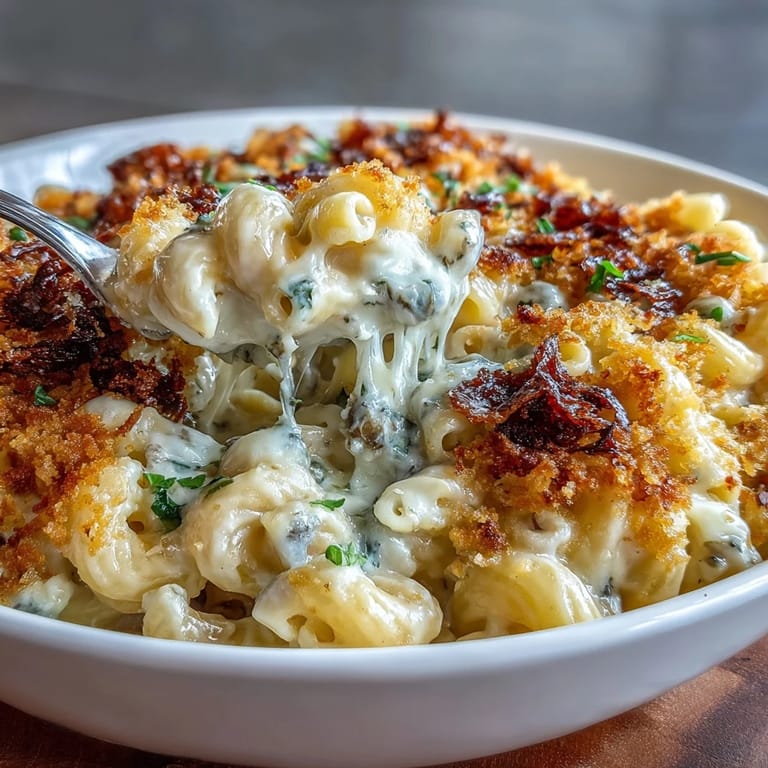
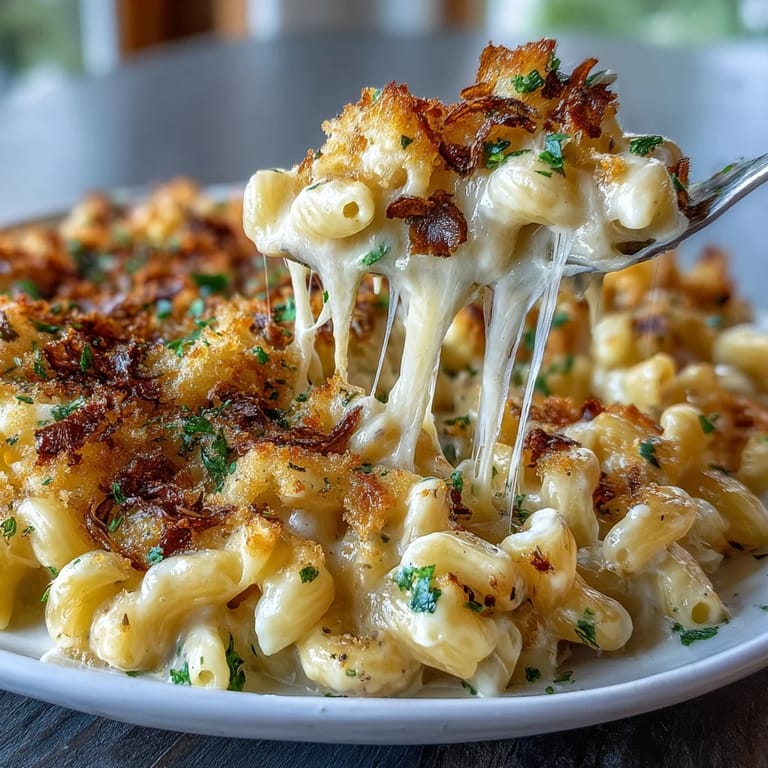
- Mix the panko breadcrumbs with the melted butter and grated Parmesan in a small bowl—the mixture should look like wet sand. Scatter this evenly over the top of the macaroni, pressing down just slightly so it adheres without becoming compacted.
- Bake until golden:
- Slide the dish into the oven for 15 to 20 minutes, watching for the moment when the topping turns golden brown and the sauce starts bubbling around the edges. This is the sweet spot—any longer and the breadcrumbs become too dark.
- Finish with truffle magic:
- Remove the dish from the oven and let it rest for 5 minutes so the sauce sets slightly. While it's still warm, drizzle the black truffle oil over the top and scatter the shaved truffle across the surface—the heat activates the aroma beautifully.
 Save
Save There's a moment, usually around the dinner table, when someone pauses mid-bite and just closes their eyes—that's when you know the dish has crossed from "nice dinner" into something memorable. This recipe does that consistently.
The Four-Cheese Philosophy
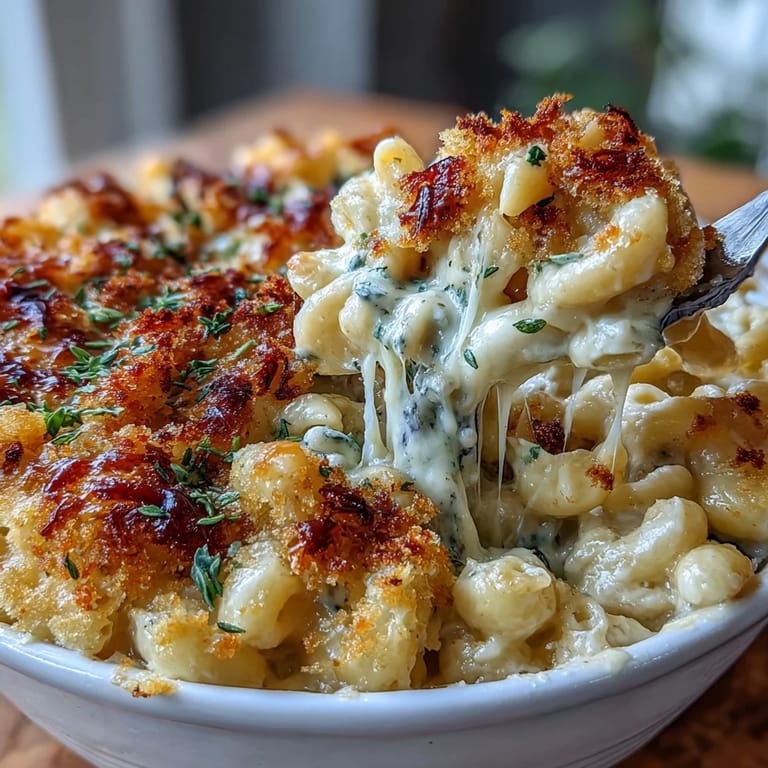
Using one good cheese is fine; using four is transformative. Gruyère without cheddar tastes incomplete—you need that sharp edge cheddar brings. Fontina alone lacks the umami depth that Parmesan adds at the finish. I learned this through trial and error, sometimes lazily substituting just two or three cheeses when I couldn't find one at the store, and every time the result felt flat. The combination works because each cheese has a specific job: Gruyère creates structure and nutty flavor, cheddar adds personality and sharpness, Fontina melts into creaminess, and Parmesan provides savory backbone. This balance is what makes the dish feel sophisticated rather than just rich.
Why Truffle Matters, and When It Doesn't
Truffle is polarizing—some people find it earthy and luxurious, others think it tastes like dirt, and honestly, both perspectives have merit. The key insight I've gathered from making this dish many times is that fresh truffle shaved on top at the very end matters far more than truffle oil stirred into the sauce. The heat volatilizes the delicate compounds that give truffle its characteristic aroma, which is why adding it during cooking wastes its potential. If you can't source fresh truffle, truffle paste or even truffle salt can work, though the effect becomes more understated. I've served this to guests without any truffle at all—just the four-cheese sauce, the panko topping, and maybe some crispy sage—and it's been equally celebrated. The truffle is the flourish that says "special occasion," but the foundation is solid enough to stand on its own.
Serving and Pairing Thoughts
This dish is rich enough to be a main course, though I usually serve it alongside something light—a sharp green salad with lemon vinaigrette works beautifully, cutting through the cheese and making the meal feel balanced rather than overwhelming. For wine, the original notes suggest Burgundy or Champagne, and I've found that any crisp white wine with good acidity does the job. The bubbles in Champagne pop against the richness in an almost playful way. I've also served this at room temperature the next day (yes, it keeps well) as a side dish at picnics, and somehow it tastes even more indulgent when cold.
- Make this ahead and reheat gently in a 160°C oven for 10 minutes; it actually improves as the flavors settle overnight.
- Double the recipe easily if you're feeding a crowd, though you may need to extend the baking time by 5 to 10 minutes.
- Leftovers transform into a luxurious pasta salad when tossed with fresh herbs and a touch of lemon juice while still slightly warm.
 Save
Save This dish has become my answer to "what should I make when I want to feel like I'm dining somewhere special without leaving home." It's comforting and indulgent at once, familiar enough to feel like home cooking but polished enough to impress.
Kitchen Guide
- → What cheeses are used in the sauce?
The sauce blends Gruyère, sharp cheddar, Fontina, and Parmesan for a rich, creamy flavor.
- → How is the sauce thickened?
A roux of butter and flour is whisked with milk to create a smooth, thick base before adding cheese.
- → Can I substitute the pasta type?
Yes, elbow macaroni or any short pasta of choice works well in this dish.
- → What is the role of Dijon mustard and nutmeg?
They add subtle depth and warmth, enhancing the overall flavor complexity of the sauce.
- → How is the dish finished for an aromatic touch?
It's drizzled with black truffle oil and topped with freshly shaved truffle for a luxurious, earthy aroma.
- → Is there a recommended garnish?
Finely chopped chives add a fresh, mild onion note and a pop of color if desired.