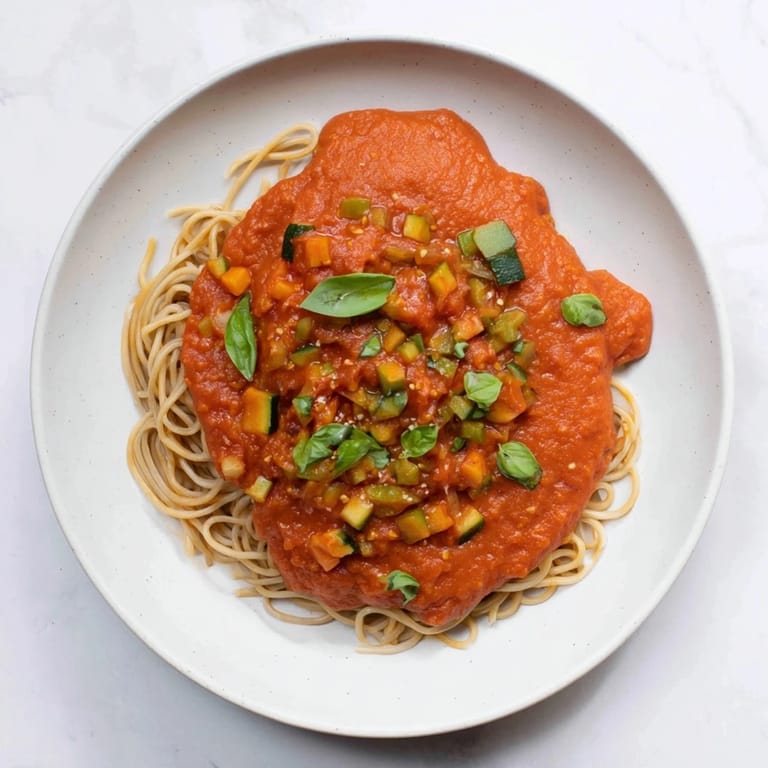
 Save
Save There's something magical about the moment when you taste a pasta sauce and realize you're eating an entire garden. I stumbled onto this version while trying to sneak more vegetables into weeknight dinners without sacrificing that deep, satisfying tomato flavor. The secret isn't fancy technique—it's letting humble carrots, zucchini, and bell peppers melt into the sauce until they vanish into silky richness. What began as a practical solution became the sauce I reach for constantly, one that somehow makes even simple pasta feel like a meal prepared with intention.
I remember serving this to friends who'd been through a rough week, ladling it over pasta while we caught up in the kitchen. As they ate, I watched them slow down, genuinely pause between bites. One friend asked what was in it, convinced there was cream or some secret ingredient. When I mentioned the vegetables, she laughed—she'd never have guessed. That's when I knew this recipe had passed the real test: it tastes indulgent while being genuinely nourishing.
Ingredients
- Carrots (1 medium): Their natural sweetness balances the tomatoes' acidity and adds body when puréed.
- Zucchini (1 small): It dissolves into the sauce almost invisibly, adding moisture and a gentle vegetable note.
- Bell pepper, red or orange (1): Choose these colors over green for sweetness—they practically candy in the heat.
- Onion (1 small): The backbone of flavor; don't skip it even if you're short on time.
- Garlic (2 cloves, minced): Add it after the softer vegetables so it doesn't burn and turn bitter.
- Celery (1 stalk): This is the unsung hero that deepens the overall flavor profile.
- Crushed tomatoes (2 cans, 14 oz each): Choose whole peeled if you can find them—they purée more smoothly than diced.
- Tomato paste (2 tbsp): This concentrate deepens the tomato flavor without watering down the sauce.
- Olive oil (1 tbsp): Use your everyday oil here; save the fancy stuff for drizzling.
- Dried oregano (1 tsp): It's sharper than fresh here, which cuts through richness.
- Dried basil (1 tsp): Fresh basil burns at high heat, so dried keeps its integrity.
- Salt (1/2 tsp) and black pepper (1/4 tsp): Taste as you go—tomatoes vary in saltiness.
- Sugar (1/2 tsp, optional): A tiny pinch transforms overly acidic sauce into something rounded and approachable.
- Red pepper flakes (pinch): For those who want warmth without complexity.
- Fresh basil for garnish: The final gesture that makes it feel restaurant-worthy.
Tired of Takeout? 🥡
Get 10 meals you can make faster than delivery arrives. Seriously.
One email. No spam. Unsubscribe anytime.
Instructions
- Get everything ready:
- Chop your vegetables into similar-sized pieces so they cook evenly. This takes five minutes and transforms the whole process.
- Warm the oil and start with the hard vegetables:
- Heat olive oil in your saucepan over medium heat, then add onion, carrot, and celery—the ones that need time to soften. Let them sit undisturbed for a minute or two, then stir occasionally. You're building a foundation, not rushing.
- Add the faster vegetables:
- After about four minutes, add the zucchini and bell pepper. They'll cook quickly and release their own moisture into the pan. The whole mixture should smell sweet and jammy.
- Introduce garlic and paste:
- Once the vegetables soften slightly, add minced garlic and stir constantly for just one minute—the goal is fragrant, not burned. Then stir in tomato paste and cook it for another minute so it caramelizes slightly and stops tasting raw.
- Bring in the tomatoes:
- Add your crushed tomatoes along with oregano, basil, salt, pepper, and sugar if using. Bring everything to a gentle simmer—not a rolling boil, which can make the sauce taste sharp.
- Let it soften into itself:
- Cover the pan and let it cook for 20 to 25 minutes, stirring occasionally. The vegetables should become so tender they practically collapse. This is where all that buried goodness becomes sauce.
- Blend into smoothness:
- Using an immersion blender, purée directly in the pot until completely smooth—no flecks of vegetable should remain. If using a countertop blender, work in batches and be careful with hot liquid; let it cool slightly first. This is the transformation moment.
- Finish with a gentle simmer:
- Return the blended sauce to low heat and let it cook uncovered for 5 to 10 minutes, which lets it thicken slightly and deepen. Taste and adjust salt, pepper, or add a pinch more sugar if it needs balance.
- Serve with intention:
- Ladle over hot pasta and finish with torn fresh basil. The heat will release its aroma just as you're about to eat.
 Save
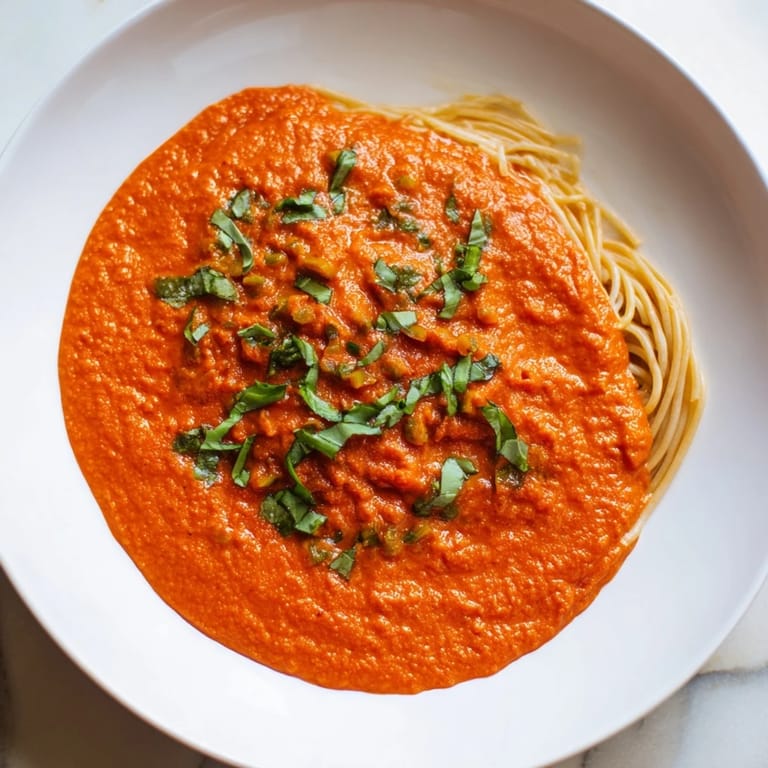
Save There was a night when my neighbor stopped by just as I was blending this sauce, and the aroma pulled her into my kitchen. She tasted it straight from the spoon—sauce still steaming—and her face changed. She asked if I'd add lentils to make it heartier for a friend's illness meal. I did, and that sauce became part of someone's recovery story. That's when I realized recipes aren't just instructions; they're conduits for care.
Ways to Make It Your Own
This sauce is a canvas. I've stirred in cooked white beans for protein without changing the texture, added a handful of spinach just before blending so it disappears completely, and even tossed in finely chopped mushrooms alongside the carrots for an earthier note. The beauty is that almost any vegetable softens into this sauce beautifully—broccoli florets, cauliflower, even a small handful of fresh herbs like parsley work seamlessly. The core flavor stays true while the sauce becomes whatever you need it to be.
Storage and Make-Ahead Magic
This sauce was made for busy weeks. It keeps in the refrigerator for up to five days in an airtight container, and freezes brilliantly for three months in freezer bags or containers—I always flatten bags in the freezer so they stack like files and thaw quickly. On nights when cooking feels impossible, you're just minutes away from a meal that tastes made from scratch. I've also noticed the flavors actually deepen as it sits, so day-two sauce tastes even better than day-one.
Pairing Beyond Pasta
While pasta is the obvious match, I've learned this sauce is incredibly versatile. Spoon it over polenta, use it as a base for shakshuka, or swirl it into soups for color and depth. Once, I poured it over roasted vegetables and realized it had become something closer to a ratatouille. It brings comfort and wholesomeness to anything it touches.
- For extra protein without changing the sauce's silky texture, stir in cooked lentils or white beans after blending.
- Whole-wheat or legume-based pasta pairs beautifully here, adding fiber and making the meal more satisfying.
- Save a little sauce before adding proteins, then you can use it as-is for vegetable toppings or lighter meals.
 Save
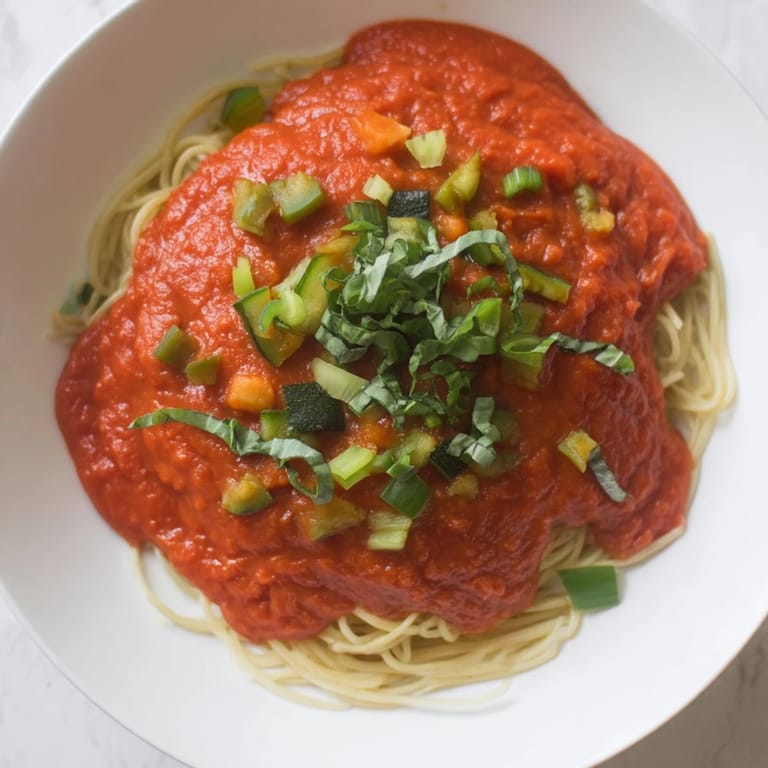
Save What started as a way to add vegetables quietly has become a staple that I trust completely. It's the sauce that brings people to the table and keeps them there a little longer.
Kitchen Guide
- → What vegetables are used in this sauce?
Carrots, zucchini, bell pepper, onion, celery, and garlic are sautéed and puréed to create a smooth and nutritious base.
- → How is the sauce thickened and balanced?
Tomato paste and crushed tomatoes provide body, while a pinch of sugar balances the acidity for a smooth taste.
- → Can this sauce be prepared in advance?
Yes, it freezes well for up to three months, making it convenient for meal prep and storage.
- → What cooking technique ensures a smooth texture?
Puréeing the cooked vegetables with an immersion or countertop blender creates a rich, velvety sauce.
- → How can the sauce be customized for extra nutrition?
Adding spinach, broccoli florets, lentils, or white beans enhances fiber and protein content without altering flavor.