 Save
Save The first time I made Thai peanut chicken pasta was on a Tuesday night when I had pasta in the pantry, leftover rotisserie chicken in the fridge, and a jar of Thai peanut sauce that had been sitting there for weeks. I threw it together half-heartedly, but the moment those flavors came together—the nutty sauce clinging to the pasta, the brightness of lime cutting through the richness—I realized I'd accidentally stumbled onto something that would become a weeknight staple. Now whenever I'm short on time but want something that tastes like I've been cooking all day, this is what I reach for.
I made this for a friend who was going through a rough patch, and I remember her taking that first bite, then immediately asking for the recipe. She said it tasted like comfort but also like sunshine, and I think that's exactly what happens when you combine the earthiness of peanut sauce with the sharpness of lime and the freshness of cilantro. There's something about serving it warm in bowls with all those herbs scattered on top that makes even a simple pasta dinner feel special.
Ingredients
- Linguine or spaghetti (340 g / 12 oz): Any pasta shape works, but I prefer linguine because it holds the sauce better than thin spaghetti and cooks evenly in about 9–10 minutes.
- Boneless, skinless chicken breast (450 g / 1 lb), thinly sliced: Slicing it thin is the secret to getting it cooked through quickly without drying out—use a sharp knife and you can even partially freeze the chicken for 15 minutes to make slicing easier.
- Vegetable oil (1 tbsp): This gets the pan hot enough to sear the chicken and give it a golden crust, which adds flavor even though it's such a small amount.
- Salt and black pepper: Season the chicken generously—this is where you build the first layer of flavor before the sauce even arrives.
- Ready-made Thai peanut sauce (1 cup / 240 ml): I use the jarred kind without apology because it's already perfectly balanced, and honestly, making peanut sauce from scratch takes longer than everything else combined.
- Soy sauce (2 tbsp): This deepens the sauce and adds umami, making it taste less sweet and more savory.
- Lime juice (2 tbsp): Fresh lime juice is non-negotiable here—it wakes up the entire dish and prevents the sauce from tasting one-dimensional.
- Fresh ginger (1 tsp, grated) and garlic (2 cloves, minced): These bloom quickly in the warm sauce and add an aromatic bite that rounds out the flavors.
- Fresh cilantro (1/4 cup, chopped): This is your brightness—don't skip it or use dried herbs, as the fresh flavor matters too much.
- Fresh mint (2 tbsp, optional): If you have it, it adds a cooling note that balances the richness beautifully.
- Green onions (2, thinly sliced): Use them in two parts—half into the sauce at the end for cooked flavor, half scattered on top for a raw, crisp contrast.
- Roasted peanuts (1/4 cup, chopped): These add texture and a toasted flavor that echoes the peanut sauce without overwhelming it.
- Lime wedges: Serve these on the side so people can squeeze more brightness into their bowls if they want it.
Tired of Takeout? 🥡
Get 10 meals you can make faster than delivery arrives. Seriously.
One email. No spam. Unsubscribe anytime.
Instructions
- Get the pasta going:
- Fill a large pot with salted water—it should taste like the sea—and bring it to a rolling boil. Add the pasta and stir it once so nothing sticks, then cook according to the package instructions until it's al dente, which means it should have a tiny bit of resistance when you bite it. Drain it in a colander but don't rinse it; the starch on the noodles helps the sauce cling beautifully.
- Sear the chicken:
- While the pasta cooks, heat the vegetable oil in a large skillet over medium-high heat until it shimmers and smells hot. Add the sliced chicken in a single layer—don't crowd the pan, or it will steam instead of sear—and let it sit undisturbed for a minute so it gets golden. Season with salt and pepper, then toss and cook until it's cooked through and the edges are golden, about 5–7 minutes total. Transfer it to a clean plate and wipe out the skillet if there are any browned bits stuck to the bottom (you can save these or wipe them away, depending on how intense you like your flavors).
- Bloom the aromatics:
- Lower the heat to medium and add the peanut sauce, soy sauce, lime juice, ginger, and garlic directly to the skillet. Stir everything together and let it warm through for 2–3 minutes until it's steaming and fragrant. The ginger and garlic will soften slightly and infuse the sauce, so don't skip this step just to save time.
- Marry everything together:
- Add the drained pasta and cooked chicken back to the skillet and toss everything until every strand is coated with that glossy, nutty sauce. This is where the magic happens—the warmth of the pasta finishes cooking the sauce, and all the flavors start to meld.
- Finish with fresh herbs:
- Remove from heat and stir in the cilantro, mint if you're using it, and half of the sliced green onions. The residual heat will soften the herbs slightly while keeping them bright.
- Plate and garnish:
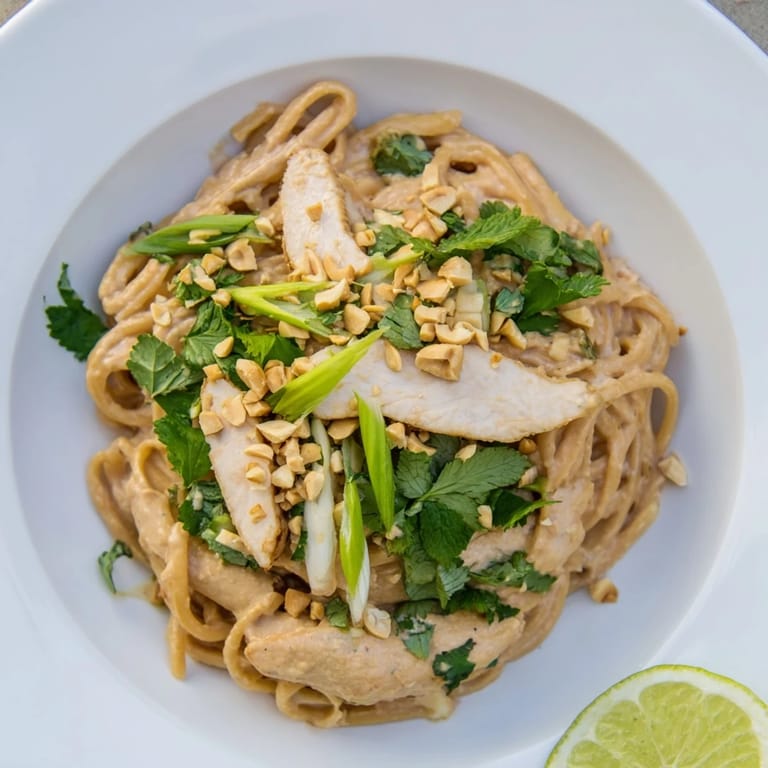
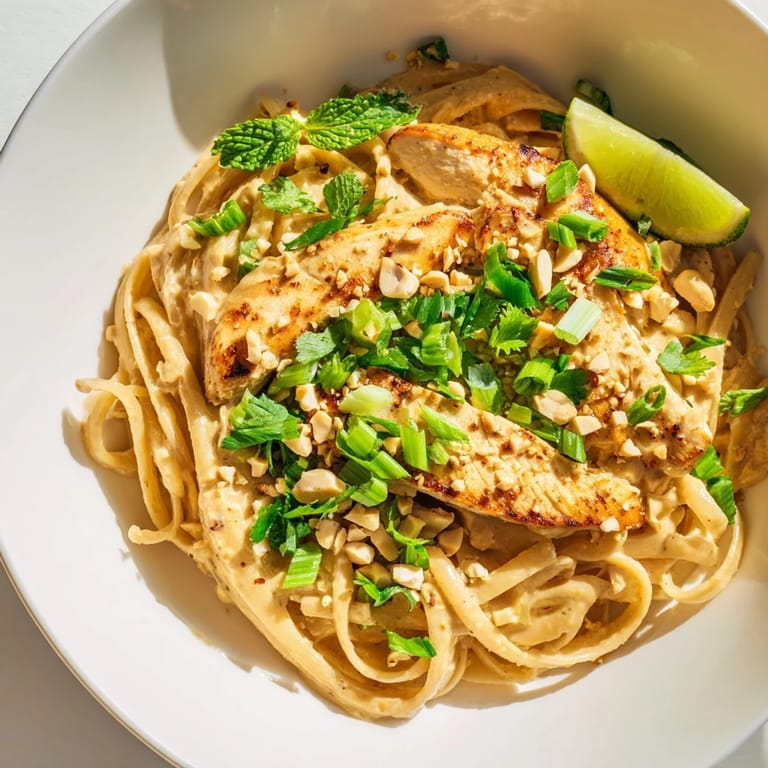
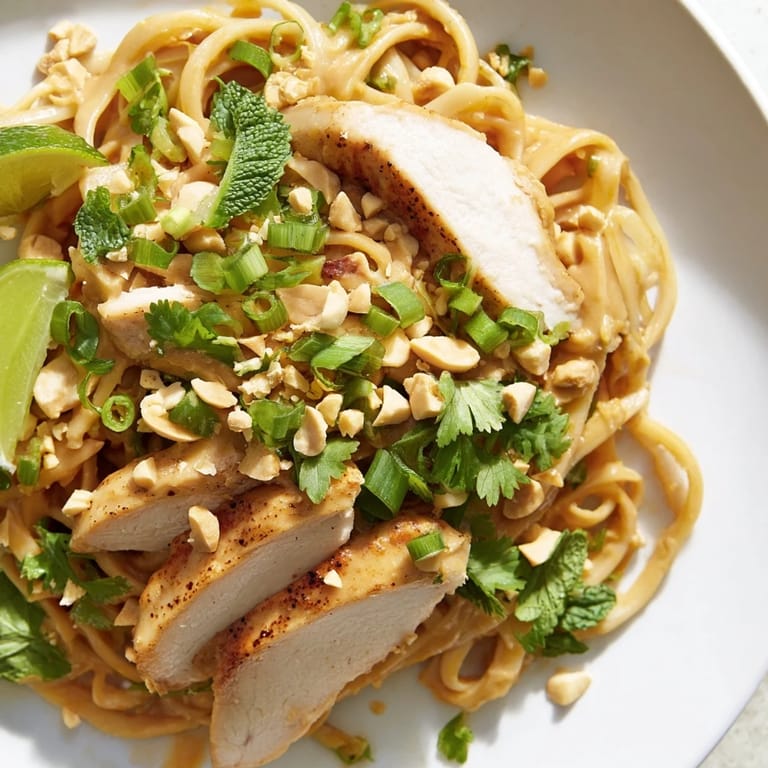
- Divide the pasta among bowls and top each one with chopped peanuts, the remaining green onions, and a lime wedge tucked onto the rim. Serve immediately while it's still warm—this dish doesn't hold well once it cools, and the pasta will keep absorbing the sauce.
 Save
Save What surprised me most about this dish is how it became the thing I make when I want to impress someone without letting them know I'm trying. It looks intentional and complex, but it's honestly just good ingredients doing what they're supposed to do—no special skills required, just attention and a willingness to taste as you go.
Why This Works as a Weeknight Dinner
The genius of this dish is that most of the work is just cooking pasta and chicken in parallel, which means you're never standing there waiting for one thing to finish before you can start another. The sauce comes together in the time it takes to think about what you're doing, and the herbs at the end are what transform it from convenient to genuinely delicious. I've made versions of this with whatever protein I had on hand—shrimp, tofu, pork tenderloin—and it works every single time because the sauce is flexible enough to carry whatever you give it.
Making It Your Own
Once you've made this once or twice, you'll start noticing variations that appeal to you. Some nights I add a splash of sriracha or red chili flakes if I want heat, other times I squeeze extra lime into my bowl at the table. A friend of mine makes a vegetarian version with crispy tofu instead of chicken and swears it's actually better because the sauce coats the tofu differently. The beauty of using ready-made peanut sauce is that you're starting from a solid foundation, which means you have freedom to experiment without worrying about breaking the base.
Kitchen Notes and Quick Fixes
If your sauce breaks or looks oily, it usually means the heat was too high or you added something cold to something hot—just stir in a little water and lower the heat, and it will come back together. If you find yourself making this often and getting tired of the same flavor profile, try swapping half the peanut sauce for a good Thai curry paste, or add a small spoonful of sesame oil at the very end for deeper flavor. The pasta water is a powerful tool; if everything looks too thick or dry, add a few tablespoons of the starchy cooking water from the pasta pot, which will help the sauce coat everything more evenly.
- Cook the pasta 30 seconds under al dente if you know you're going to simmer it in the sauce, since it will finish cooking as it sits in the heat.
- Use fresh herbs on the day you buy them—cilantro and mint wilt fast and lose their brightness, which is exactly what you don't want here.
- Keep lime wedges at the table so people can add brightness to their own taste, and don't judge anyone who squeezes a whole lime over their bowl because they're probably right to do it.
 Save
Save This dish taught me that the best recipes are often the simplest ones—not because they lack flavor, but because they let each ingredient shine without unnecessary fuss. Make it once, and it becomes one of those things you reach for again and again.
Kitchen Guide
- → What type of pasta works best for this dish?
Linguine or spaghetti are ideal for holding the creamy peanut sauce well, offering a satisfying texture.
- → Can I make this dish vegetarian?
Yes, substituting chicken with firm tofu provides a delicious plant-based alternative.
- → How do I add extra heat to the sauce?
A dash of sriracha or red chili flakes stirred into the peanut sauce adds a spicy kick.
- → What fresh herbs complement the flavors here?
Cilantro and mint add bright, aromatic notes that balance the richness of the peanut sauce.
- → Are there gluten-free options for this dish?
Using rice noodles instead of wheat-based pasta creates a gluten-free version without compromising flavor.
- → How do I ensure the chicken stays tender?
Thinly slice the chicken breast and sauté over medium-high heat until just golden and cooked through.