 Save
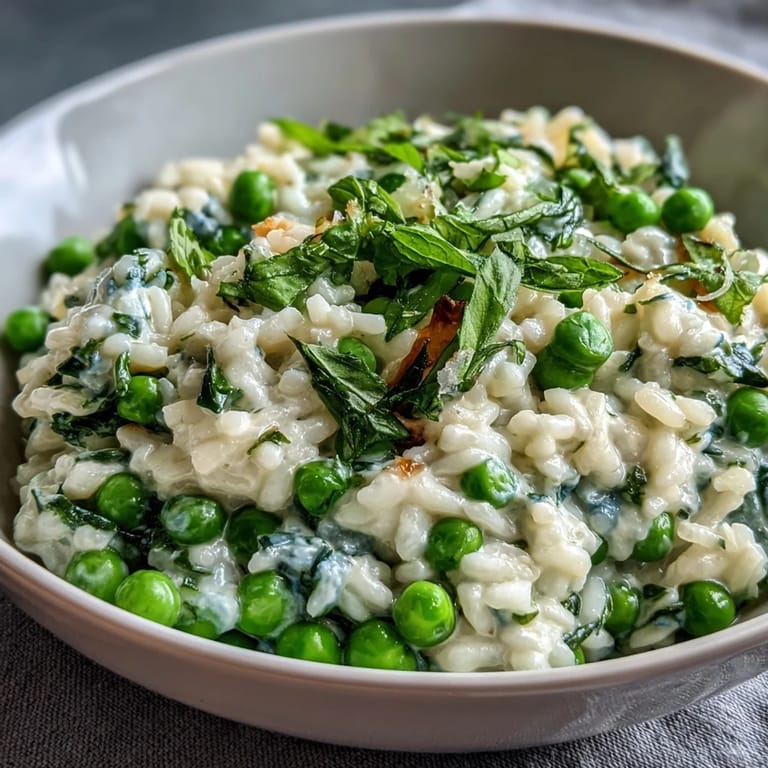
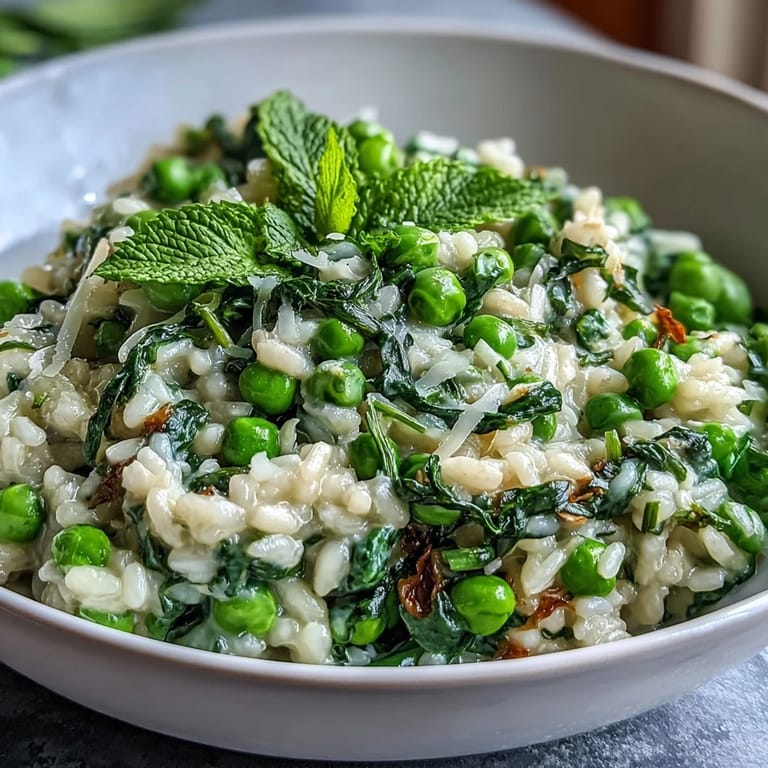
Save There's something about the first warm afternoon of spring that makes you crave green things, and that's exactly when I discovered how a simple risotto could taste like the season itself. My neighbor brought over a basket of just-picked peas from her garden, still in their pods, and I stood at the kitchen counter snapping them open one by one, listening to the gentle pop as each pea tumbled out. That night, I turned them into this creamy, mint-bright risotto, and suddenly my kitchen smelled like a herb garden had decided to move in. My partner took one bite and asked if I'd learned to cook like an Italian over lunch, which made me laugh—the truth was just good timing and really fresh peas.
I made this for my book club once on an April evening when everyone was tired of winter food, and the moment that creamy green risotto hit their bowls, the whole conversation shifted—suddenly everyone was leaning over their plates instead of talking. One friend asked for the recipe before she'd even finished eating, which I took as the highest compliment possible.
Ingredients
- Fresh or frozen spring peas (1 cup): Frozen peas are secretly just as good as fresh ones, since they're picked and frozen at peak ripeness—no shame in the freezer section here.
- Small onion, finely chopped (1): Finely chopped means the onion disappears into the risotto and becomes part of the creamy base, so don't skip the knife work.
- Garlic cloves, minced (2): Mincing it small keeps it from overpowering the delicate spring flavors—you want whispers of garlic, not shouts.
- Fresh mint leaves, finely chopped (2 tablespoons): Fresh mint is non-negotiable; the dried stuff will make this taste like toothpaste instead of springtime.
- Lemon zest (from 1 lemon, optional but worth it): The zest brightens everything without adding moisture, and it's the secret ingredient that makes people wonder what you did differently.
- Arborio rice (1 1/2 cups): Arborio's starch is what creates that signature creamy texture, so don't swap it for long-grain rice or you'll lose the whole magic.
- Unsalted butter, divided (3 tablespoons): Two tablespoons go in early for cooking, and one stays for the finish—that final butter is what makes it taste restaurant-quality.
- Grated Parmesan cheese (1/2 cup): Grate it yourself if you can; pre-shredded has anti-caking agents that keep it from melting as smoothly into the risotto.
- Heavy cream (1/4 cup, optional): I skip this sometimes to keep it lighter, but on a cold spring night when I want extra richness, it's lovely.
- Vegetable broth, kept warm (4 cups): Keeping it warm matters more than you'd think—adding cold broth will stop the cooking process and make the rice grainy.
- Dry white wine (1/2 cup): The wine adds acidity and depth; a Sauvignon Blanc or even a Pinot Grigio you'd drink works perfectly.
- Extra-virgin olive oil (2 tablespoons): Good olive oil makes a difference in how the onion softens and in the final flavor, so don't use the cheap stuff here.
- Salt and freshly ground black pepper, to taste: Taste as you go, because you'll need more salt than you think, especially once the Parmesan goes in.
Tired of Takeout? 🥡
Get 10 meals you can make faster than delivery arrives. Seriously.
One email. No spam. Unsubscribe anytime.
Instructions
- Start your warm broth bath:
- Pour your vegetable broth into a medium saucepan and set it on the stove at low heat, where it'll stay warm and steaming the whole time you're making risotto. This sounds like a small thing, but adding cold broth to hot rice will shock it and make the final texture grainy instead of creamy.
- Sauté the aromatics:
- In your large skillet, warm the olive oil and 2 tablespoons butter over medium heat, then add your finely chopped onion. Cook it for about 4 minutes, stirring occasionally, until it's soft and translucent—you'll know it's ready when the sharp onion smell mellows out and it starts to turn slightly golden at the edges.
- Wake up the garlic:
- Add your minced garlic and cook for just 1 minute, stirring the whole time so it doesn't catch on the bottom of the pan. You're looking for that moment when your kitchen suddenly smells incredible—that's your signal it's ready.
- Toast the rice:
- Stir in the Arborio rice and cook for 2 minutes, stirring constantly, watching as the grains get coated in butter and oil and start to turn slightly translucent at the edges. This toasting step is what gives risotto its subtle nutty flavor and keeps each grain from getting mushy.
- Deglaze with wine:
- Pour in your white wine and stir until it's mostly absorbed—you'll hear it sizzle and smell the alcohol cooking off. This takes about 1 minute and adds brightness to the whole dish.
- The patient add-and-stir dance:
- Now comes the part that takes time but is actually meditative: add your warm broth one ladle at a time, stirring frequently, and wait until each addition is mostly absorbed before adding the next. You'll notice the risotto start to look creamy around the 10-minute mark, and you keep going like this for 18 to 20 minutes total, until the rice is tender but still has the slightest bite to it.
- Sneak in the peas:
- About 5 minutes before the rice is done, stir in your peas and let them cook through and warm up. If you're using frozen peas, don't thaw them first—the cold helps them stay intact instead of turning to mush.
- Build the final flavor:
- Turn off the heat and stir in the remaining tablespoon of butter, the Parmesan, heavy cream if you're using it, chopped mint, and lemon zest. Taste and season with salt and pepper, remembering that Parmesan is salty, so go easy at first.
- Rest and serve:
- Let the risotto sit for 2 minutes—this gives everything a chance to settle—then serve immediately while it's still creamy, with a little extra mint and Parmesan on top if you're feeling fancy.
 Save
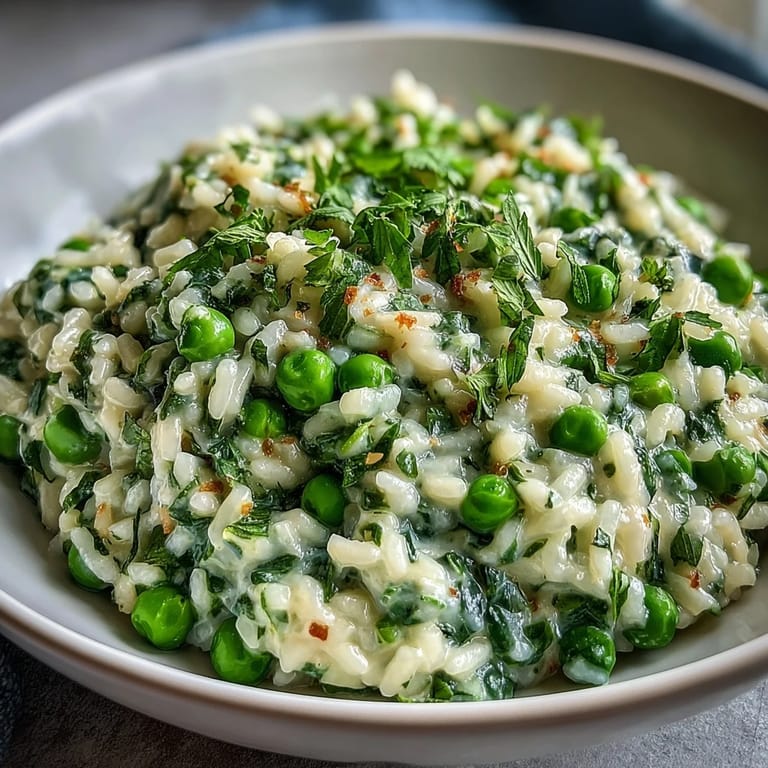
Save The first time I really understood why Italians spend so much time on risotto was when I sat down with a bowl of this one on my back porch at sunset, still warm, the steam carrying that mint-and-lemon smell right to my face. It wasn't just dinner; it was the taste of spring happening on my plate.
The Green Matter: Peas and Mint
Peas and mint are the real stars here, and they need respect. The peas add sweetness and that pop of color that makes the dish feel special, while the mint keeps everything from tasting heavy or one-note. I've learned that adding the mint at the very end preserves its fresh, almost peppery bite—cook it for too long and it turns into a vague green flavor that could be anything. The same goes for the lemon zest; that citrus is what makes people pause and ask what's in it, so don't skip it thinking it's optional.
Timing and Temperature Matter More Than You Think
Risotto is one of those dishes where you can't just walk away and set a timer; it demands your attention and your wooden spoon. Keep that medium heat steady—too hot and the rice will burn before the inside cooks, too cool and you'll be stirring for forty minutes. The broth temperature is just as important; I keep mine at a gentle simmer the whole time, and I always have extra hot broth nearby in case I need more than the recipe calls for, because rice can be unpredictable depending on how old it is and how dry your kitchen is.
Variations and Customization
This risotto is forgiving enough to handle a few changes depending on what's in your kitchen or what you're craving. Baby spinach wilts right in during those last few minutes and adds earthiness, while toasted pine nuts scattered on top bring a subtle crunch that some people prefer. For something lighter, skip the cream entirely and rely on that final butter and Parmesan to create the creaminess; I do this version often and find it lets the peas and mint shine even brighter.
- Add a handful of baby spinach in the last minute of cooking for extra greens and earthiness.
- Top with toasted pine nuts or even crispy breadcrumbs for texture contrast.
- Swap half the Parmesan for a sharp pecorino if you want more of a punch of flavor.
 Save
Save This risotto has become my go-to dinner when I want to feel like I've cooked something special without spending all day in the kitchen. Make it when spring is trying to arrive, serve it to people you like, and watch how a simple bowl of creamy rice and green things becomes something that sticks with them.
Kitchen Guide
- → How can I achieve a creamy texture?
Stir the Arborio rice gradually while adding warm broth one ladleful at a time. This slow absorption method releases starch, creating a rich, creamy texture.
- → Can I use frozen peas instead of fresh?
Yes, frozen peas work well and can be added during the last 5 minutes of cooking to retain their sweetness and vibrant color.
- → What wine pairs best with this dish?
A crisp Sauvignon Blanc or a light Pinot Grigio complements the fresh peas and mint while balancing the richness of the Parmesan.
- → Is it possible to make this dish vegan?
Replace butter and Parmesan with vegan alternatives and omit the cream to create a dairy-free version without sacrificing flavor.
- → How do I prevent the risotto from becoming mushy?
Cook the rice gently, stirring frequently but not overcooking. Add broth gradually and taste often to ensure the grains remain al dente.