 Save
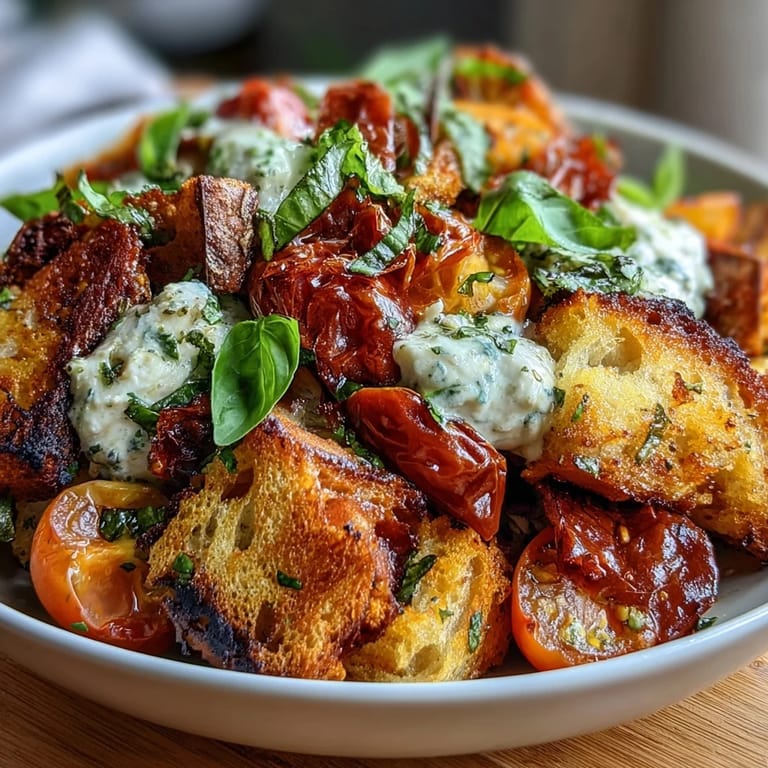
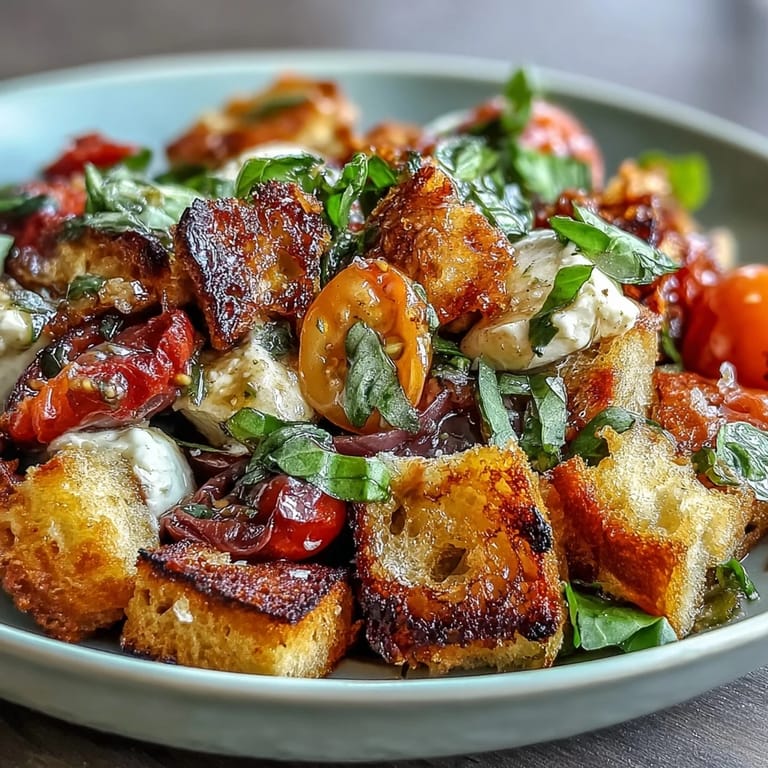
Save There's something about standing in a farmers market in late July with overflowing bags of heirloom tomatoes that makes you realize you need to eat differently that day. I grabbed a crusty sourdough loaf without much of a plan, knowing only that those tomatoes—striped and jewel-toned—deserved something that would honor their flavor rather than hide it. By the time I got home and the oven was warming, I'd already decided this salad would be my dinner, my lunch tomorrow, and the thing I'd bring to a friend's porch gathering that weekend.
I made this for my neighbor's backyard dinner last August, and watching people actually come back for thirds of a salad was the kind of small victory that sticks with you. One guest asked if it was complicated, and I laughed because the secret is that it isn't—it just tastes like it is, which feels like the whole point of cooking.
Ingredients
- Day-old sourdough bread, 250 g (about ½ loaf), cut into 2 cm cubes: Slightly stale bread is actually what you want here because it's firm enough to toast into proper croutons without dissolving when the dressing hits it.
- Extra-virgin olive oil, 2 tbsp plus ¼ cup: Use something you actually like the taste of because it's the backbone of both the croutons and the vinaigrette.
- Sea salt, ½ tsp plus a pinch: Coarse salt makes a difference when you're toasting the bread; it stays on the surface longer than fine salt.
- Heirloom tomatoes, 500 g, assorted colors, cut into wedges or bite-sized pieces: The whole point of this salad lives here—buy them ripe and at their peak, even if it means waiting until the right time of year.
- Cucumber, 1 small, peeled and sliced: This adds cooling contrast and a bit of structural interest to break up the softness of the tomatoes.
- Red onion, ½ small, thinly sliced: The thin slices let it integrate rather than dominate, softening slightly as it sits.
- Garlic, 1 small clove, minced: Fresh garlic goes into the vinaigrette, so mince it finely so it distributes evenly.
- Fresh basil, 30 g (about 1 cup), packed: Tear it by hand if you can because the bruising from your fingers is less harsh than a knife blade, and the smell will remind you why you're doing this.
- Red wine vinegar, 1½ tbsp: This amount balances the oil and herbs without making the whole salad taste vinegary.
- Dijon mustard, 1 tsp: An emulsifier that helps the vinaigrette cling to every piece instead of pooling at the bottom of the bowl.
- Honey, ½ tsp: A whisper of sweetness that rounds everything out.
- Fresh mozzarella or burrata, 50 g (about ½ cup), torn (optional): If you use it, tear it just before serving so it stays creamy rather than drying out or breaking down.
- Black pepper and extra basil for finishing: Freshly ground pepper tastes completely different from pre-ground, and those extra basil leaves are the final flourish.
Tired of Takeout? 🥡
Get 10 meals you can make faster than delivery arrives. Seriously.
One email. No spam. Unsubscribe anytime.
Instructions
- Get your oven ready and prep the bread:
- Preheat to 180°C (350°F) while you cut your sourdough into roughly 2 cm cubes—they don't need to be perfect because the irregular pieces toast more interestingly.
- Toast the croutons until they're golden and crisp:
- Toss the bread with olive oil and salt, spread it on a baking sheet in a single layer, and let it toast for 10–15 minutes, stirring once around the halfway point so they cook evenly. You want them to smell like toasted bread and feel firm when you break one open, not hard as a rock. Let them cool on the sheet so they firm up completely.
- Blend the basil vinaigrette until it's smooth and herbaceous:
- Combine basil, olive oil, vinegar, mustard, honey, minced garlic, and salt and pepper in a blender or food processor. Blend until the vinaigrette is smooth and bright green, then taste it—this is the moment to adjust the salt, vinegar, or honey to match what you want.
- Combine the vegetables and bread in a bowl:
- Layer the tomatoes, cucumber slices, and red onion with the cooled sourdough cubes in a large bowl, tossing them gently together.
- Dress the salad and let it sit:
- Drizzle the basil vinaigrette over everything and toss gently so the dressing coats each piece without crushing the tomatoes. Let it stand for 10 minutes—this is when the bread starts absorbing the dressing and the flavors actually start mingling.
- Plate and finish with fresh touches:
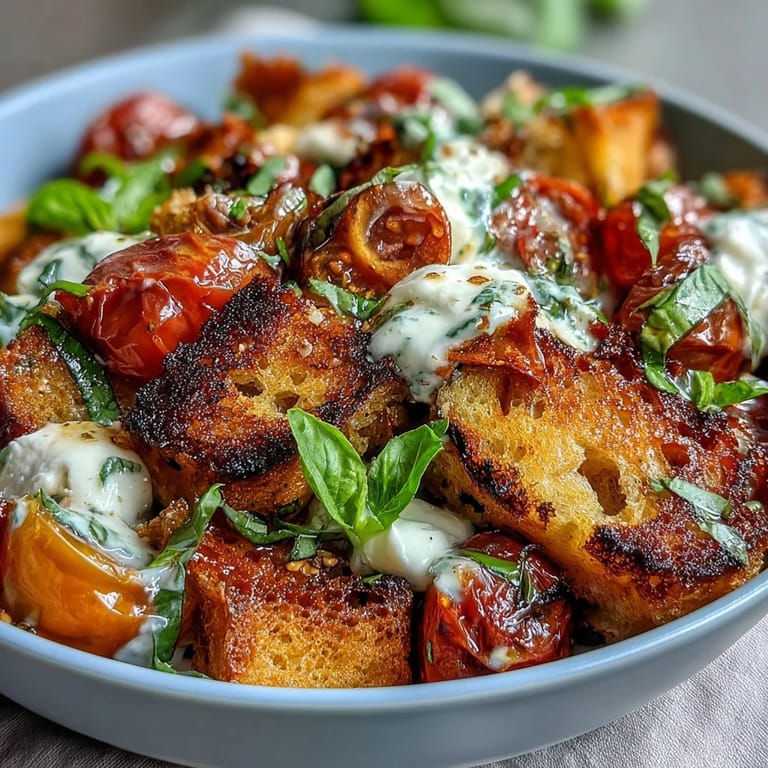
- Transfer to a serving platter, tear the mozzarella or burrata over the top if you're using it, scatter extra basil leaves across, crack some black pepper over everything, and serve right away.
 Save
Save This became the salad I made every time tomato season actually arrived, the one that made people stop and really taste their food instead of just eating. There's something about a salad that asks you to notice every single ingredient—the bread, the herb, the acid—that reminds you why you cook in the first place.
Timing It Right
The best version of this salad happens in late summer when heirloom tomatoes are actually abundant and reasonably priced, but I've made it in shoulder seasons too by being slightly more generous with the other vegetables and letting the bread and vinaigrette do more of the talking. Seasonality doesn't mean you can't make something, it just means you might adjust what you lean on.
Building Flavor Layers
The basil vinaigrette is doing most of the heavy lifting here—it's not just dressing the salad, it's the thing that ties every element together and makes this feel intentional rather than random. The emulsion from the mustard means the herb flavor actually clings to the bread and vegetables instead of sliding off, and that small detail is the difference between a salad that tastes bright and harmonious versus one that feels a bit flat.
Variations and Flexibility
Once you understand the basic structure, you can pivot based on what looks good or what you have in the kitchen. I've added capers for a salty punch, scattered torn burrata across the top and let it get a little warm from the salad, and once made it completely vegan by skipping the cheese and doubling down on really good bread and really fresh herbs. The variations work because the foundation is solid.
- If you can't find heirloom tomatoes, use whatever ripe tomato you can find and adjust the other vegetables to add more visual interest and flavor contrast.
- Sourdough can be swapped for any rustic bread with structure—a good country loaf or ciabatta works if that's what you have.
- Mozzarella is optional because the salad stands completely on its own, but if you use it, tear it just before serving so it stays creamy and doesn't break down.
 Save
Save This salad has become my default answer to what to bring when someone asks me to contribute something to a dinner, because it asks only for good ingredients and a little attention. It's the kind of simple dish that makes you look like you know what you're doing even though the secret is just showing up with respect for what you're cooking.
Kitchen Guide
- → How do I get the sourdough cubes crispy?
Toss the bread cubes with olive oil and sea salt, then bake at 180°C (350°F) for 10–15 minutes, stirring once until golden and crisp.
- → Can I substitute the bread?
Yes, any rustic bread can replace sourdough, but toasting it well helps maintain crunch and texture.
- → What makes the vinaigrette flavorful?
Fresh basil combined with olive oil, red wine vinegar, Dijon mustard, honey, and garlic creates a balanced, fragrant dressing.
- → How long should the salad rest before serving?
Let the salad stand for about 10 minutes after tossing to allow the bread to soak up the vinaigrette and flavors to meld.
- → Can I make this dish vegan?
Omitting the cheese or using a plant-based alternative makes it vegan-friendly without compromising taste.