 Save
Save There's a particular Thursday evening I can't quite forget—the kind where the kitchen was cold, my fridge was nearly empty, and I had a container of kimchi that had been sitting there just long enough to develop serious personality. I'd thrown together what I had: day-old rice, gochujang, a couple of eggs, and within fifteen minutes, something unexpectedly delicious emerged. That dish became my answer to every "what's for dinner" moment when time is short but the stomach demands something bold.
I remember serving this to my roommate late one night when she came home starving from work, skeptical about the bright red color but willing to try it anyway. She took one bite and got completely quiet—the good kind of quiet. By the end of the bowl, she was asking for the recipe and whether we could make it again the next day. That's when I knew this wasn't just a desperate weeknight dinner; it was the kind of dish that converts people.
Ingredients
- Day-old white rice (2 cups, cold): Cold rice is non-negotiable—it breaks apart easily when you stir-fry it instead of turning to mush, giving you that perfect slightly crispy texture.
- Napa cabbage kimchi, chopped (1 cup plus 2 tbsp juice): The fermented punch of this recipe, bringing funk, heat, and complexity that makes the whole dish sing.
- Gochujang (2 tbsp): This Korean chili paste carries the soul of the dish—choose one that feels spicy enough for you because there's no hiding it.
- Large eggs (2): They scramble into creamy pockets throughout the rice, adding richness and protein without any fuss.
- Soy sauce (1 tbsp): Your umami anchor, balancing the heat and tying all the flavors into something cohesive.
- Toasted sesame oil (1 tsp): The finishing oil that changes everything—use real sesame oil, not the cheap cooking version, or you'll taste the difference immediately.
- Vegetable oil (1 tbsp): High heat oil for the initial sauté and stir-fry, since sesame oil would smoke and burn.
- Onion, finely diced (1/2 small): Softened in oil first, it becomes sweet and forms the aromatic base for everything that follows.
- Green onions, sliced (2, white and green parts separated): White parts go in early to cook, green parts scattered at the end for fresh bite and color.
- Carrot, finely diced (1 small, optional): A small touch of sweetness and textural contrast that plays beautifully against the spicy heat.
- Sugar (1 tsp, optional): Sometimes the kimchi juice or gochujang tips too acidic—a tiny pinch of sugar smooths it out without making it sweet.
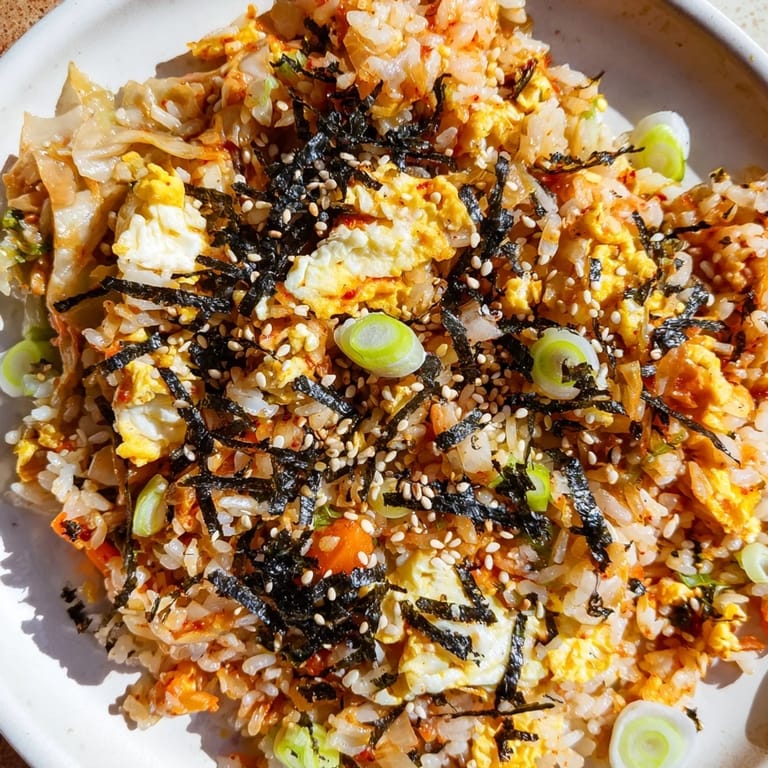
- Sesame seeds and roasted seaweed strips, for garnish: These aren't decoration; they're the textural finish that makes each bite feel intentional and complete.
Tired of Takeout? 🥡
Get 10 meals you can make faster than delivery arrives. Seriously.
One email. No spam. Unsubscribe anytime.
Instructions
- Set up your mise en place:
- Chop everything first—onion, carrot, green onion whites, kimchi—because once the pan gets hot, things move fast. Cold rice should be broken into individual grains as much as possible.
- Start the aromatics:
- Heat vegetable oil in your skillet or wok over medium-high heat until it shimmers, then add onion, carrot, and white parts of green onion. You're looking for them to soften and turn slightly golden at the edges, about 2 to 3 minutes, filling the kitchen with that savory smell that tells you you're on the right track.
- Bring in the kimchi:
- Add your chopped kimchi and let it sit undisturbed for a moment, then stir and let it char slightly against the hot pan. This 2 to 3 minutes of cooking deepens its flavor, turning it from raw-tangy to complex-funky.
- Mix in the seasonings:
- Stir in gochujang, soy sauce, and sugar if using, making sure the gochujang is completely mixed in and coating everything. The mixture should smell bold and a little spicy at this point—if it doesn't, taste and adjust.
- Scramble the eggs:
- Push everything to the side of the pan and crack your eggs into the empty space. Let them sit for 10 seconds, then scramble them gently until they're just set but still a bit creamy, about 1 to 2 minutes.
- Add the rice:
- Tip in your cold rice and break up any clumps as you fold everything together. Stir constantly, making sure every grain gets coated with the gochujang-soy mixture, for about 2 to 3 minutes.
- Finish with liquid and oil:
- Pour in the kimchi juice and continue stirring for another minute to let it distribute evenly and warm through. Drizzle with sesame oil and fold in the green parts of green onion.
- Taste and adjust:
- This is the moment to think—is it hot enough, salty enough, balanced? Add more gochujang for heat, soy sauce for salt, or a pinch more sugar if the acidity is too sharp.
- Plate and garnish:
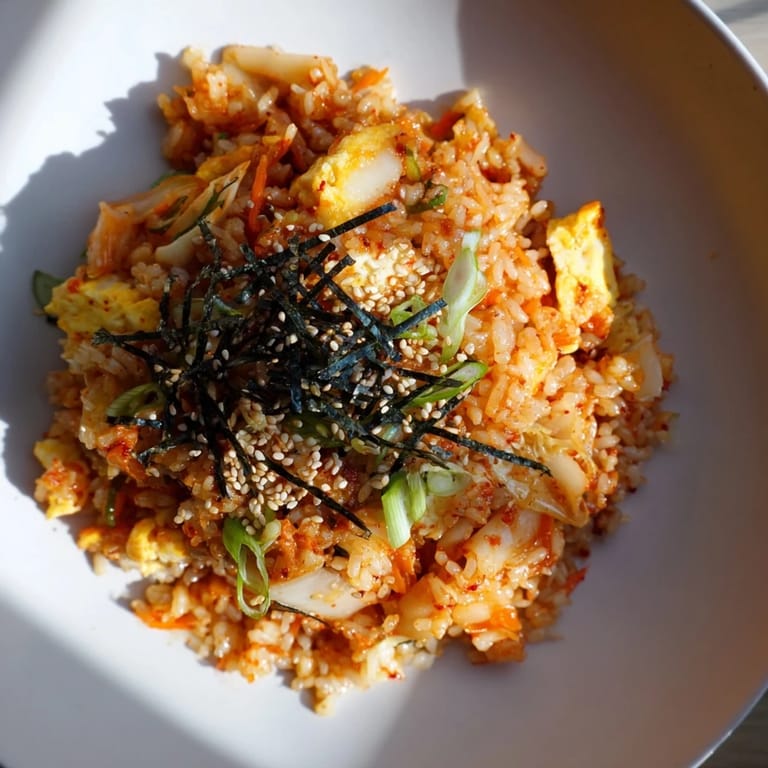
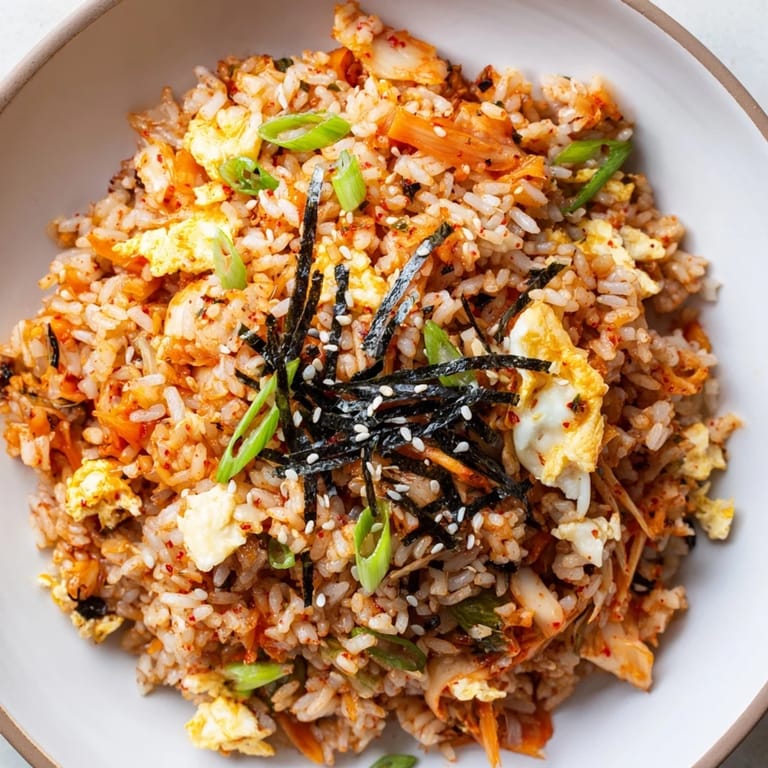
- Serve into bowls while still hot and top with sesame seeds, extra green onion, and seaweed strips. These garnishes add texture and a fresh breath that cuts through the richness perfectly.
 Save
Save What surprised me most about this dish is how it stopped being just food and became this small, reliable comfort I could make on any difficult evening. There's something about the bright red color, the heat, the funk of fermented kimchi—it feels bold enough to match a big appetite but simple enough that you're never stressed making it.
The Kimchi Question
Not all kimchi tastes the same, and that's part of the joy of making this dish. Some kimchi is crunchy and relatively gentle, others are aged and smell like serious business. I've learned to taste mine before committing to the full 2 tablespoons of gochujang—if my kimchi is already quite spicy and funky, I might use 1.5 tablespoons instead. The best versions I've made came from trying different kimchi brands until I found ones I loved, then building the rest of the dish around them.
Why Cold Rice Matters So Much
Warm or freshly cooked rice releases starch as it cools, which makes it sticky and prone to clumping when you stir-fry it. Cold rice, especially from yesterday or the day before, has dried out slightly and separates easily into individual grains. This is why restaurant fried rice tastes so good—they're always using rice that's been resting. If you're in a hurry, you can spread hot rice on a plate, let it cool for 10 minutes, then refrigerate it for 30 minutes to speed up the process.
Making It Your Own
This recipe is honestly just a starting point for whatever you have around. I've made it with leftover rotisserie chicken, with crumbled tofu for vegetarian nights, and once with cubed Spam because that's what was in the pantry. Some people add mushrooms or corn or frozen peas—all of it works as long as you're frying it quickly over medium-high heat and tasting as you go. The bones of the recipe stay the same; the details are yours to play with.
- Soft tofu works beautifully as a protein if eggs aren't your thing, but add it at the very end so it doesn't break apart.
- If you like it less spicy, reduce gochujang and let the kimchi carry more of the flavor, or use a milder kimchi to start.
- Butter or a touch of mayo stirred in at the very end adds creaminess that some people absolutely love.
 Save
Save This dish became my proof that simple food, made with good ingredients and a bit of intention, can feel like something special. It's the kind of recipe that gets better the more times you make it, because you stop following and start cooking.