 Save
Save The first time I watched okonomiyaki being made at a tiny stall in Osaka, I was mesmerized by the chef's rhythm—how confidently they poured the batter, layered the cabbage, and flipped it with one sure motion. Years later, I realized that confidence comes from understanding the dish, not from years of practice, and I've since made these savory pancakes countless times in my own kitchen. What started as street food fascination became a weeknight staple that somehow makes everything feel like celebration.
I made this for my partner on a rainy Sunday when neither of us wanted to leave the kitchen, and somehow we ended up eating four pancakes between us while standing at the counter, laughing with our mouths full. The bonito flakes were still moving from the warmth, and we kept pausing to watch them shimmy before diving back in. That's when I knew this recipe had staying power.
Ingredients
- All-purpose flour: The foundation that gets light and crispy when mixed with dashi—use fresh flour if you can, as older flour sometimes absorbs liquid differently.
- Dashi stock: This is your secret weapon for authentic flavor; if you don't have it, water works, but dashi makes the batter taste like you've been cooking Japanese food your whole life.
- Eggs: They bind everything and create that custard-like interior that makes people close their eyes when they bite in.
- Finely shredded cabbage: Shred it yourself if possible—pre-shredded loses moisture and can make the pancake dense instead of fluffy.
- Green onions and carrots: These aren't just garnish; they add sweetness and texture that balances the savory sauce.
- Okonomiyaki sauce: Find it in the Asian section or make your own; this tangy, slightly sweet sauce is non-negotiable for authenticity.
- Japanese mayonnaise: It's sweeter and richer than regular mayo—it matters more than you'd think.
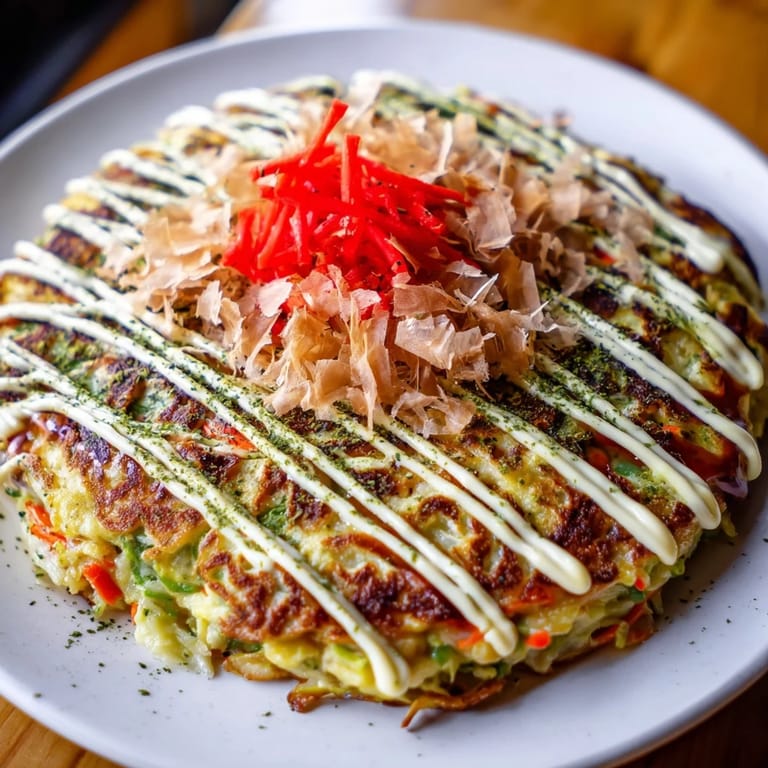
- Bonito flakes: These paper-thin shavings dance from the heat, and they're where the magic really happens—don't skip them.
- Aonori: A sprinkle of this seaweed powder adds a subtle ocean taste that ties everything together.
- Pickled ginger: It cuts through the richness and keeps your palate fresh between bites.
Tired of Takeout? 🥡
Get 10 meals you can make faster than delivery arrives. Seriously.
One email. No spam. Unsubscribe anytime.
Instructions
- Mix your batter with confidence:
- Whisk flour, dashi, eggs, salt, and baking powder until smooth—this should take about a minute. Don't overmix; a few small lumps are fine and actually help the pancake stay tender.
- Fold in the vegetables gently:
- Add cabbage, green onions, carrot, and bean sprouts, then shrimp if using, folding until everything is coated but not crushed. The vegetables should still have some texture.
- Get your pan singing:
- Heat your skillet or griddle over medium heat and add just enough oil to lightly coat—too much and your pancake becomes greasy, too little and it sticks.
- Pour and shape like you mean it:
- Use about a quarter of the batter and spread it into a round about half an inch thick. If using bacon or pork belly, lay the strips across the top now, pressing them gently into the batter.
- Watch for the golden cue:
- After 4 to 5 minutes, the bottom should be deeply golden and crispy; you'll hear it sizzle when you touch the spatula to it. This is your signal that it's ready to flip.
- Execute the flip with a steady hand:
- Slide your spatula underneath, take a breath, and flip in one confident motion—hesitation is what makes pancakes break. Cook the other side another 4 to 5 minutes until the center is cooked through.
- Dress it while it's still warm:
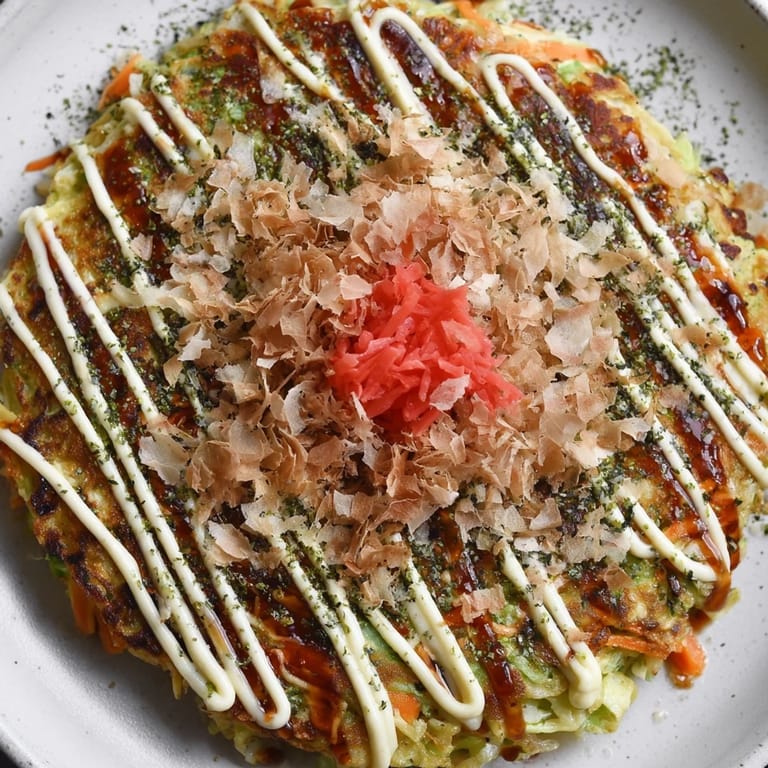
- Transfer to a plate and drizzle sauce and mayo in a crisscross pattern while the pancake is steaming; the warmth helps everything meld. Top immediately with bonito flakes so they dance from the heat, then add aonori and pickled ginger.
 Save
Save There was a moment when a friend bit into one of these and their eyes went wide—that split-second before they smiled. They asked if I'd learned this in Japan, and I laughed because honestly, I learned it in my kitchen through trial and error, the same way anyone makes something truly theirs. That's when okonomiyaki stopped being a recipe and became proof that you can make something feel authentically foreign in your own home.
The Magic of Umami Layering
What makes okonomiyaki so addictive is that it hits every taste sensation at once—the dashi in the batter provides a subtle umami base, the bonito flakes amplify it, and the sauce brings tangy sweetness to balance everything out. It's not accidental; it's the architecture of a dish that's been perfected by street food vendors who understood flavor in ways that took me years to appreciate.
Making It Your Own
Once you nail the basic technique, okonomiyaki becomes a canvas for whatever you're craving—I've added fresh corn, melted cheese, even sautéed mushrooms when I wanted something earthier. The beauty is that the batter structure is so forgiving that you can experiment without worrying about ruining it, which is why I find myself making different versions depending on my mood and what's in my fridge.
Serving and Pairing
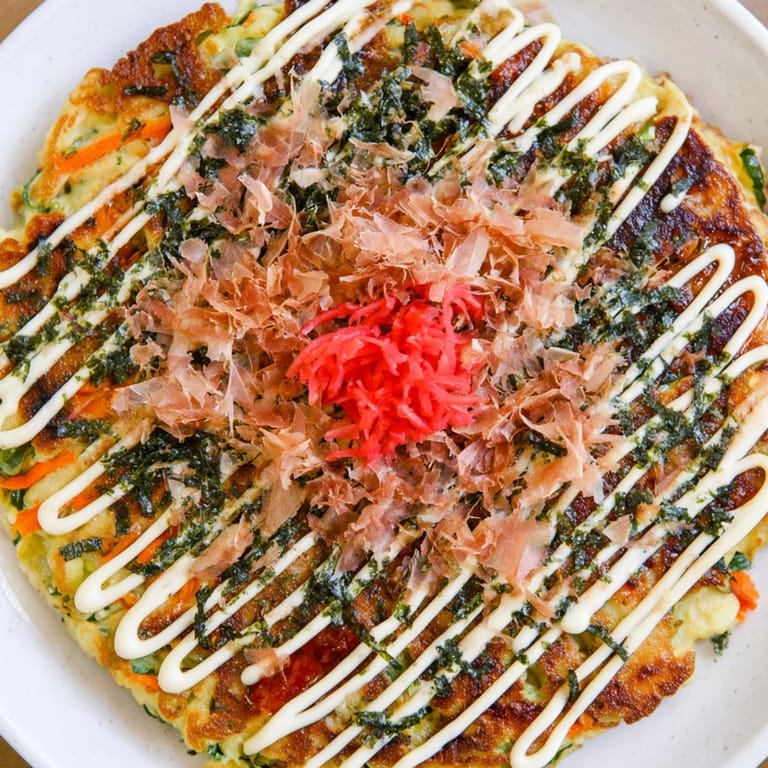
Okonomiyaki is best eaten immediately while the pancake is still warm and crispy, the bonito flakes are still dancing, and all the flavors are at their peak. It's a dish that begs to be shared—serve it at the counter with friends, let everyone customize their own toppings, and watch how quickly they disappear.
- A cold sake or light Japanese beer cuts through the richness beautifully and keeps you coming back for more.
- Leftover pancakes can be reheated gently in a skillet, though they're honestly perfect cold the next day as a lunch surprise.
- Make a double batch if you're serving more than two people—they go faster than you'd expect.
 Save
Save Every time I make okonomiyaki, I remember why food matters—it's never just about filling your stomach, it's about the small moments of joy, the connection with people, and the quiet pride of making something delicious from scratch. I hope you find that same feeling in your kitchen.
Kitchen Guide
- → What gives the pancakes their fluffy texture?
The combination of flour, dashi stock, eggs, and baking powder creates a light and airy batter that produces fluffy pancakes when cooked.
- → Can the dish be made vegetarian?
Yes, by omitting shrimp and bacon or pork, the dish remains flavorful with the mix of cabbage, vegetables, and toppings.
- → What are common toppings for these pancakes?
Toppings typically include okonomiyaki sauce, creamy Japanese mayonnaise, bonito flakes, aonori (dried seaweed), and pickled ginger.
- → How is the batter cooked to ensure proper texture?
The batter is poured onto a hot, lightly oiled nonstick skillet and cooked on medium heat until golden on both sides, ensuring a crispy exterior and soft interior.
- → Are there alternatives to okonomiyaki sauce?
A blend of Worcestershire sauce, ketchup, and soy sauce can be used as a substitute for okonomiyaki sauce if unavailable.