 Save
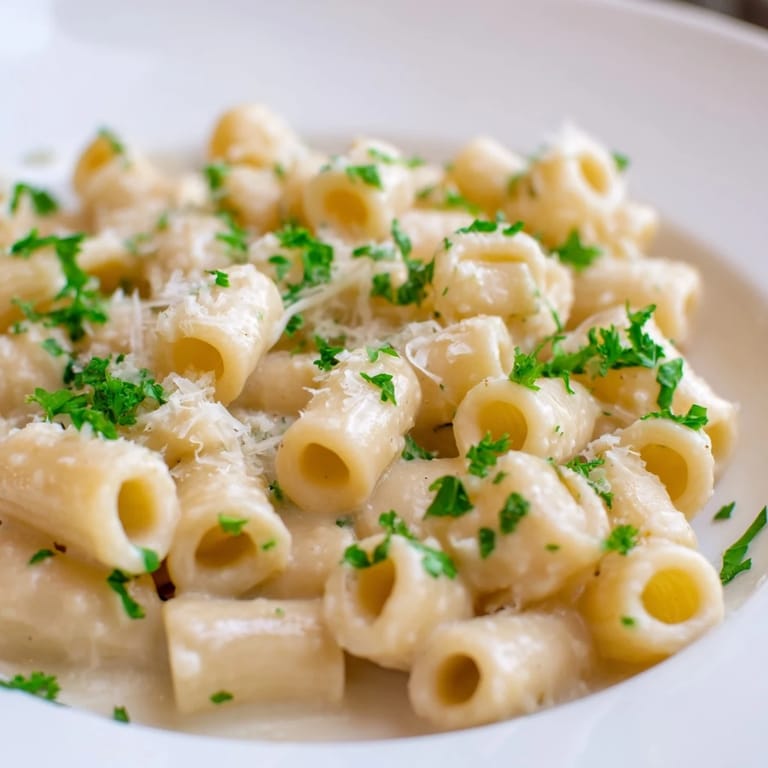
Save There's something about the smell of garlic hitting hot oil that stops me mid-task every time. I was rushing through a weeknight, hungry and tired, when I decided to throw together this creamy ditalini pasta—nothing fancy, just what I had on hand. Twenty minutes later, I was sitting down to something so comforting it felt like a small victory. The half-and-half keeps it light enough that you don't feel weighed down, but the garlic makes it taste rich and indulgent anyway.
I made this for a friend who showed up unexpectedly one evening, apologizing that she hadn't eaten all day. She took one bite and actually closed her eyes. That moment—when someone tastes something you've made and it's exactly what they needed—that's when you know a recipe has staying power.
Ingredients
- Ditalini pasta, 300 g: Small and sturdy enough to hold the sauce in every bite, though any short pasta works if that's what you have.
- Olive oil, 1 tablespoon: Use good oil here—you'll taste it since there aren't many ingredients competing for attention.
- Garlic, 4 cloves minced finely: The star of the show, so mince it by hand if you can and don't let it brown or it turns bitter.
- All-purpose flour, 2 tablespoons: This thickens the sauce without any fancy technique; just whisk it in smooth.
- Half-and-half, 480 ml: The secret to feeling indulgent without the heaviness of cream.
- Low-sodium vegetable broth, 60 ml: Adds flavor and gives you control over saltiness.
- Parmesan cheese, 40 g grated: Sharp and salty—a little goes a long way.
- Salt and freshly ground black pepper: Taste as you go; every stove and ingredient behaves differently.
- Red pepper flakes, pinch: Optional but worth it if you like a whisper of heat.
- Fresh parsley, 2 tablespoons chopped: Brightness at the end, a small gesture that makes the whole thing feel finished.
Tired of Takeout? 🥡
Get 10 meals you can make faster than delivery arrives. Seriously.
One email. No spam. Unsubscribe anytime.
Instructions
- Start the pasta:
- Bring salted water to a rolling boil—the kind where you're not second-guessing whether it's hot enough. Cook the ditalini until it's just tender but still has a little resistance when you bite it, following the package time as your guide.
- Make the roux:
- While pasta cooks, heat oil in a large skillet over medium heat until it shimmers slightly. Add minced garlic and listen for it to sizzle—that's when you know it's working—then stir for about a minute until fragrant but still pale.
- Build the sauce base:
- Sprinkle flour over the garlic and stir constantly for a minute to cook out the raw flour taste, then start whisking in the half-and-half and broth slowly so you don't get lumps. Keep whisking until everything comes together and the sauce begins to thicken, which takes about 3 to 4 minutes.
- Season and finish:
- Stir in Parmesan, salt, pepper, and those red pepper flakes if you're using them. Let it bubble gently for 2 minutes so the cheese melts completely and flavors marry.
- Bring it together:
- Add the drained pasta to the skillet and toss until every piece is coated. If the sauce seems thick, pour in some of that reserved pasta water you set aside and stir until it flows like you want it to.
- Plate and serve:
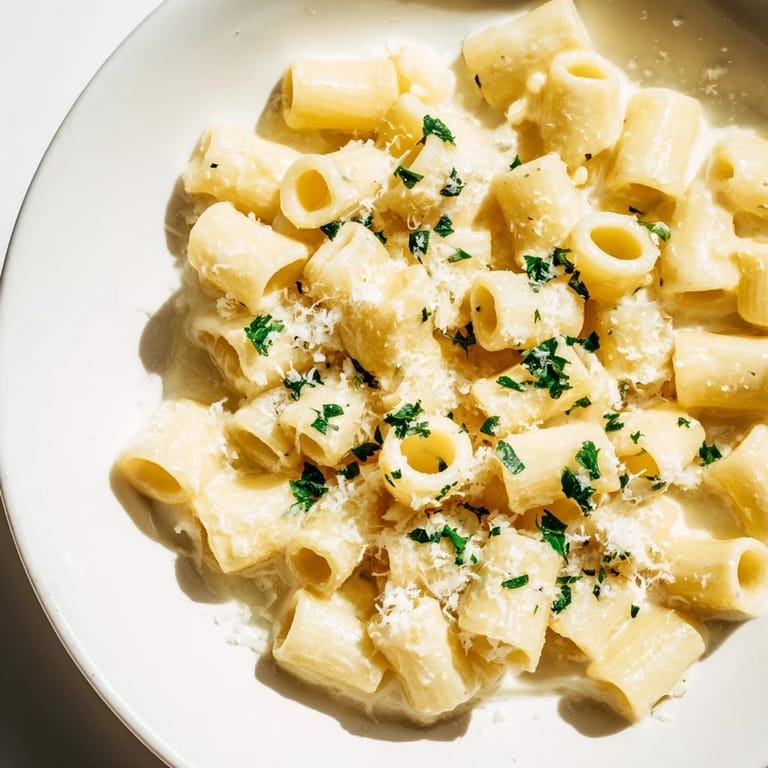
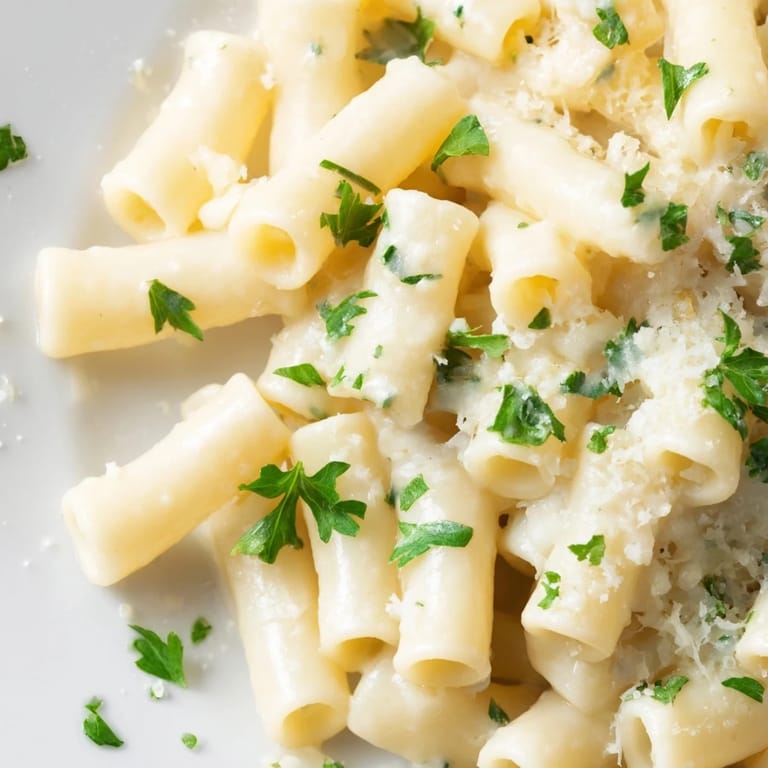
- Take it off the heat while it still looks glossy, sprinkle parsley and extra Parmesan on top, and serve right away before everything cools down.
 Save
Save This pasta taught me that sometimes the simplest meals feel like the biggest accomplishment. There's no complicated technique hiding here, just good ingredients and a little attention.
Making This Dish Your Own
The beauty of this recipe is how forgiving it is. I've made it on nights when I had wilted garlic that needed using and nights when I had pristine cloves from the farmers market, and both times it came out tasting like comfort. The half-and-half and broth ratio can shift slightly depending on how thick you like your sauce—I've leaned both ways and never regretted it. If you want to add protein, cooked chicken stirred in at the end feels natural, or sautéed mushrooms if you're keeping it vegetarian.
Pairing and Serving Suggestions
A crisp green salad with a sharp vinaigrette cuts through the richness perfectly, and a cold glass of Pinot Grigio makes the whole meal feel slightly special even on a regular Tuesday. I've also served this alongside roasted vegetables when I wanted something lighter on the plate, and there's something nice about that balance.
Notes from the Kitchen
This recipe came from wanting something creamy without the heaviness that haunts you afterward. I learned that half-and-half has a sweet gentleness that complements garlic in ways heavy cream sometimes overshadows. The flour roux might feel old-fashioned, but it's reliable—no weird separating or breaking, just smooth sauce every time.
- If you have whole wheat ditalini, it works beautifully and adds a nuttier note.
- Make extra if there are people around who might want seconds—this dish has a way of disappearing.
- Leftovers reheat well with a splash of milk, though honestly, this tastes best fresh and warm.
 Save
Save There's a reason I keep coming back to this one. It's the kind of dish that feels like a hug in a bowl, and it never asks for more than you can give.
Kitchen Guide
- → What pasta works best for this dish?
Small shapes like ditalini hold the creamy sauce well, allowing each bite to capture flavor evenly.
- → How does half-and-half affect the sauce?
Using half-and-half instead of heavy cream lightens the sauce while maintaining its smooth, creamy texture.
- → Can I add protein to enhance this meal?
Yes, adding cooked chicken or sautéed mushrooms provides extra protein and complements the garlic-parmesan flavors.
- → How do I adjust the consistency of the sauce?
Reserve some pasta water and add gradually to thin the sauce as needed for a perfect coating.
- → What garnishes suit this pasta?
Fresh parsley adds brightness, and extra grated Parmesan delivers an additional savory punch.