 Save
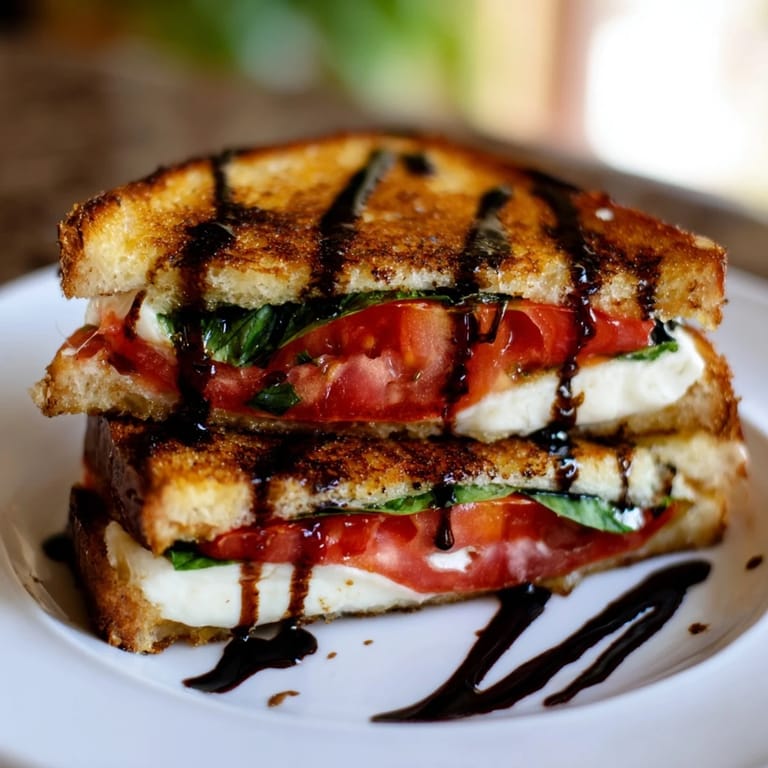
Save There's something about the way fresh mozzarella starts to bleed into warm bread that makes you realize grilled cheese doesn't need permission to be fancy. One afternoon, I had just bought the prettiest tomatoes from the farmer's market and some creamy burrata, and instead of saving them for a salad, I found myself thinking about how they'd taste pressed between toasted bread with melted cheese. That first bite—tangy balsamic hitting sweet tomato, basil releasing its green sharpness—felt like summer decided to live in a sandwich.
I made these for my sister when she came home exhausted from work, and watching her close her eyes after that first bite made the whole thing worth it. She said it tasted like an Italian café but tasted like home—and somehow it managed to be both at once, which is exactly what comfort food should do.
Ingredients
- Sourdough or Italian bread: Use something with real structure that won't get soggy—the crumb matters here because you need it to hold all those juices without turning into mush.
- Fresh mozzarella, sliced: This is where the magic happens; the fresher the better, and slicing it yourself instead of buying pre-packaged keeps the texture silky when it melts.
- Unsalted butter, softened: Soft butter spreads without tearing the bread, creating an even golden crust that the heat can reach every corner.
- Ripe tomato, thinly sliced: This is your main flavor player, so pick one that smells like tomato and yields slightly to pressure—pale winter tomatoes will betray you.
- Fresh basil leaves: Tear or leave them whole, but add them right before closing the sandwich so they don't get crushed into submission or turn black from the heat.
- Balsamic glaze: A good glaze has sweetness and acidity that punches through the richness; if you only have thick balsamic vinegar, reduce it slightly in a pan until it's glossy.
- Salt and freshly ground black pepper: Don't skip the seasoning step inside the sandwich—it's where the real flavor building happens, not just an afterthought on top.
Tired of Takeout? 🥡
Get 10 meals you can make faster than delivery arrives. Seriously.
One email. No spam. Unsubscribe anytime.
Instructions
- Butter your bread like you mean it:
- Spread that softened butter on one side of all four slices, using enough that you can see it coating the surface evenly. This is your insurance policy for a golden crust.
- Build your sandwich with intention:
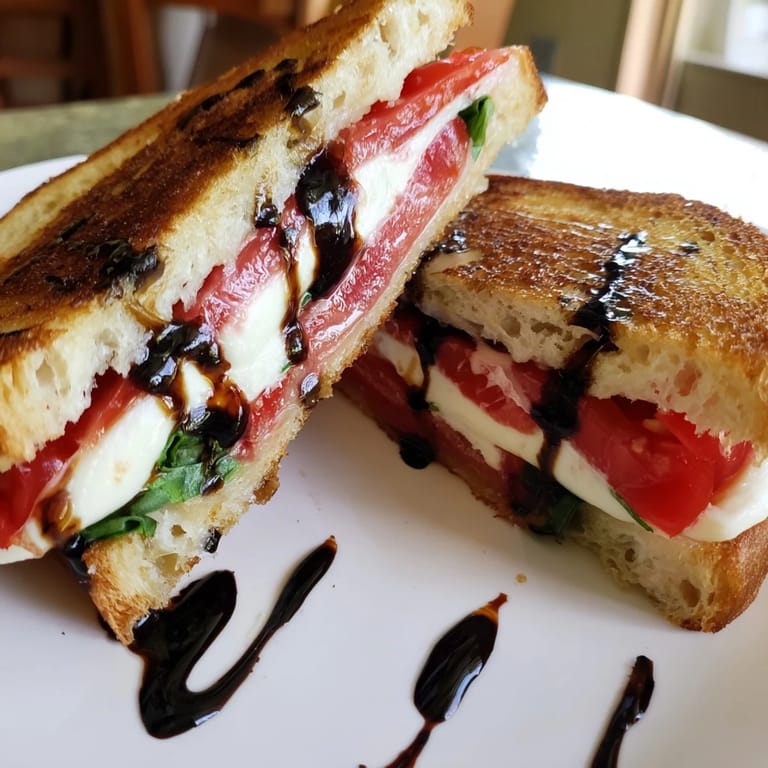
- Place two slices butter-side down on the counter, then layer mozzarella first (it protects the bread from getting too wet), then tomato, then basil, then your seasoning. Drizzle the balsamic right over the tomato while you can still see it, because you want it distributed, not all pooled in one corner.
- Create the seal:
- Top each sandwich with the remaining bread slices, butter-side up, and press gently to bring everything into contact without squashing the tomato completely.
- Get your pan ready:
- Heat your skillet or grill pan over medium heat for a minute or two—you want it hot enough that the butter sizzles immediately when the sandwich touches down, but not so hot that the outside burns before the cheese melts inside.
- Cook with attention:
- Place the sandwiches in the pan and let them sit for three to four minutes, resisting the urge to move them around too much. You'll hear the butter browning and smell that nutty aroma, and that's when you know something good is happening. Flip gently with a spatula, press down just slightly, and cook the other side the same way until the cheese releases and the bread is the color of an old penny.
- The resting moment:
- Let the sandwich sit for one minute after you pull it from the heat—this lets the melted cheese set slightly so it won't slide out when you cut it. Slice diagonally, drizzle with extra balsamic if you're feeling generous, and serve while it's still warm enough to be impressive.
 Save
Save The first time I got this right, I realized it wasn't about trying to make something fancy at all—it was about respecting each ingredient enough to let it stay itself while everything came together. That's when a grilled cheese stops being just lunch and becomes something you remember.
The Art of Temperature Control
Medium heat is your friend here, not medium-high where impatience lives. I used to crank the heat and end up with burnt exteriors and cold centers, until I learned that giving the sandwich time to cook through means the cheese actually melts instead of just warming up. The slower cook also brings out the nutty flavor in the butter, turning something simple into something that tastes intentional. Think of it less like searing and more like embracing—you want the bread to get golden, not aggressive.
Building Better Layers
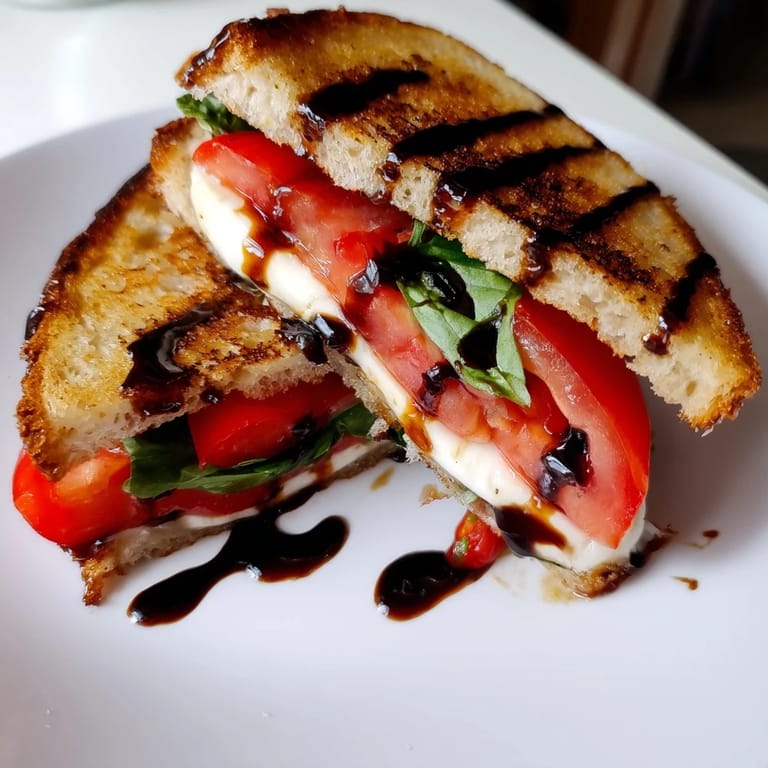
There's a reason restaurants layer things in a specific order, and it's not just for looks. Putting the cheese against the bread creates a barrier that keeps tomato juice from soaking straight through, buying you time to get a proper crust. Basil goes on top of the tomato so it doesn't get hidden, and the balsamic finds its way into the crevices where it belongs. Every choice creates a little bit of protection and intention, which is the difference between a sandwich that falls apart and one that holds itself together like it knows exactly what it's doing.
Variations and Swaps That Work
Once you understand how this sandwich works, you can rearrange the pieces without breaking it. A thin spread of pesto before the cheese adds herbal richness, while arugula brings a peppery bite if you're feeling adventurous. Some days I use whole-grain bread because I like the nuttiness, other times ciabatta when I want something lighter and airier. The formula stays the same—good bread, good cheese, good tomato, good heat—and the rest is just permission to play.
- Try a thin smear of pesto or sun-dried tomato paste for depth without adding moisture.
- Swap basil for oregano or a tiny pinch of red pepper flakes if your mood calls for something different.
- Use whatever tomato you can find; farmers market heirlooms are ideal but a good Roma tomato on the right day works just fine.
 Save
Save This sandwich is proof that you don't need complicated techniques to make something feel special; you just need to show up and pay attention. Serve it warm, slice it proud, and let the balsamic do what it does best—make everything taste like an accident that turned into exactly what you meant to make.
Kitchen Guide
- → What type of bread works best?
Sourdough or Italian bread offers a sturdy, flavorful base that crisps nicely without overpowering the filling.
- → Can I use a substitute for fresh mozzarella?
Replacing fresh mozzarella with a melting cheese like provolone works, but fresh mozzarella gives the best creamy texture.
- → How should the balsamic glaze be applied?
Drizzle the balsamic glaze over the tomato and basil layers before grilling, and optionally add more before serving for a tangy accent.
- → Is there a way to add more herb flavor?
Adding a layer of pesto under the cheese enhances herbal notes and complements the basil leaves.
- → Can this be made vegan?
Yes, substituting plant-based mozzarella and butter creates a vegan version while maintaining rich flavors.