 Save
Save I'll never forget the holiday party where I first saw a cheese board arranged like a calendar—twelve distinct sections, each one a tiny flavor journey. My friend Sarah had spent all afternoon selecting cheeses from around the world, and watching guests move through each pairing like they were opening gifts made me realize that food could be pure theater. That moment inspired me to create my own version, and now this festive cheese board has become my favorite way to celebrate with others.
I served this at our family's holiday gathering last year, and my uncle—who claims he only likes mild cheese—went back to the Roquefort and pear section three times. Watching him discover that blue cheese paired with something sweet could actually be delicious was worth the entire afternoon of prep.
Ingredients
- Brie: Creamy and approachable, it's the gateway cheese that makes everyone feel welcome. Buy it a day ahead so it softens to that perfect, almost melting texture.
- Aged Cheddar: Sharp and complex, it cuts through rich pairings beautifully. Look for one with a crumbly texture—that's how you know it's truly aged.
- Manchego: Nutty and slightly sweet, this Spanish cheese teaches your palate something new. It's firm enough to cut into perfect bite-sized cubes.
- Roquefort or Blue Cheese: Bold and assertive, pair it with something sweet to let people ease into the intensity. Don't be shy with this one.
- Goat Cheese: Tangy and fresh, it's a palate cleanser that makes people want to try the next section. Crumble it gently so it stays light and airy.
- Gruyère: Caramelized and complex, it's the cheese that makes mustard sing. Toast it beside a mustard pot and watch people understand flavor combinations.
- Camembert: Earthy and elegant, it's like tasting autumn in one bite. Make sure it's ripe enough to almost collapse when you cut it.
- Gouda: Buttery and approachable, paired with chocolate it becomes something people didn't know they needed. It's the bridge between savory and sweet.
- Comté: Golden and graceful, it has this subtle sweetness that makes grapes feel like the most natural pairing on earth.
- Pecorino: Salty and sheepy, it needs honey to shine properly. That pairing is where salty and sweet finally understand each other.
- Havarti: Creamy and somewhat hidden, it's the cheese that converts people who say they don't like cheese. Pair it with fig jam for proof.
- Smoked Cheese: Distinctive and memorable, it's the conversation starter. The dark chocolate beside it makes people pause and reconsider what chocolate can do.
- Artisanal bread or assorted crackers: Your vehicle for tasting, so choose ones with enough character to not disappear on the palate.
- Honey: The bridge ingredient that makes everything sweeter, more rounded. Use the good stuff—this is where quality matters.
- Fig jam: Jammy sweetness that transforms neutral cheeses into something memorable. It's like adding poetry to a sentence.
- Whole grain mustard: The secret weapon that makes you taste cheese differently. Grains add texture that makes your mouth pay attention.
- Seedless grapes: Fresh and bright, they cleanse between strong flavors and remind everyone that cheese is still food, still part of nature.
- Dried apricots: Concentrated sweetness that intensifies fruit flavor. They're chewy enough to make the tasting experience linger.
- Walnut halves: Earthy and serious, they ground the board and add an unexpected depth. Toast them lightly before serving if you want a revelation.
- Toasted almonds: Delicate and nutty, they're the gentle voice in the nut section. Toasting brings out flavors you didn't know were hiding.
- Apple slices: Crisp and familiar, they're the comfort food that makes everything feel approachable. Toss them in lemon juice so they don't brown.
- Fresh pear slices: Soft and honeyed, they pair with assertive cheeses like nothing else can. They're the butter to cheese's bread.
- Dark chocolate: Rich and unexpected with savory cheese, it breaks people's brains in the best way. Choose something with at least 70% cocoa.
- Cornichons: Briny and sharp, they're the palette reset that makes you ready for the next flavor. Their acidity is everything.
- Fresh herbs: Thyme and rosemary add a whisper of garden to the board, making everything feel intentional and alive.
Tired of Takeout? 🥡
Get 10 meals you can make faster than delivery arrives. Seriously.
One email. No spam. Unsubscribe anytime.
Instructions
- Divide your canvas:
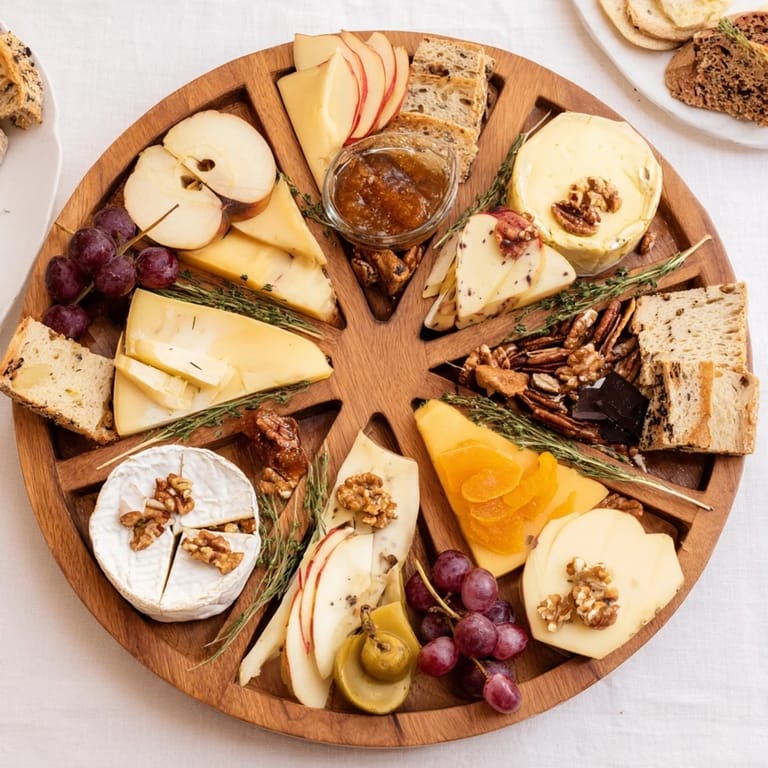
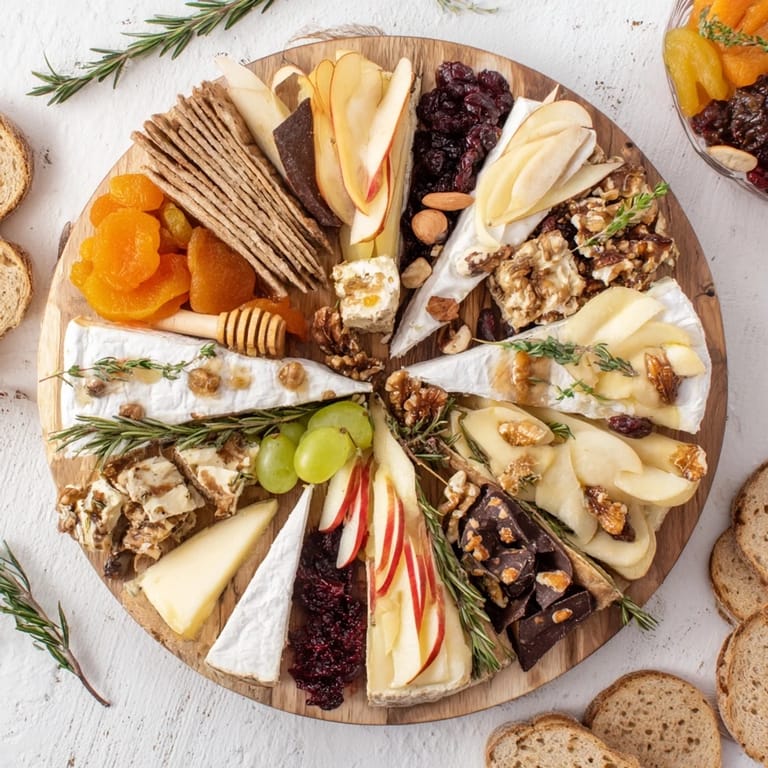
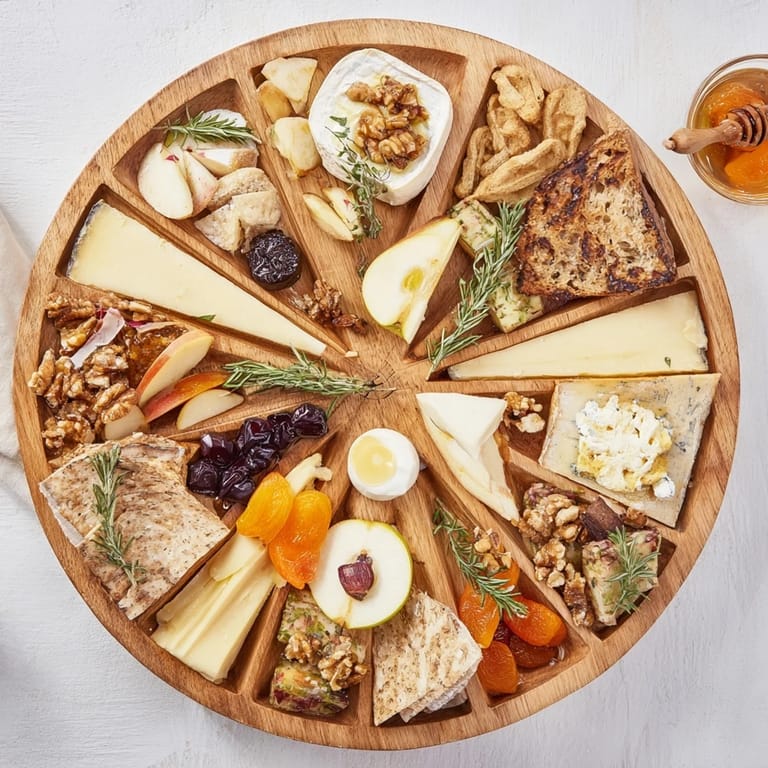
- Set out your large board and imagine it divided into twelve sections, like hours on a clock or pages in an advent calendar. Use your ramekins or just imagine lines—this is your stage, so make it feel intentional. A round board feels festive, a rectangular one feels elegant, so choose based on your mood.
- Select and arrange your cheeses:
- Cut each cheese into bite-sized pieces—nothing larger than something you could eat in one composed bite. Let them breathe on the board for a moment, admiring how different each one looks. Brie should be soft enough to almost collapse, the blue cheese should look proud and assertive, the Manchego should shine golden in the light.
- Create the twelve pairings:
- This is where you become an artist. In one section, place creamy Brie with a drizzle of honey and a thin apple slice—let them almost touch so the guest understands the intention. In another, crumble sharp Cheddar, add a small spoonful of fig jam, and rest a walnut half nearby. Each pairing should tell a small story about how these flavors found each other. Think about flavor contrasts: creamy with sweet, sharp with briny, earthy with fresh.
- Position your crackers strategically:
- Arrange bread and crackers around the board like spokes on a wheel, so no section feels abandoned. Make sure there's enough—more than you think is necessary, because people eat crackers like they're running out of time. A variety of textures matters here: crispy beside seeded, buttery beside plain.
- Add the final magic:
- Scatter fresh herb leaves across the board in a way that looks effortless but probably took you three tries to get right. A sprig of thyme near the goat cheese, a bit of rosemary near the gruyère—these aren't just garnish, they're flavor memories waiting to happen.
- Let it rest and breathe:
- If you're not serving immediately, cover it loosely with a kitchen towel. When you unveil it, do so like a reveal—your guests deserve that moment of appreciation before the eating begins.
 Save
Save My daughter once asked if every day could be a cheese board day. I realized then that this wasn't really about the cheese at all—it was about creating permission for people to slow down, taste deliberately, and discover something they didn't know they loved.
The Art of Cheese and Flavor Pairing
Each cheese has a voice, and the right pairing is like finding a duet partner. Creamy cheeses want sweetness—they're soft enough to embrace honey without getting lost. Sharp, aged cheeses demand acidity or sweetness to balance their intensity. Nutty cheeses call out for fruits and nuts of their own kind, creating a conversation that feels inevitable. When you understand these relationships, arranging a cheese board stops being a task and becomes a language you're speaking fluently.
Making It Festive and Personal
This board tells a story about the world, and you can lean into that or make it deeply personal. I've made versions using only cheeses from the country my family came from, versions themed by color, versions where each pairing represents a memory or inside joke. The twelve sections are a framework, but they're your framework. The magic isn't in following the recipe exactly—it's in understanding why each component matters and then making it yours.
Timing, Storage, and Serving Secrets
Assemble this board no more than three hours before serving—fresh fruit oxidizes, and cheese dries out if it's exposed too long. If you must prep ahead, cut everything and keep it separate, then arrange just before guests arrive. Serve with sparkling wine or a light red, and watch how conversation naturally flows from one section to the next. Wine doesn't just taste good with cheese; it gives everyone permission to linger, to taste again, to ask questions about where a cheese comes from or what makes it special.
- Keep a small spoon beside each spread so people don't use the same knife in the honey and the mustard—flavors matter here, and cross-contamination destroys the point.
- If someone tells you their favorite pairing, remember it—that's how you learn the language of taste, through their preferences, not just from tradition.
- A cheese board is an invitation to slow down, so make sure there's nowhere to stand while eating. People should sit, savor, and discuss what they're tasting.
 Save
Save A cheese board isn't just food—it's an invitation to experience the world through taste, one small section at a time. Make this for people you care about, and watch how a simple arrangement of cheese becomes the moment they remember.
Kitchen Guide
- → How should the cheese board be prepared?
Divide a large serving board into twelve sections using small bowls or garnish lines, placing one type of cheese with its accompaniment in each section.
- → What accompaniments pair well with the cheeses?
Pairings include honey, fig jam, nuts, dried fruits, fresh herbs, and artisanal crackers to enhance each cheese’s characteristics.
- → Can this board accommodate dietary restrictions?
Yes, using plant-based cheeses allows for vegan options, and gluten-free crackers can be substituted if needed.
- → What is the best way to serve the board?
Serve at room temperature to bring out the full flavor and texture of each cheese and accompaniment.
- → How can the cheese selection be varied?
Select cheeses from different countries for an international flair or choose aged and smoked varieties for diverse flavors.