 Save
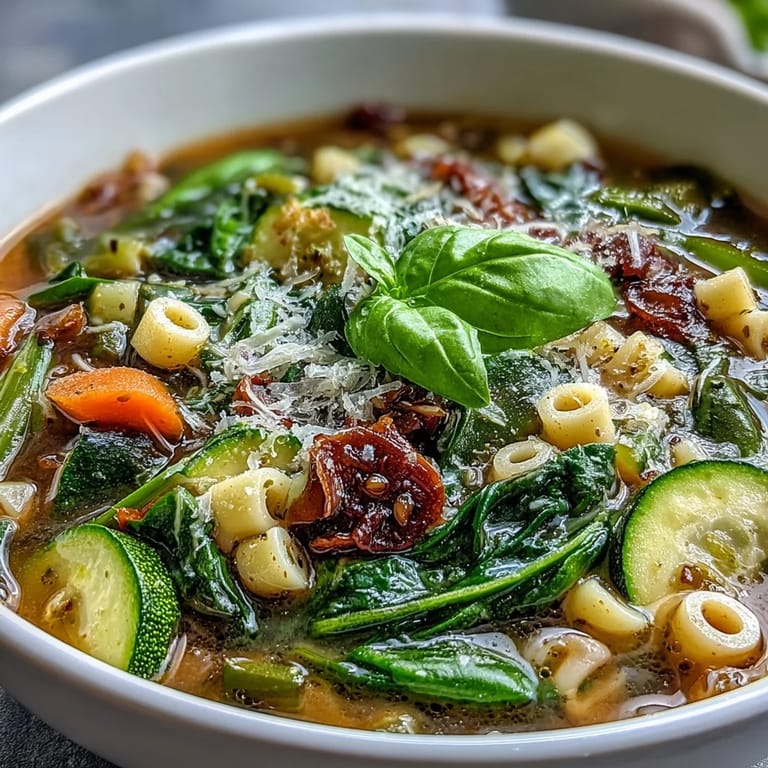
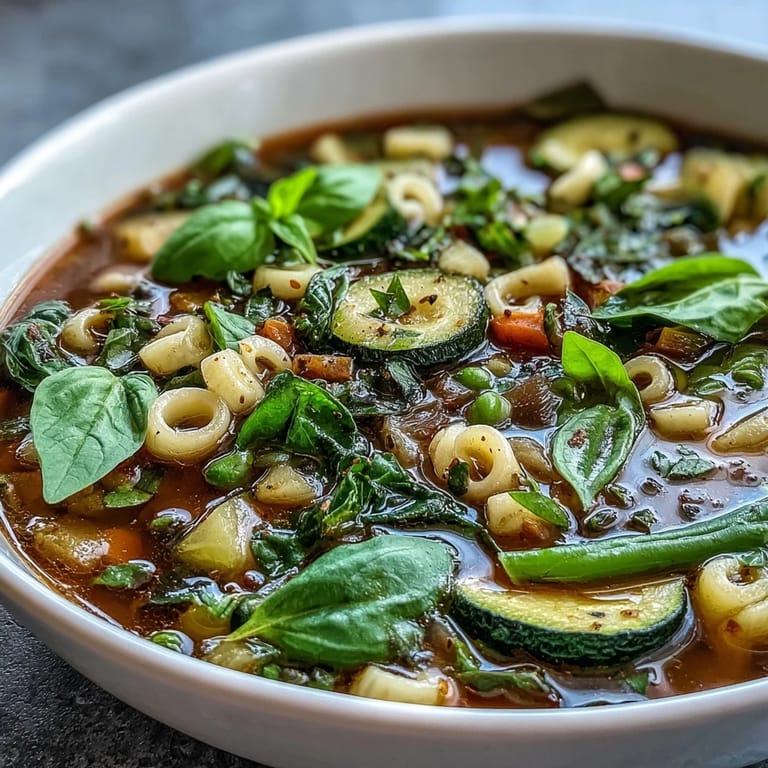
Save Steam curled up from the soup pot and coated our kitchen windows with a misty layer that hinted at the shifting season outside. Each year, the first really good bunch of green beans at the market tempts me into making this Spring Minestrone, its colors as fresh as a flower stand. The gentle clatter of chopping vegetables becomes its own kind of kitchen music, promising something nourishing and bright. I never quite know which little moment will become my favorite—maybe it’s the scent of garlic mingling with young carrots, or the way spinach wilts into emerald ribbons right before we eat. This soup nudges us all to linger around the table just a bit longer.
I once made this soup on a rainy spring night when my cousin showed up at the door unexpectedly, drenched and shivering. She claimed it was the smell of onions and fresh basil that pulled her inside, but I think it was the promise of a steaming bowl with a side of promise and laughter. We sat at the kitchen table, sheltering from the storm, sipping and telling stories as the green beans and pasta tumbled together on our spoons. The soup, somehow, became a small celebration of the season itself.
Ingredients
- Olive oil: Use extra-virgin for depth and a peppery finish—let it shimmer but never smoke.
- Onion: Chopping it finely lets its flavor melt gently into the broth without overpowering the greens.
- Garlic: Mincing it small means quick, even flavor; keep an eye out so it doesn’t brown and turn bitter.
- Carrots: Dice them small so they sweeten up quickly and match the size of your other veggies.
- Celery: Look for bright green stalks; I prefer to peel them if they’re tough so they cook evenly.
- Zucchini: Adds a gentle sweetness—don’t overcook or it’ll lose its cheerful color.
- Peas: Fresh or frozen work; add them last for bursts of sweetness.
- Baby spinach: Toss in just before serving for gentle wilting and vivid color.
- Green beans: Snapped into tidy pieces, they bring crunch and a faint grassy note that sings spring.
- Vegetable broth: Low-sodium lets you control seasoning—homemade or store-bought both shine here.
- Bay leaf: Quietly infuses the soup with herbal depth; don’t forget to fish it out before serving.
- Small pasta shapes: Ditalini and orzo are favorites—the smaller, the more evenly they cook with the veggies.
- Fresh parsley: Stir in right at the end for a hit of green and brightness; don’t be shy with it.
- Salt: Taste at the finish and adjust, especially if using vegetable broth with different sodium levels.
- Black pepper: Freshly cracked takes it from good to great.
- Grated Parmesan: Just a little transforms each bowl with umami richness—skip or sub for vegan as needed.
- Fresh basil: Chiffonade and scatter on top for an aromatic, slightly sweet finish.
- Extra olive oil for drizzling: Just a swirl at the end for a silky mouthfeel.
Tired of Takeout? 🥡
Get 10 meals you can make faster than delivery arrives. Seriously.
One email. No spam. Unsubscribe anytime.
Instructions
- Start with the aromatics:
- Drizzle olive oil into your biggest pot and let onions sweat gently over medium heat until translucent, filling the kitchen with a savory promise.
- Build a vegetable base:
- Add garlic, carrots, and celery; sauté just until they surrender their rawness but still hold a little bite, stirring and inhaling that comforting warmth.
- Bring on the green:
- Stir in zucchini, green beans, and peas—listen for the sizzle and admire the array of colors dancing together.
- Create the broth:
- Pour in vegetable broth, slip in the bay leaf, and let it come to a soft boil before nudging it down to a gentle simmer.
- Pasta time:
- Tip in your chosen pasta shapes and watch as they begin to plump, cooking until just barely al dente in the bubbling soup, 8-10 minutes usually does the trick.
- Add the greens:
- In the last couple of minutes, scatter in spinach and chopped parsley, stirring until the leaves wilt and the broth turns a deeper green.
- Season and finish:
- Season with salt and black pepper, taste, and don’t forget to pluck out the bay leaf before ladling piping hot soup into bowls.
- Garnish generously:
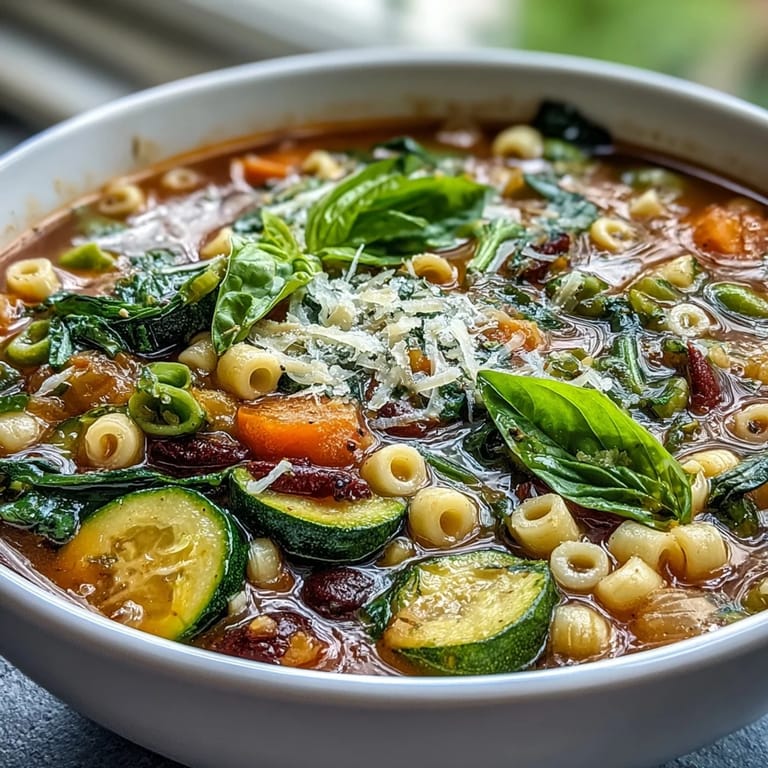
- Top each bowl with grated Parmesan, torn basil, and a light drizzle of olive oil for an inviting, glossy finish.
 Save
Save The first time my neighbors tried this minestrone, they insisted the leftovers were even better the next day—each flavor got brighter, and the texture smoothed out in the fridge. Since then, a quart tucked away for lunch-after becomes part of the ritual, almost as satisfying as the meal itself.
How to Get the Most from Spring Vegetables
Using vegetables at their crispest gives the soup a subtle crunch and lively color—there’s something about freshly snapped green beans and peas that makes the broth sing. I try to chop everything so each bite gives you a balanced forkful, and save any delicate greens for last so they wilt without getting soggy.
Customize for What You Have
Sometimes I toss in stray pieces of asparagus or a scoop of leftover cooked beans for heartiness—this is a true “empty the crisper” recipe. Small pasta is best because it won’t overwhelm the tender vegetables, and if you want to go gluten-free, swap in your favorite alternative without missing a beat.
Serving and Storage Smarts
If you know you’ll have leftovers, cook the pasta separately and add it to each bowl before ladling in hot soup to keep it from going mushy overnight. Any extra minestrone keeps beautifully in the fridge for a couple of days or can even be frozen for a quick, cozy meal later on.
- Let soup cool before storing in airtight containers.
- Reheat gently to preserve the vegetables color and bite.
- Add a fresh splash of broth if it thickens up too much after chilling.
 Save
Save May your Spring Minestrone be as joyful to share as it is to make—sometimes a single pot of soup can make even a gray day feel like a celebration.
Kitchen Guide
- → How long does it take to make this?
About 45 minutes total: roughly 15 minutes for prep and 30 minutes simmering. Pasta usually needs 8–10 minutes within the simmering broth.
- → What pasta shapes work best?
Small shapes like ditalini, orzo, or tiny shells work best so they mingle with the vegetables. Use gluten-free small pasta if avoiding wheat.
- → How do I keep the vegetables bright and tender?
Sauté aromatics first and add sturdier vegetables early; add peas and spinach in the last few minutes to preserve color and texture.
- → Can I make dairy-free or gluten-free variations?
Yes. Omit Parmesan or use a plant-based alternative for dairy-free; swap to gluten-free pasta to avoid gluten and check broth labels for allergens.
- → Is freezing recommended?
Freeze the soup without pasta for best texture. Reheat the broth and vegetables, then add freshly cooked pasta when serving. Keeps about 2–3 months.
- → How should I season and finish the bowl?
Taste and adjust salt gradually during cooking. Finish with freshly ground black pepper, chopped parsley or basil, and a drizzle of good olive oil; add grated cheese if desired.