 Save
Save There's a particular Tuesday night energy to this dish that I stumbled upon completely by accident. I had leftover rice, some ground turkey that needed using, and a jar of gochujang staring at me from the pantry shelf. What started as improvisation became the kind of meal that makes people ask for the recipe, then actually make it. The combination of sweet, spicy, and creamy came together so naturally that I wondered why I'd never thought to pair these flavors before.
I made this for my neighbor who'd just moved in, and watching her face when she tasted the creamy spiced rice with that perfectly jammy egg made the whole cooking process feel worthwhile. She kept asking if there was cream in it, surprised by how lush it tasted, and that's when I realized this dish had that deceptive quality where simple ingredients create something unexpectedly rich and satisfying.
Ingredients
- Ground turkey: This lean protein keeps the dish from feeling heavy, and it shreds beautifully into the sauce rather than staying chunky, which means better flavor distribution with every spoonful.
- Gochujang: The star player that brings umami depth alongside its signature spicy kick, and honestly, this is where the whole dish gets its personality.
- Sesame oil: Use the toasted kind and don't skip it, because it's what makes your kitchen smell like something intentional is happening, not just dinner on a weeknight.
- Yellow onion, garlic, and ginger: These three together create an aromatic base that wakes up your palate before you even taste the sauce.
- Heavy cream or coconut cream: This is the ingredient that transforms the dish from spicy to spicy-and-luxurious, creating that creamy sauce that clings to every grain of rice.
- Chicken or vegetable broth: Keeps the sauce from becoming too thick, letting it distribute evenly and coat everything with spiced creaminess.
- Day-old rice: Cold, separated grains work best because fresh rice absorbs too much liquid and turns mushy instead of staying fluffy within the creamy sauce.
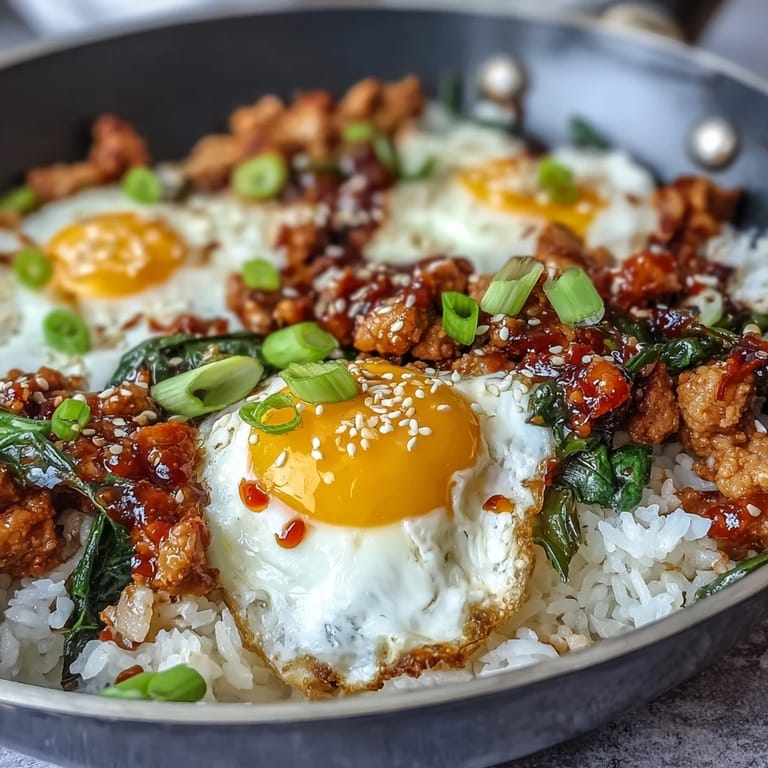
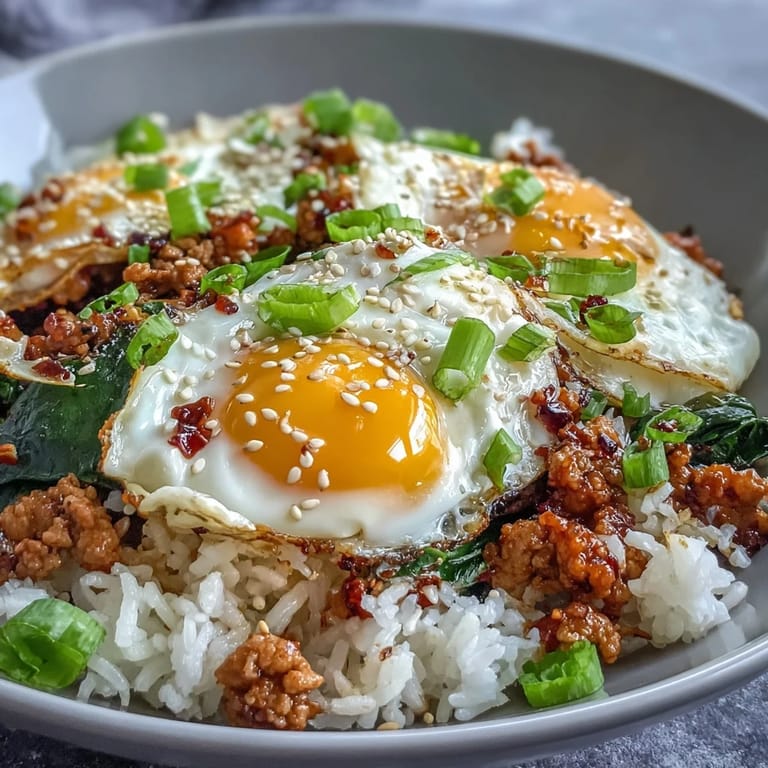
- Jammy eggs: The seven-minute timing is crucial here, creating that perfect runny yolk that becomes an extra sauce when it breaks over the rice.
- Green onions and sesame seeds: These finishing touches add brightness and crunch that contrast beautifully with the creamy, warm bowl below.
Tired of Takeout? 🥡
Get 10 meals you can make faster than delivery arrives. Seriously.
One email. No spam. Unsubscribe anytime.
Instructions
- Warm your pan and build your flavor base:
- Heat a large skillet over medium heat and add sesame oil, then let the onion, garlic, and ginger sauté for 2 to 3 minutes until the kitchen fills with that wonderful ginger-forward aroma. You'll know it's ready when the onion pieces start to turn translucent at the edges and the raw sharpness mellows out.
- Brown the turkey and let it release its moisture:
- Add ground turkey and break it up with a spatula as it cooks, taking about 5 to 6 minutes until there's no pink remaining. Don't rush this step or stir constantly; let it sit for little pockets of time so the meat can actually brown instead of just turning pale and sad.
- Add the carrots and give them a head start:
- Stir in diced carrots and cook for another 2 minutes just to soften them slightly before the sauce arrives. This prevents them from being too crunchy in the final dish while keeping them from becoming mushy.
- Mix your sauce components and pour them in:
- Whisk together gochujang, soy sauce, honey, rice vinegar, and broth in a small bowl, then pour this into the skillet and stir until the meat and vegetables are coated in that gorgeous reddish-brown sauce. The sauce should smell simultaneously spicy, sweet, and deeply umami-forward.
- Wilt the spinach and keep the heat gentle:
- Reduce heat to low, add spinach, and stir for about 1 minute until it collapses into the sauce. Low heat here is your friend because you're not trying to cook anything further, just incorporate it gently.
- Stir in cream and rice, then let it mingle:
- Add heavy cream or coconut cream and cooked rice, stirring until everything is evenly combined and the rice is coated in creamy sauce. Simmer for 2 to 3 minutes to let the flavors marry and the rice warm through completely.
- Cook your eggs while the skillet finishes:
- Bring a separate saucepan of water to a boil and gently add eggs, simmering for exactly 7 minutes for those golden, runny yolks. Transfer them immediately to ice water to stop the cooking, then peel and halve them when you're ready to serve.
- Assemble and serve with intention:
- Spoon the creamy turkey and rice mixture into bowls, top each with two egg halves, scatter green onions and sesame seeds across the top, and serve with kimchi on the side if you like that extra fermented contrast.
 Save
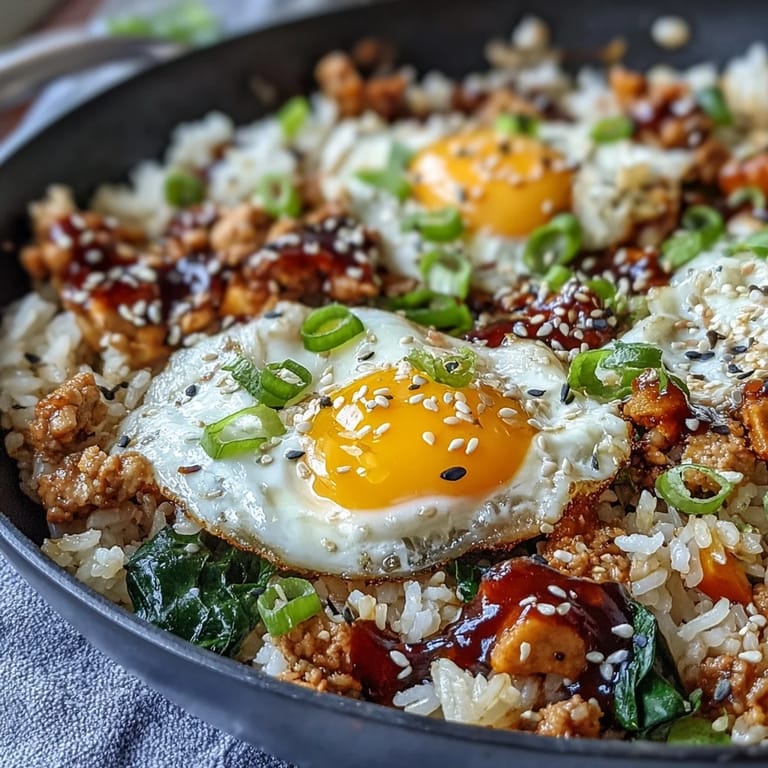
Save There was this moment when my partner tasted this for the first time and their entire expression changed when they broke the egg yolk into the rice. That's the moment I knew this dish had transcended being a weeknight dinner and become something worth making again and again, something that makes people feel cared for.
Why Day-Old Rice Changes Everything
The texture difference between using leftover rice and freshly cooked rice in this dish is genuinely dramatic, and it's not just texture snobbery. Day-old rice has firmer, separated grains that stay distinct even when coated in the creamy sauce, while fresh rice is still warm and absorbent, pulling in liquid until the whole bowl becomes gluey. I learned this the hard way by trying to make this on a Sunday with rice I'd just cooked, and the result was more creamy mush than skillet. Now I actually plan ahead and cook extra rice the night before specifically for this dish.
The Science of the Jammy Egg
A jammy egg is not an accident of timing but a precise target, and those seven minutes are doing actual work. The whites cook through completely and become tender, while the yolk stays liquid enough to create a secondary sauce when it breaks across the rice, but firm enough that it doesn't immediately dissipate into nothing. I've experimented with six-minute eggs that were too runny and eight-minute eggs that were mostly solid, and seven minutes is genuinely the sweet spot where everything feels intentional.
Customizing the Spice Level and Creaminess
This dish is forgiving in a way that makes it perfect for cooking for people with different heat tolerances. You can adjust gochujang gradually, tasting as you go, because the sauce comes together quickly and there's no point in overshooting the spice. The cream also acts as a moderator, tempering the heat without washing out the flavor, so if you go too spicy, you can add a splash more cream to bring it back into balance.
- Start with 1.5 tablespoons of gochujang if you're unsure about spice levels, then add more as you taste.
- Use coconut cream for a dairy-free version that actually tastes richer than regular cream, not like a substitution.
- Add kimchi on the side rather than stirring it in, so people can control their own fermented heat and texture contrast.
 Save
Save This is one of those dishes that tastes like you've been cooking all day, even though you haven't, and that's the kind of magic that keeps it coming back to the table. Make it once and it becomes part of your rotation, the meal you turn to when you want something that feels special but doesn't demand a lot of fuss.
Kitchen Guide
- → What makes this dish Korean-style?
The Korean flavors come from gochujang (Korean chili paste), soy sauce, rice vinegar, sesame oil, and the balance of sweet and spicy elements typical of Korean cuisine.
- → Can I make this dairy-free?
Yes, simply substitute coconut cream or omit the heavy cream entirely for a dairy-free version that still delivers rich, creamy texture.
- → What type of rice works best?
Day-old white rice works best as it's less moist, but fresh cooked rice cooled slightly can also be used.
- → How do I get jammy eggs?
Simmer eggs for exactly 7 minutes, then immediately transfer to ice water to stop cooking. This yields perfectly runny yolks with set whites.
- → Can I adjust the spice level?
Absolutely. Reduce or increase the gochujang to control heat. Start with less if you're sensitive to spice, then add more to taste.
- → What protein alternatives work well?
Ground chicken or pork are excellent substitutes that work equally well with the Korean-style sauce.