 Save
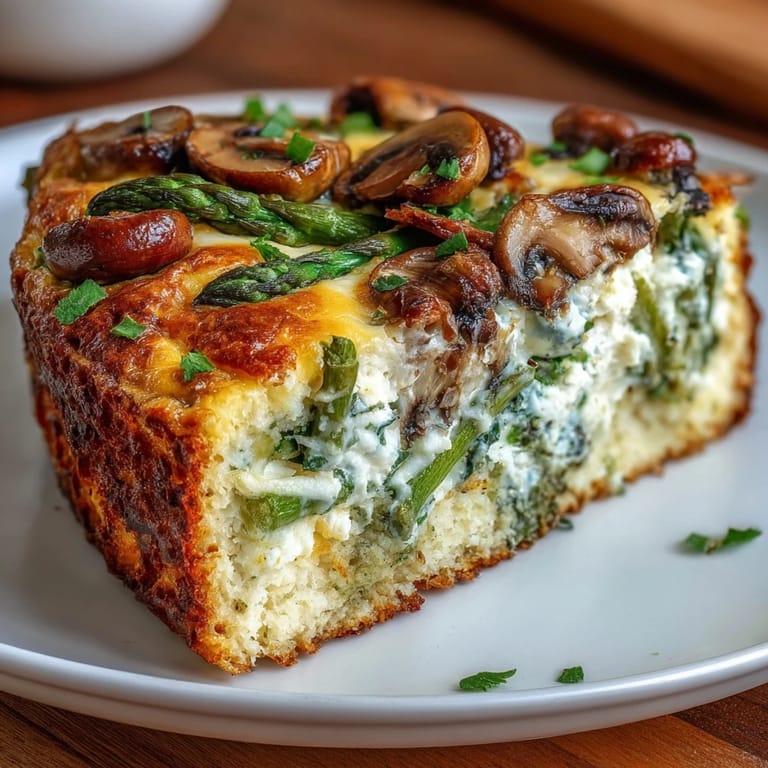
Save There's something about spring that makes me crave eggs in unexpected ways. One Saturday morning, I had a half loaf of sourdough going stale and a bunch of asparagus that needed rescuing, so I started layering them into a pan with mushrooms and cream without much of a plan. What emerged from the oven was this golden, puffy thing that felt equal parts brunch and dinner, elegant enough to serve guests but honest enough for a quiet weeknight. That happy accident taught me that the best dishes often come from having just enough ingredients and the confidence to let them speak for themselves.
I made this for my neighbor who had just moved in, and watching her face when she bit into that first slice was worth every minute of prep. She'd mentioned loving both frittatas and sourdough in passing, and somehow this felt like the obvious answer. We ate it on her porch with terrible coffee and better conversation, and it became the shorthand for how I cook now—not following recipes like instructions, but using them as starting points for small moments with people.
Ingredients
- Sourdough bread, 6 slices with crusts removed: Day-old or slightly stale bread works beautifully here because it won't turn to mush when it meets the egg mixture, and the tang of sourdough adds depth that regular sandwich bread simply can't match.
- Unsalted butter, 2 tbsp melted: This is what transforms bread into something crispy and golden, so don't skip brushing every bit of that crust.
- Asparagus, 1 cup trimmed and cut into 1-inch pieces: Fresh asparagus has this almost squeaky texture when it's raw, and that snap is what you're after—it'll soften just enough in the oven without becoming mushy.
- Cremini or button mushrooms, 1 cup sliced: The earthiness here is non-negotiable; cremini mushrooms have more flavor than buttons and won't disappear into the eggs.
- Shallot, 1 small finely chopped: This is your secret weapon for building flavor without overpowering the vegetables, much more refined than garlic in this context.
- Olive oil, 2 tbsp: Use something you'd actually taste on its own, as it's doing real work in sautéing those vegetables.
- Eggs, 8 large: Room temperature eggs blend more smoothly and create a silkier final texture than cold ones straight from the fridge.
- Whole milk, 1/3 cup: This adds tenderness to the frittata without making it heavy.
- Heavy cream, 1/4 cup: The secret to richness and that custardy center that makes people ask for your recipe.
- Gruyère cheese, 1/2 cup grated: Gruyère melts like a dream and brings a slightly nutty complexity that everyday cheddar won't deliver.
- Parmesan cheese, 1/4 cup grated: Freshly grated is miles better than pre-shredded, and it adds a sharp finishing note.
- Fresh chives, 2 tbsp chopped: These stay bright and onion-y without being aggressive, and they should go in right before baking so they don't fade.
- Salt, 1/2 tsp and ground black pepper, 1/4 tsp: Taste as you go because eggs need more seasoning than you'd think, and you can always add more but you can't take it back.
Tired of Takeout? 🥡
Get 10 meals you can make faster than delivery arrives. Seriously.
One email. No spam. Unsubscribe anytime.
Instructions
- Heat your oven and prepare your pan:
- Preheat to 375°F and lightly grease a 9-inch springform pan or deep pie dish. A springform makes unmolding easier, but any deep dish works if you're comfortable sliding it onto a plate.
- Build your sourdough crust:
- Arrange those bread slices overlapping slightly to line the bottom and sides of the pan, like you're building a soft bread boat. Brush every surface with melted butter and slide it into the oven for 8 to 10 minutes until the edges just start to crisp and turn golden.
- Sauté your vegetables:
- Heat olive oil in a skillet over medium heat and start with the shallot for a minute or two until it smells sweet and fragrant. Add mushrooms and let them soften and release their moisture, about 4 minutes, then add asparagus and cook for another 2 to 3 minutes until everything is tender but still has character.
- Whisk your custard:
- In a large bowl, crack those eggs and whisk them with milk, cream, both cheeses, chives, salt, and pepper until it's smooth and lightly combined. You're looking for a pale yellow mixture with no streaks of white egg white, but don't overwork it or you'll incorporate too much air.
- Assemble and bake:
- Spread those sautéed vegetables over your crisped sourdough crust, then pour the egg mixture over everything and let it settle. Slide into the oven for 25 to 30 minutes until the top is puffed and golden and the center is just barely set when you give the pan a gentle shake—it should jiggle slightly but hold its shape.
- Rest and serve:
- Let it cool for 5 minutes so it sets up just enough to slice cleanly, then serve it warm or at room temperature.
 Save
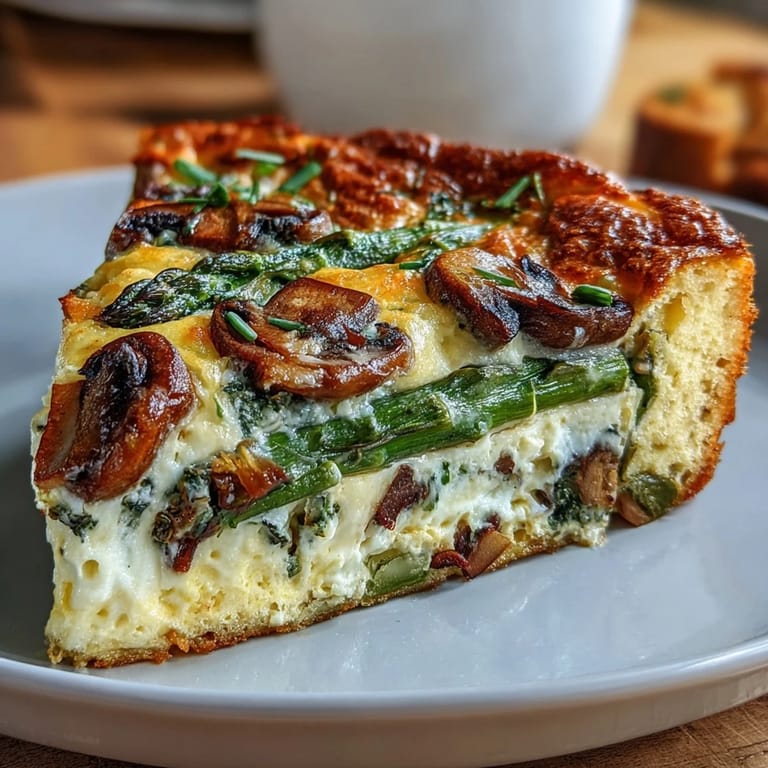
Save My sister called it "grown-up" the first time she had it, and I think that's exactly right. There's nothing complicated about it, but there's something about the combination of textures and flavors that feels thoughtful and deliberate in a way that makes brunch feel like an occasion rather than just breakfast.
The Magic of the Sourdough Base
This frittata would be lovely without the bread crust, but with it you get something entirely different. The sourdough doesn't disappear into the eggs like regular bread would; instead, it becomes this textured, tangy foundation that anchors the whole dish and gives you something substantial to bite into. I've made this with regular white bread before out of desperation, and while it was still good, it lacked that distinctive flavor and structure that makes this version special.
Timing and Temperature Matter
Getting the oven temperature right makes all the difference between a frittata that's silky in the center and one that's slightly rubbery. I learned this the hard way by turning up the heat to speed things along and ending up with eggs that were overcooked around the edges while the middle was still jiggly. Now I trust the time and temperature, and it comes out perfect every single time.
Variations and Flexibility
This is a recipe that welcomes improvisation once you understand its basic structure. Leeks work wonderfully in place of shallots, zucchini softens beautifully alongside the mushrooms, and even roasted tomatoes add a summer brightness that feels different but equally right. The important thing is keeping the ratio of vegetables to custard roughly the same, and remembering that the sourdough base is what ties everything together.
- Add crumbled goat cheese instead of or alongside the Gruyère for a tangier finish.
- Stir in some fresh herbs like tarragon or dill instead of chives for a completely different flavor profile.
- Make this the night before, cover it, and bake it in the morning for an effortless brunch.
 Save
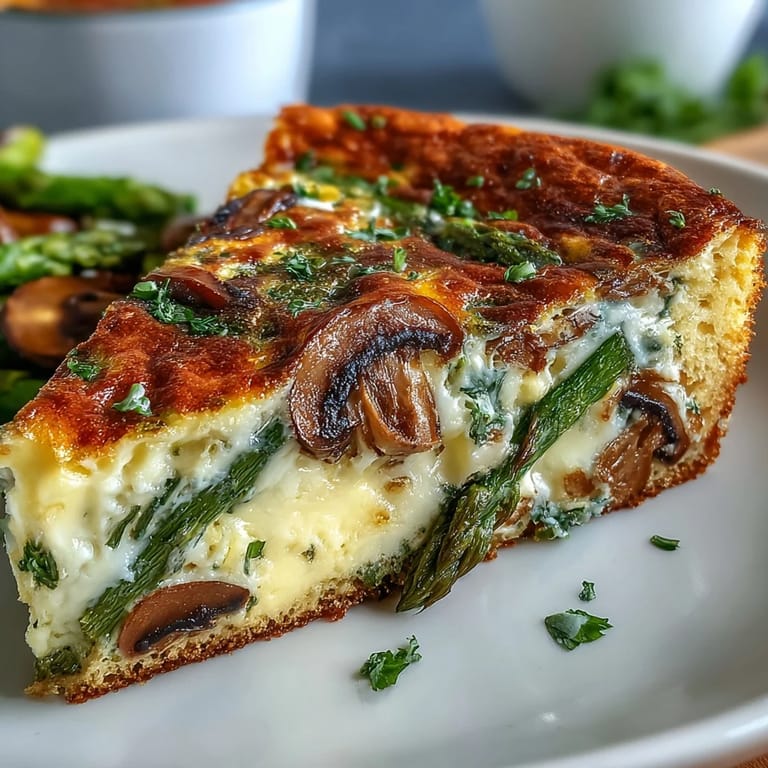
Save This frittata has become my answer to so many different moments—brunch with friends, a quiet dinner for two, leftovers that taste even better the next day. It's the kind of dish that makes you feel like you've accomplished something without breaking a sweat.
Kitchen Guide
- → How do I prepare the sourdough crust?
Line a springform pan with buttered sourdough slices and bake them until crisp before adding the filling to ensure a crunchy base.
- → Can I substitute the cheeses used?
Gruyère and Parmesan provide a rich flavor, but you can swap them for similar textured cheeses like fontina or Asiago depending on preference.
- → What’s the best way to cook the vegetables?
Sauté asparagus, mushrooms, and shallots in olive oil until tender but not overcooked to maintain freshness and flavor.
- → How long should I bake the dish?
Bake at 375°F for 25–30 minutes until the filling is set and the top is golden and puffed.
- → Can I make this suitable for a dairy-free diet?
Use plant-based milk and dairy-free cheese alternatives to replace the cream and cheeses while maintaining a creamy texture.
- → Is this dish served best warm or cold?
It's delicious served warm or at room temperature, making it versatile for brunch or light dinners.