 Save
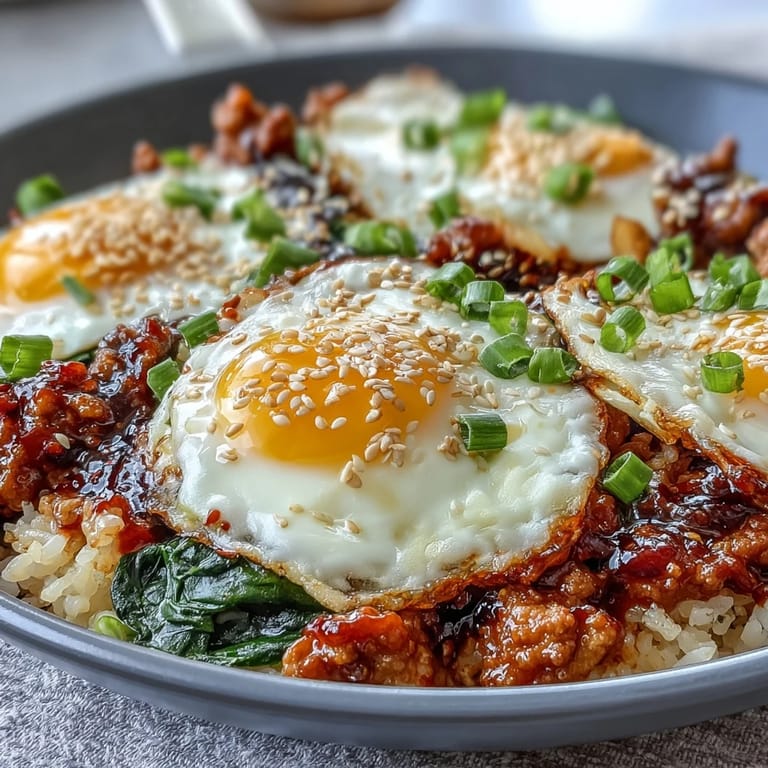
Save Last Tuesday, I was standing in my kitchen with a half-empty fridge and zero inspiration when my Korean neighbor knocked on the door with a jar of gochujang and a knowing smile. She didn't leave until I promised to make something with it that week. This skillet happened by accident, really—a collision of her pantry staple with what I had on hand—and somehow it became the dish I now make when I want something that feels both comforting and exciting at once.
I served this to my brother on a random Thursday, and he ate two bowls without saying much, which is how I know it's good—he only goes quiet when food has his full attention. The living room smelled like toasted sesame and gochujang for hours after, and I caught him sneaking back to the kitchen for thirds at midnight.
Ingredients
- Ground turkey: Lean and adaptable, it soaks up the Korean sauce without getting heavy; you can swap in ground chicken if that's what's in your freezer.
- Gochujang: This is the soul of the dish—that fermented red chili paste brings depth that you absolutely cannot replicate with sriracha or regular hot sauce, so don't skip it.
- Sesame oil: Use the toasted kind; it's the difference between a good skillet and one that tastes like the dish you were meant to make.
- Short-grain rice: Day-old rice is non-negotiable here because fresh rice gets mushy when it hits the hot sauce, but older rice holds its shape and texture beautifully.
- Large eggs: Boil them for exactly seven minutes to get that perfect jammy center; any less and it's too runny, any more and you've got a hard yolk.
- Soy sauce: Adds umami and salt balance; use tamari if you need gluten-free.
- Ginger and garlic: Fresh is crucial here—they're the backbone that stops this from tasting one-dimensional.
- Heavy cream or coconut cream: Optional but transformative; it mellows the spice and makes the whole thing feel restaurant-quality.
Tired of Takeout? 🥡
Get 10 meals you can make faster than delivery arrives. Seriously.
One email. No spam. Unsubscribe anytime.
Instructions
- Boil your eggs with intention:
- Bring water to a gentle boil, add eggs carefully, and set a timer for exactly seven minutes. The ice bath stops the cooking immediately, so the yolk stays jammy and perfect.
- Build the aromatics first:
- Heat sesame oil in your skillet and let the onion, garlic, and ginger soften together for three minutes—your kitchen will smell incredible, and this is where the flavor foundation gets built.
- Brown the turkey properly:
- Break it up with a spatula as it cooks, and don't rush; five to six minutes lets it develop color and texture instead of staying pale and steamed. If there's excess fat pooling, drain it.
- Toast the carrot briefly:
- Just two minutes of cooking keeps it with a slight bite, which matters against the creamy sauce.
- Merge the sauce with the turkey:
- Lower your heat to medium, stir in the gochujang, soy sauce, honey, vinegar, and broth, and let it all simmer together until the sauce coats everything evenly and smells like it could be from a restaurant kitchen.
- Wilt the spinach gently:
- Add the cream if you're using it, then fold in the spinach; it takes just a minute to soften. Don't overthink this step.
- Fold in the rice like you mean it:
- Make sure every grain gets coated with the sauce and heated through; this is the moment where everything becomes one cohesive dish instead of separate components.
- Taste and trust yourself:
- Before serving, taste it and adjust soy sauce for salt or add a pinch of honey if it needs sweetness balance.
- Plate with intention:
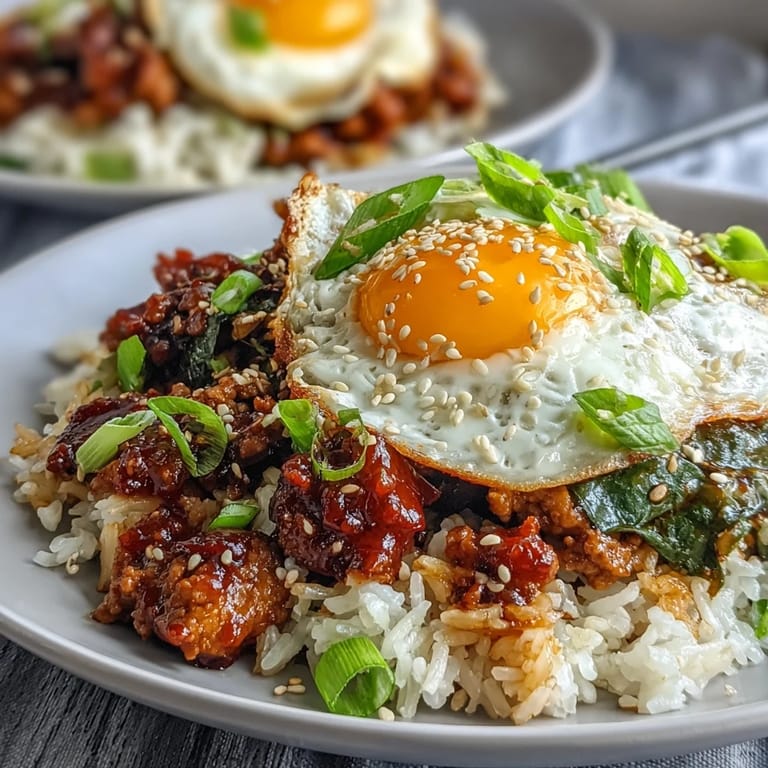
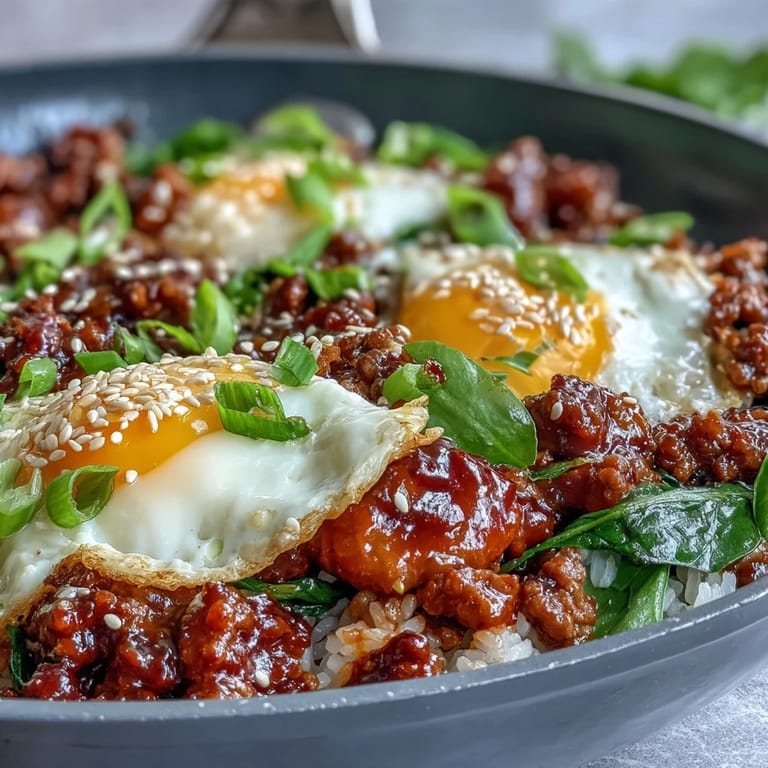
- Divide the skillet among bowls, top each with a halved jammy egg, scallions, sesame seeds, and kimchi if you have it.
 Save
Save I learned the power of this dish when my friend who usually orders Korean food every other night said she could stop paying for delivery because this tastes just as good. That moment, when someone realizes they can make restaurant-quality food at home, that's when I knew this recipe was keeper-worthy.
The Secret to Perfect Jammy Eggs
The ice bath is your best friend here, and I mean that seriously. The second those seven minutes are up, get those eggs into ice water immediately—don't delay, don't rinse them first under warm water. The cold stops the cooking dead in its tracks, which is the only way to lock in that custard-like yolk without ending up with hard-boiled eggs.
Why Gochujang Matters More Than You Think
I used to think gochujang was just hot sauce, which shows how little I knew. It's fermented, which means it brings layers of umami and complexity that regular chili paste can't touch. The first time I opened a jar and actually smelled it—funky, deep, alive—I understood why my neighbor was so protective of hers. Once you taste how it transforms simple ground turkey into something with personality, you'll start keeping jars on hand like I do.
Making This Dish Your Own
The beauty of this skillet is that it's forgiving and adaptable without losing its identity. You can riff on it based on what's in your fridge or what heat level you're craving that day. I've made it with chicken, added extra gochugaru for heat, skipped the cream on lighter nights, and even thrown in different vegetables when carrots weren't available.
- Add gochugaru (Korean chili flakes) if you want more heat and a textured bite.
- Substitute ground chicken, pork, or even tofu if turkey isn't your protein of choice.
- Use coconut cream instead of heavy cream for dairy-free without sacrificing that creamy richness.
 Save
Save This skillet has become my go-to when I want to impress without stress, or when I'm cooking just for myself and deserve something that tastes like care. Make it once, and you'll understand why it ended up in my regular rotation.
Kitchen Guide
- → What makes this Korean-style?
The Korean inspiration comes from gochujang (Korean red chili paste), soy sauce, rice vinegar, sesame oil, and the traditional jammy egg topping. These ingredients create the characteristic sweet-spicy-savory flavor profile found in Korean cuisine.
- → Can I use freshly cooked rice?
Day-old rice works best because it's drier and holds its texture better when stirred into the sauce. Freshly cooked rice can become mushy. If you must use fresh rice, spread it on a baking sheet and refrigerate for 30 minutes to dry slightly before adding.
- → How do I get perfect jammy eggs?
Gently boil eggs for exactly 7 minutes, then immediately transfer to an ice bath to stop cooking. This yields a set white with a creamy, runny yolk. For slightly firmer yolks, cook for 8 minutes.
- → Is this dish very spicy?
The heat level is moderate because gochujang's spiciness is balanced by honey and soy sauce. For more heat, add gochugaru (Korean chili flakes) or increase the gochujang amount. You can reduce gochujang to 1 tablespoon for a milder version.
- → Can I make this dairy-free?
Yes, simply omit the heavy cream or substitute with coconut cream for the same silky texture. All other ingredients are naturally dairy-free, making this an adaptable dish for various dietary needs.
- → What protein alternatives work well?
Ground chicken is the closest substitute, but ground pork or beef also work beautifully. For a vegetarian version, use crumbled tofu or plant-based ground meat alternative, adjusting cooking time accordingly.