 Save
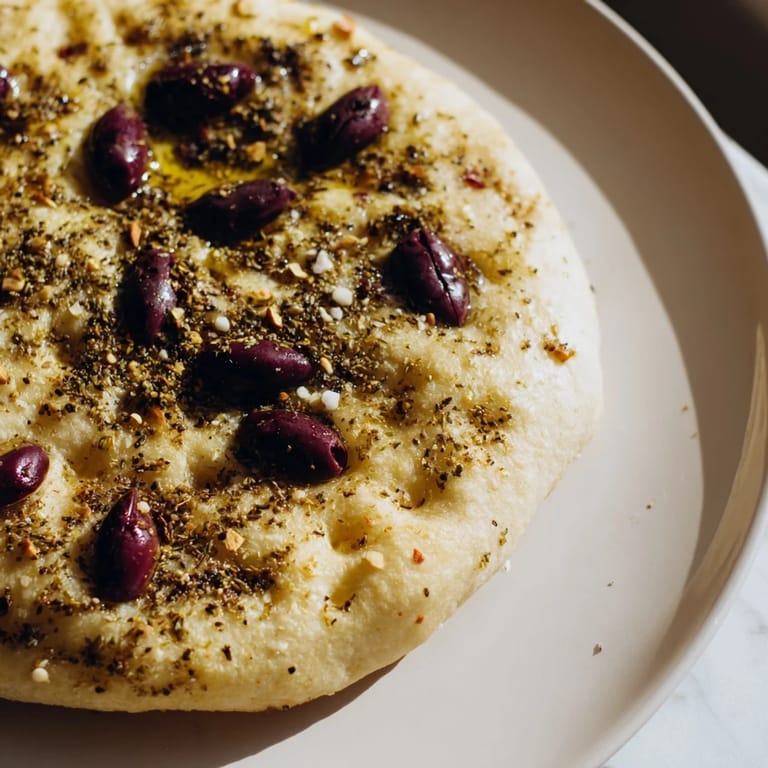
Save My first encounter with zaatar was at a cramped spice market in Amman, where an elderly vendor insisted I smell the blend before buying anything. That earthy, herbaceous burst stayed with me for weeks, and I knew I had to bake it into something. One lazy Sunday afternoon, I decided to marry that zaatar with focaccia—that pillowy Italian bread I'd fallen in love with years ago—and add briny olives to bridge the two worlds. The result was nothing short of magic: golden, dimpled, aromatic, and impossible to stop eating.
I made this for my sister's dinner party last spring, and watching her guests tear into it with their bare hands—olives dropping onto plates, zaatar dust everywhere—reminded me why I cook. Someone asked if I'd bought it from a bakery. I didn't correct them until after they'd finished their second slice.
Ingredients
- Bread flour (500 g): The high protein content builds structure and chew; don't substitute with all-purpose unless you prefer a softer crumb.
- Active dry yeast (7 g): Dissolve it in warm water first so you can see the foam—it's your signal that everything's alive and ready to rise.
- Fine sea salt (1½ tsp): It strengthens the dough and seasons the crumb; add it to the flour, not directly to the yeast.
- Warm water (325 ml): Test it on your wrist like baby formula—it should feel warm but not hot, or you'll kill the yeast.
- Extra virgin olive oil (60 ml plus 2 tbsp): Use good oil here; it's not just fat, it's the personality of the bread.
- Zaatar spice blend (2 tbsp): This is where the magic happens—if your zaatar tastes stale or musty, replace it immediately.
- Kalamata olives (100 g, halved): Pat them dry before scattering or they'll release moisture and make wet patches in your focaccia.
- Flaky sea salt (1 tsp): Maldon or similar; it won't dissolve into the dough like fine salt, creating little bursts of brine.
Tired of Takeout? 🥡
Get 10 meals you can make faster than delivery arrives. Seriously.
One email. No spam. Unsubscribe anytime.
Instructions
- Wake up the yeast:
- In a separate bowl, sprinkle the yeast over warm water and let it sit undisturbed for 5 minutes. You want to see a foamy crown form on top—that's your proof everything's working. If there's no foam, your yeast is dead and you'll need to start over.
- Bring the dough together:
- Combine the flour and fine sea salt in a large bowl, then pour in the yeast mixture along with 60 ml of olive oil. Stir with your hand or a wooden spoon until no dry flour remains and you have a shaggy, slightly sticky dough. Don't overthink it at this stage.
- Build strength and elasticity:
- Transfer to a floured surface and knead for 8–10 minutes by hand, or use a stand mixer with the dough hook. The dough should go from rough and sticky to smooth and supple, bouncing back gently when you poke it.
- First rise:
- Place the dough in a lightly oiled bowl, turn it once to coat all sides, and cover with a damp towel or plastic wrap. Let it rise in a warm, draft-free spot for 1 hour, or until it's roughly doubled in size. This is the perfect time to make coffee and sit quietly.
- Shape and second rise:
- Oil your baking sheet or 9x13 pan generously. Punch down the dough with enthusiasm (it's therapeutic), then press it evenly into the pan using your fingertips and palms. Cover loosely and let it rise again for 30 minutes until puffy and relaxed.
- Preheat and prepare:
- Heat your oven to 220°C (425°F). When the dough has risen, use your fingers to create deep dimples all over the surface—press firmly but don't tear the dough. These dimples hold the oil and toppings like little pools.
- Top and bake:
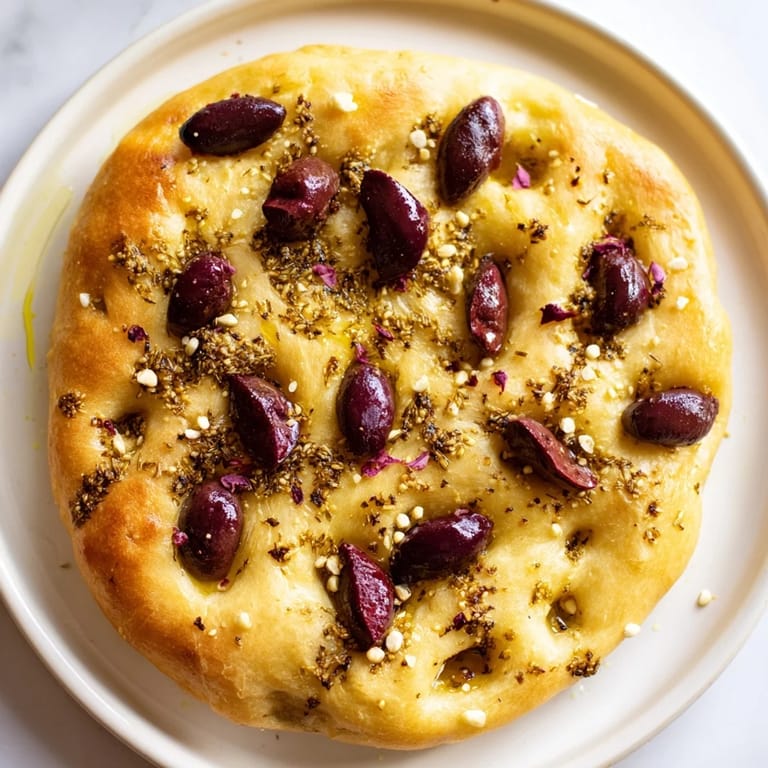
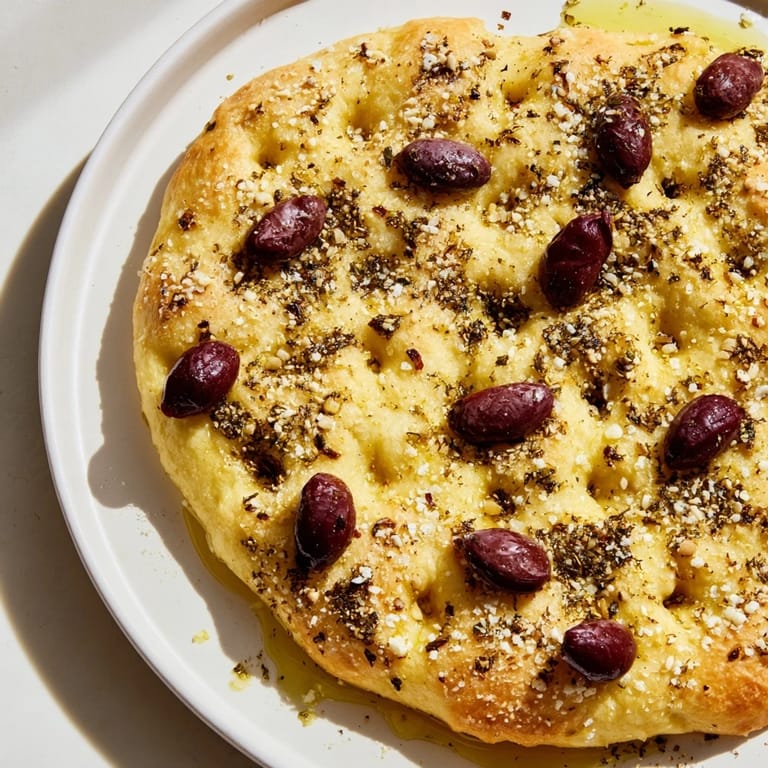
- Drizzle the 2 tbsp of olive oil over the dimpled surface, letting it pool in those indentations. Scatter the zaatar evenly, then distribute the halved olives and finish with flaky sea salt. Bake for 20–25 minutes until the edges are crisp and golden and the top is lightly bronzed.
- Cool and serve:
- Pull it from the oven and let it cool on the pan for a few minutes so it firms up enough to slice cleanly. Serve warm or at room temperature, and watch it disappear.
 Save
Save The moment I sliced into my first homemade focaccia and saw the honeycomb structure inside—all those tiny air pockets catching light—I understood why people become obsessed with bread. It was no longer just about feeding people; it was about that small triumph of patience and technique.
The Middle Eastern–Italian Fusion
Zaatar and olives are as Mediterranean as it gets, but they come from different corners of that ancient sea. Pairing them with focaccia—that Ligurian staple of oil and air—feels like a natural conversation between neighbors who've traded recipes for centuries. What makes this focaccia special is that nothing competes; the zaatar doesn't overpower the bread, the olives add brine and texture without drowning the crumb, and the olive oil ties everything into a coherent, fragrant whole.
Why This Recipe Works
Focaccia dough is forgiving because the oil and long, slow rise develop flavor without demanding precision. The two rises—one bulk rise and one final proof—give you flexibility; if you're running late, the dough is happy to wait in the fridge. The topping strategy matters too: dimpling creates pockets for oil and toppings to nestle into, preventing them from sliding off into the oven.
Ideas for Variation and Serving
Once you've mastered the basic formula, this focaccia becomes a canvas. I've scattered roasted garlic cloves across the surface in winter, stirred sun-dried tomatoes into the dough itself, and even pressed thin slices of preserved lemon into the dimples for brightness. Serve it alongside creamy labneh, silky hummus, or simply with a small dish of excellent olive oil for dipping. Some nights, I've warmed leftover focaccia in the oven and split it for sandwiches the next day—it's equally good cold with cheese and fresh herbs.
- Toast stale slices and crumble them into a fattoush salad for texture and body.
- Wrap warm focaccia around grilled vegetables and soft cheeses for a simple, satisfying meal.
- Store cooled focaccia in an airtight container; it keeps for three days and reheats beautifully in a warm oven.
 Save
Save Bread-making is meditation disguised as cooking—it asks you to slow down, trust time, and understand that some of the best things in life can't be rushed. This focaccia, with its fragrant zaatar and bursts of olive, is proof of that simple, delicious truth.
Kitchen Guide
- → What is zaatar and how does it affect the flavor?
Zaatar is a Middle Eastern spice blend typically made of thyme, oregano, sumac, and sesame seeds. It adds an herby, tangy, and slightly nutty flavor that complements the olive oil and olives beautifully.
- → Can I substitute the Kalamata olives?
Yes, green olives can be used for a milder flavor, or sun-dried tomatoes can be added for a different taste profile.
- → How do I achieve a fluffy texture in the focaccia?
Proper kneading and allowing the dough to rise in a warm place twice helps develop gluten and creates an airy, soft crumb.
- → Is the focaccia suitable for a vegan diet?
Yes, this focaccia uses no animal products and relies on olive oil and plant-based ingredients, making it vegan-friendly.
- → What’s the best way to serve this focaccia?
It can be served warm or at room temperature, paired with dips like hummus or labneh, making it ideal as an appetizer or side dish.