 Save
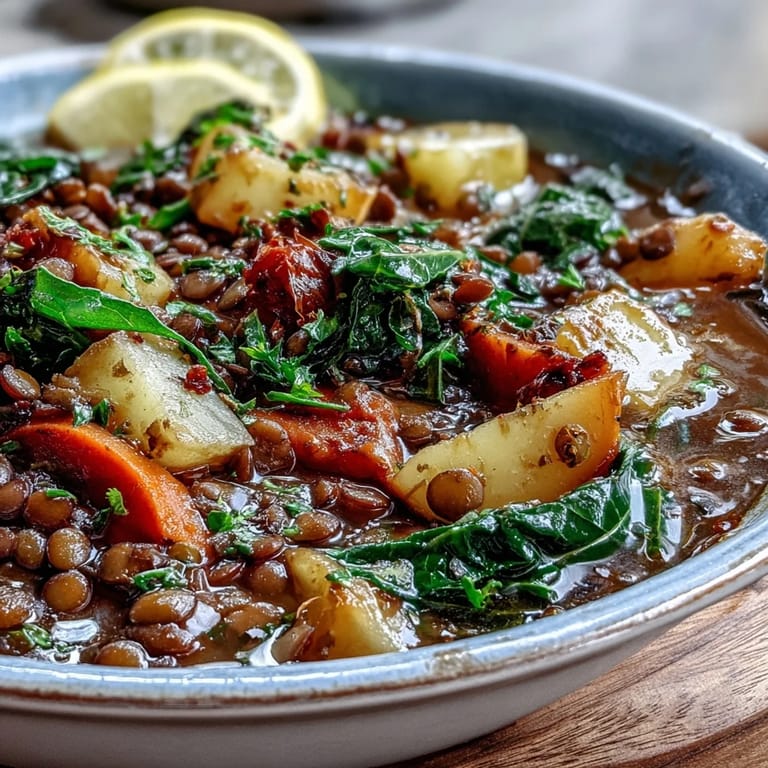
Save There's something about the sound of lentils hitting the bottom of a pot that signals the start of something good. My neighbor once stopped by during a particularly cold Thursday evening when I was deep into making this stew, and the aroma alone kept her lingering in my kitchen for twenty minutes. She'd never made a vegetarian dish before, but watching how the humble lentils transformed into something so satisfying changed her mind about plant-based cooking entirely. That's when I realized this wasn't just comfort food, it was a conversation starter.
I made this stew for my book club last fall, when everyone was tired of salads but not quite ready for heavy cream-based dishes. One friend went back for thirds and asked if I'd frozen some in containers for her, which felt like the highest compliment I could receive. The way the spinach softens into the broth at the end is somehow both delicate and deeply satisfying, a quality I'd never expected from such a straightforward recipe.
Ingredients
- Brown or Green Lentils: These hold their shape beautifully during cooking, unlike red lentils which dissolve into mush, and they have an earthy depth that pairs perfectly with the spices.
- Vegetable Broth: Use good quality broth if you can, as it becomes the soul of the stew; I once made it with water and it tasted thin and forgettable.
- Olive Oil: Just enough to coat the pot and help the aromatics release their flavors without making the stew greasy.
- Onion, Carrots, Celery: The holy trinity that builds the flavor foundation; take your time with the sauté and you'll taste the difference.
- Garlic: Minced fresh, not jarred, because that one minute of cooking transforms it from harsh to sweet and mellow.
- Potato: It adds body and creaminess naturally, without any cream, and helps stretch the stew to feed more people.
- Canned Tomatoes: San Marzano varieties are worth seeking out, and don't drain the juice because it's liquid gold for the stew.
- Spinach or Kale: Added at the very end to preserve its vibrant color and keep it from becoming an indistinguishable mush in the pot.
- Cumin and Smoked Paprika: These two spices do the heavy lifting, giving the stew depth without any dairy or meat to rely on.
- Thyme and Bay Leaf: Dried herbs work fine here, but don't skip them thinking they won't matter, because they absolutely will.
Tired of Takeout? 🥡
Get 10 meals you can make faster than delivery arrives. Seriously.
One email. No spam. Unsubscribe anytime.
Instructions
- Heat your pot and start the aromatics:
- Pour olive oil into a large pot and let it warm over medium heat until it shimmers slightly. Add your diced onion, carrots, celery, and red bell pepper all at once, and listen for that soft sizzle that tells you the oil is hot enough.
- Cook the vegetables until they soften:
- Stir occasionally with a wooden spoon, scraping the bottom so nothing sticks. You want them tender but not falling apart, which usually takes about 5 to 7 minutes depending on how finely you diced them.
- Wake up the garlic:
- Add your minced garlic and stir constantly for just one minute. You'll smell it shift from raw and pungent to sweet and fragrant, which is your cue to move forward before it burns.
- Build the stew base:
- Add the cubed potatoes, rinsed lentils, canned tomatoes with their juice, all the dried spices, the bay leaf, and the vegetable broth. Stir everything together so the spices distribute evenly and nothing sits on the bottom.
- Simmer low and slow:
- Bring the stew to a boil over medium-high heat, then reduce the temperature to low and partially cover with a lid. Let it bubble gently for 30 to 35 minutes, stirring every 10 minutes or so, until both the lentils and potatoes are completely tender when pierced with a fork.
- Finish with greens:
- Remove the bay leaf, stir in your spinach or kale, and cook for just 2 to 3 minutes until it's wilted and a deeper shade of green. Don't cook it longer or it loses all its brightness and character.
- Season and serve:
- Taste the stew and season generously with salt and pepper. If it feels too thick, add more broth or water a splash at a time, remembering that it will thicken further as it cools.
 Save
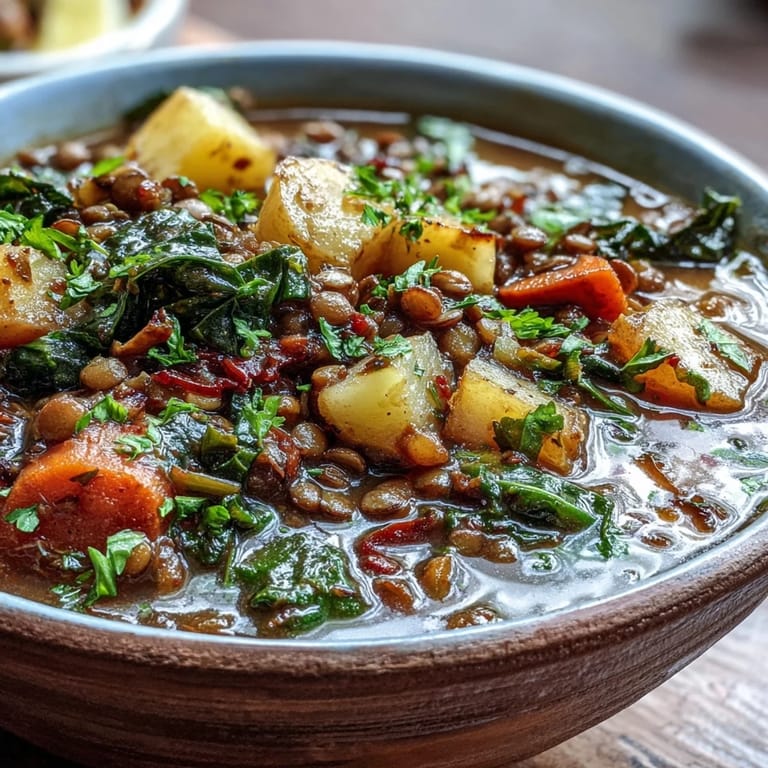
Save My partner is not vegetarian, but he's requested this stew three times in the past month, which tells me something about how complete and satisfying it truly is. Food that makes people forget to ask what's missing is the kind of food worth mastering.
Why This Stew Works for Busy Weeknights
Most of the prep work happens at the beginning, and then you can actually relax while it simmers. You're not hovering over the stove stirring constantly or timing complicated steps, which means you can set a timer, pour yourself something to drink, and read or work on other things. The stew improves as it sits, so making it earlier in the day and reheating it for dinner is actually ideal.
Variations That Keep It Interesting
I've made this stew at least a dozen different ways, swapping out vegetables based on what's in season or what I have on hand. Sweet potatoes make it sweeter and more autumnal, while adding diced zucchini or mushrooms in place of some of the potato makes it taste lighter and more summery. A splash of balsamic vinegar or a squeeze of fresh lemon juice at the end adds brightness that cuts through the earthiness beautifully.
Storing and Reheating Tips
This stew is one of those magical dishes that tastes better the next day when the flavors have melded together, so don't hesitate to make it ahead. Store it in an airtight container in the refrigerator for up to five days, or freeze it in portions for up to three months, and simply reheat gently on the stovetop with a splash of extra broth if needed.
- Let it cool completely before refrigerating so the heat doesn't warm up your entire fridge.
- Freeze in individual portions so you can grab exactly what you need for a quick weeknight dinner.
- If the stew seems too thick after refrigeration, add water or broth a little at a time rather than all at once.
 Save
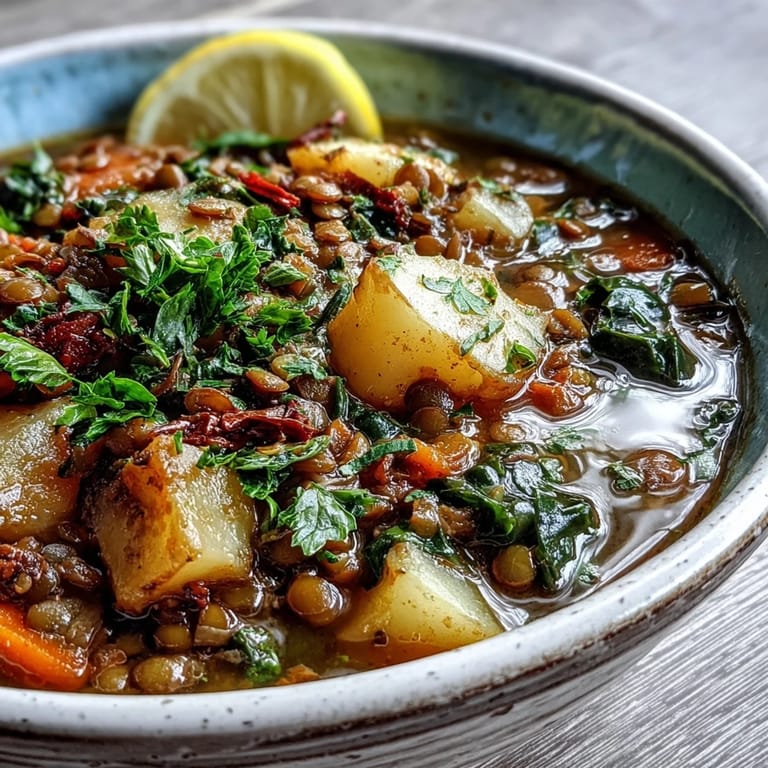
Save This stew has become my answer to the question I ask myself most often: what can I make that's nourishing without being fussy, hearty without being heavy, and good enough to serve to people I actually care about? It never disappoints.
Kitchen Guide
- → Can I use canned lentils instead of dried?
Yes, you can substitute canned lentils. Use about 3 cans (15 oz each) of rinsed and drained lentils. Reduce the simmering time to 15-20 minutes since the lentils are already cooked. The flavors will still develop beautifully with the vegetables and spices.
- → How long does this lentil stew keep in the refrigerator?
This stew stores well for 4-5 days in an airtight container in the refrigerator. The flavors actually deepen and improve after a day or two. Reheat gently on the stove, adding a splash of broth or water if needed to adjust consistency.
- → Can I freeze this vegetarian lentil stew?
Absolutely. This stew freezes beautifully for up to 3 months. Let it cool completely before transferring to freezer-safe containers. Thaw overnight in the refrigerator and reheat on the stove. Note that the potatoes may soften slightly after freezing, but the texture remains enjoyable.
- → What type of lentils work best for this stew?
Brown or green lentils are ideal because they hold their shape well during cooking. Red lentils tend to break down and become creamy, which would change the texture significantly. French lentils (Puy) also work well and offer a slightly peppery flavor.
- → How can I add more protein to this stew?
While lentils already provide 16g per serving, you can boost protein by adding a can of drained chickpeas or white beans during the last 10 minutes of cooking. Serving with a sprinkle of nutritional yeast or hemp seeds also adds plant-based protein and B vitamins.
- → What vegetables can I substitute?
This stew is versatile. Try butternut squash instead of potato, add zucchini in summer, or include chopped Swiss chard instead of kale. Root vegetables like parsnips or turnips work well in winter. The key is maintaining similar cooking times for all vegetables.