 Save
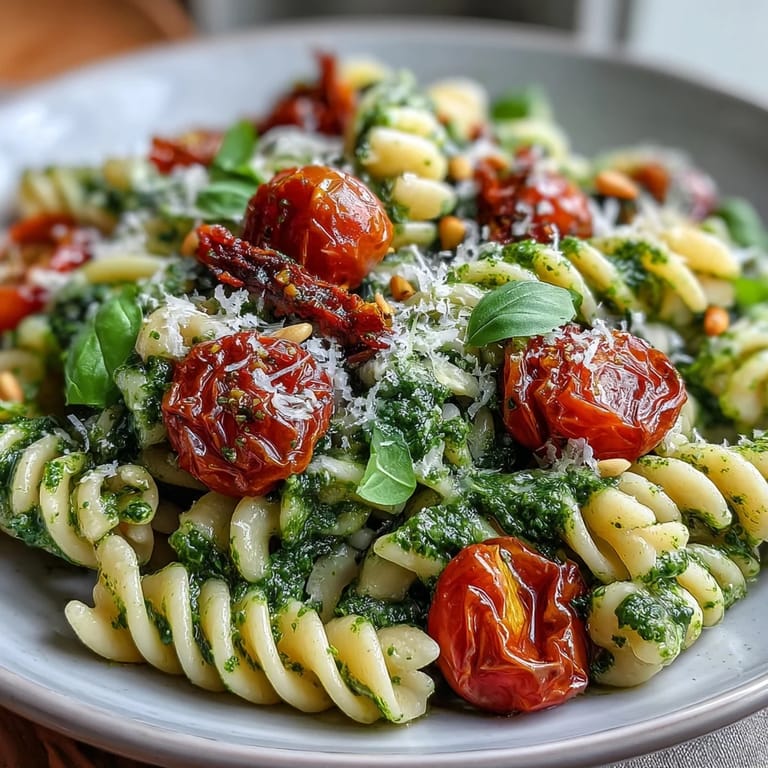
Save Last summer, my neighbor knocked on the door with an armful of basil from her garden, asking if I could use it before it bolted in the heat. I stood there holding these fragrant bundles, suddenly inspired to make something that didn't require turning on the oven. That's when this pasta salad came together—a dish so simple it almost feels like cheating, yet somehow it became the thing people actually wanted at every gathering.
I made this for a surprise picnic by the lake, and watching my partner's face when they tasted the pesto made me realize how much a homemade sauce changes everything. The pasta had absorbed just enough of the green goodness, and the cherry tomatoes burst with sweetness when you bit into them. It was the kind of meal that felt effortless but tasted like you'd spent hours planning it.
Ingredients
- Short pasta (fusilli, penne, or farfalle), 300g: Use whatever shape appeals to you—I prefer farfalle because the pesto catches in the bows and every bite is flavorful.
- Fresh basil leaves, 50g: Pick them in the morning when they're most fragrant, and avoid bruising them as you measure—damaged leaves turn dark quickly.
- Pine nuts, 40g (lightly toasted): Toasting them first makes all the difference; it brings out a nuttiness that raw pine nuts simply don't have.
- Garlic clove, 1: Just one is enough—you want the basil to shine, not a garlicky paste.
- Parmesan cheese, grated, 50g: Buy a wedge and grate it yourself if you can; the pre-grated stuff sometimes feels like sand.
- Extra virgin olive oil, 100ml: Don't be tempted to use regular olive oil here—the quality really matters when it's the main fat.
- Salt and freshly ground black pepper: Taste as you go; this is where seasoning makes the pesto sing or fall flat.
- Cherry tomatoes, 250g, halved: Look for ones that smell sweet at the stem—that's how you know they're ripe.
- Baby arugula, 50g (optional): It adds a peppery note that pairs beautifully with the basil, but skip it if you prefer something milder.
- Parmesan shavings, 30g (for garnish): Use a vegetable peeler on a fresh wedge for pretty, thin curls.
- Lemon, 1 (for zest): The brightness of lemon zest is what ties everything together at the end.
Tired of Takeout? 🥡
Get 10 meals you can make faster than delivery arrives. Seriously.
One email. No spam. Unsubscribe anytime.
Instructions
- Get your water boiling:
- Fill a large pot with water, salt it generously (it should taste like the sea), and bring it to a rolling boil. The salt seasons the pasta from the inside out, so don't skip this step.
- Cook the pasta just right:
- Add the pasta and stir occasionally so it doesn't stick. Check it a minute before the package says it's done—you want it tender but with a little resistance when you bite it, not mushy. Drain it, then rinse with cold water to stop the cooking and cool it quickly.
- Make the pesto while pasta cooks:
- Pulse the basil, toasted pine nuts, garlic, and parmesan in a food processor until everything is broken down into small pieces. Now slowly drizzle in the olive oil while the processor runs, watching it transform into a silky green sauce. The whole thing should take about a minute; blend too long and the basil will bruise and turn dark.
- Bring it all together:
- In a large bowl, toss the cooled pasta with the cherry tomatoes and arugula, then add the pesto and toss until everything is coated evenly. The pasta will drink up the pesto, so don't be shy—make sure each piece is dressed.
- Finish and serve:
- Transfer to a platter, shower it with parmesan shavings and lemon zest, and serve right away. If you need to hold it for a couple of hours, cover it and chill, then bring it back to room temperature before eating.
 Save
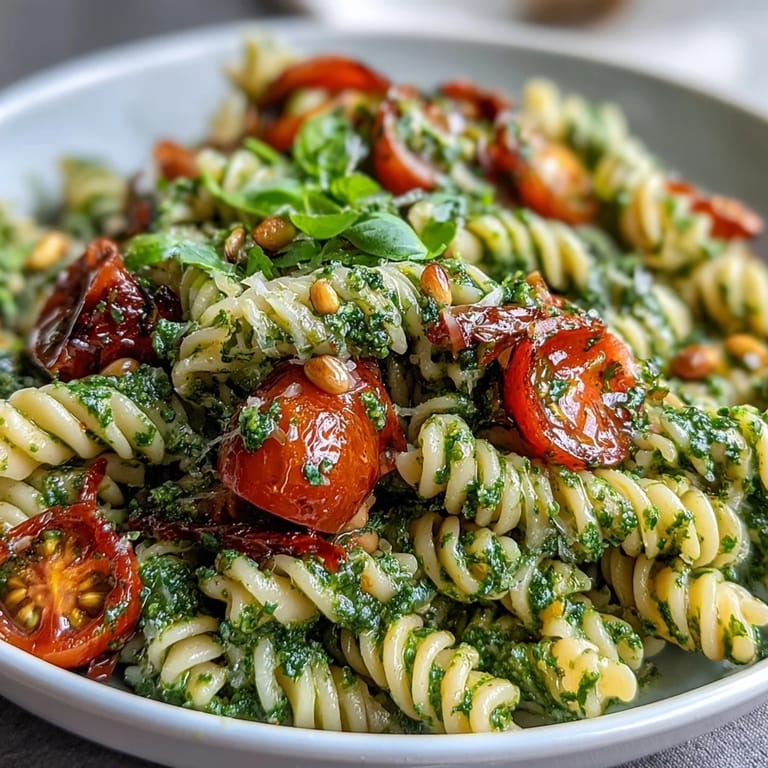
Save There was a moment at that lakeside picnic when someone asked for the recipe, and instead of just rattling off ingredients, I found myself describing how the pesto smelled when it came together—that green, garlicky, herbaceous perfume that fills your kitchen. That's when it hit me that this wasn't just food; it was a memory waiting to happen.
The Art of Making Pesto
The first time I made pesto in a food processor, I over-blended it and ended up with something closer to a paste than a sauce. Now I know that pesto should have texture—little flecks of basil and nut that you can see and feel. It's the difference between something that tastes fine and something that tastes alive. The goal is broken down but not obliterated, creamy but not homogenized.
Why Al Dente Matters
Al dente pasta has a slight firmness that holds up when you toss it with the pesto and let it sit. If you cook it until it's completely soft, by the time you serve it, especially if chilled, it becomes limp and loses its appeal. The little bit of resistance in the bite is what makes this salad feel fresh and intentional rather than like something that's been sitting around.
Make It Your Own
The beauty of this salad is how forgiving it is. I've made it with walnuts instead of pine nuts on a tight budget, and honestly, it was just as good. I've added grilled chicken when I needed more protein, roasted zucchini when vegetables were on hand, and even some crispy chickpeas for crunch. The pesto and tomatoes are the anchors; everything else is negotiable.
- If pine nuts are too expensive or you have an allergy, toasted walnuts, almonds, or even sunflower seeds work beautifully.
- Consider adding grilled chicken, white beans, or roasted vegetables to make it more substantial.
- You can absolutely use store-bought pesto if time is tight, though homemade will always have more personality.
 Save
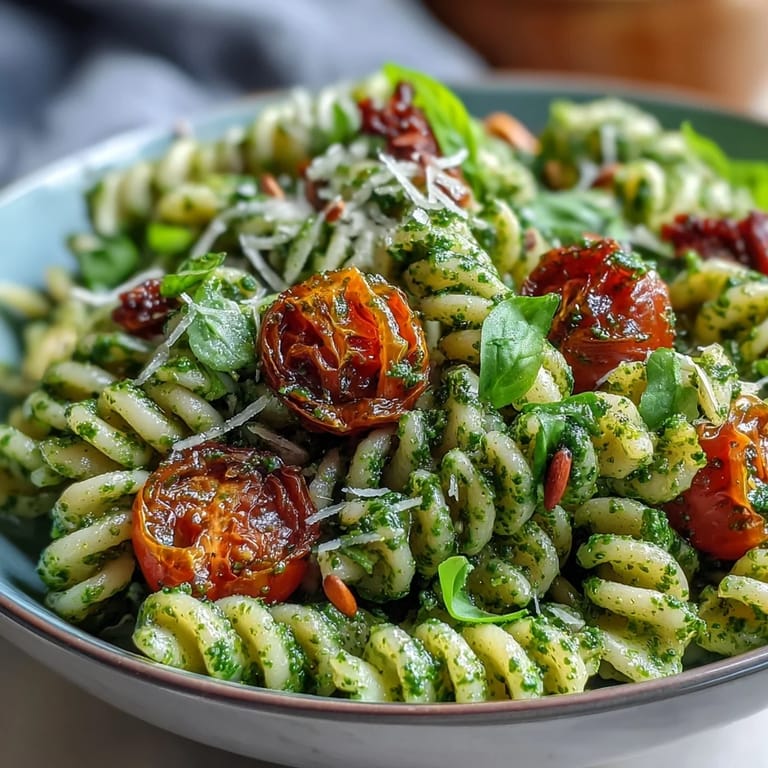
Save This pasta salad has become my go-to for those moments when you want to feed people something that tastes like you care but doesn't tie you to the kitchen all day. It's proof that the simplest ingredients, treated with intention, can be the most memorable.
Kitchen Guide
- → What type of pasta works best in this dish?
Short pasta shapes like fusilli, penne, or farfalle hold the pesto well and add texture suitable for this salad-style preparation.
- → Can I prepare the pesto in advance?
Yes, pesto can be made a day ahead and stored refrigerated in an airtight container to enhance flavor development.
- → How do I prevent the pasta from becoming mushy?
Cook pasta until just al dente and rinse under cold water to stop the cooking process, then drain well before combining with other ingredients.
- → Are there suitable substitutions for pine nuts in pesto?
Walnuts or almonds can be toasted lightly and used as a substitute for pine nuts without losing the rich texture and flavor.
- → What wine pairs well with this pasta preparation?
A crisp white wine such as Pinot Grigio complements the fresh basil and tangy tomatoes for a balanced pairing.
- → How can I add protein to this dish?
Adding grilled chicken or roasted vegetables like zucchini enhances protein content and offers additional flavor layers.