 Save
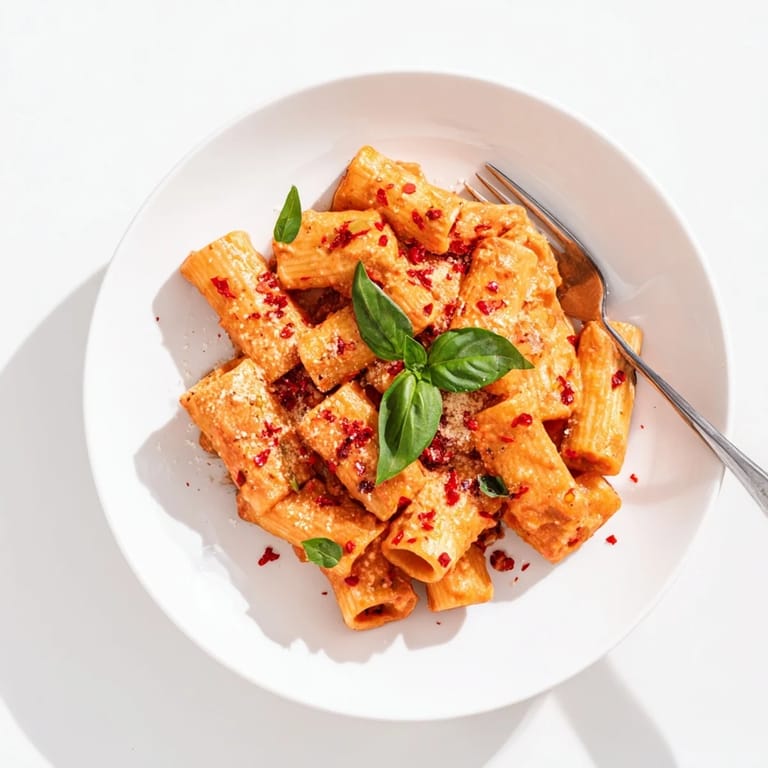
Save The steam rising from the skillet caught the afternoon light just right, turning the whole kitchen hazy and golden. I was testing this sauce on a Tuesday with no real plan except to use up tomato paste before it dried out in the back of the fridge. What I got instead was a sauce so silky and balanced that I stood there eating it straight from the spoon, forgetting I'd even boiled pasta. That's when I knew this wasn't just another weeknight dinner.
I made this for my neighbor who'd just moved in and didn't have her kitchen unpacked yet. She showed up with a bottle of wine and I handed her a bowl still too hot to hold comfortably. We sat on my back steps in the last bit of daylight, twirling pasta and talking about nothing important. She told me later it was the first meal that made the new place feel like home.
Ingredients
- Rigatoni pasta (400 g): The wide tubes and ridged sides grab onto creamy sauces better than smooth pasta ever could, and they hold their shape beautifully even after tossing.
- Olive oil (2 tbsp): This builds the flavor foundation and keeps the onions from sticking while they soften into something sweet and mellow.
- Yellow onion (1 small, finely chopped): Diced small, it melts into the sauce and adds a gentle sweetness that balances the acidity of the tomatoes.
- Garlic (3 cloves, minced): Fresh garlic blooms in the oil and fills the kitchen with that unmistakable aroma that means something good is about to happen.
- Crushed red pepper flakes (1 tsp): Adjust this to your comfort, but don't skip it entirely because the gentle warmth is what makes the dish memorable.
- Tomato paste (2 tbsp): Cooking this down for a couple minutes caramelizes the sugars and deepens the tomato flavor in a way canned sauce alone never will.
- Canned crushed tomatoes (400 g): These form the body of your sauce and simmer down into something rich and slightly thickened with very little effort.
- Heavy cream (120 ml): This transforms the sauce from bright and sharp to velvety and rounded, softening every edge without making it heavy.
- Parmesan cheese (30 g, grated): Stir it in at the end for a nutty, salty finish that ties the whole sauce together and makes it cling to the pasta.
- Fresh basil and extra Parmesan: A handful of torn basil right before serving adds a pop of freshness that cuts through the richness perfectly.
Tired of Takeout? 🥡
Get 10 meals you can make faster than delivery arrives. Seriously.
One email. No spam. Unsubscribe anytime.
Instructions
- Boil the Pasta:
- Get your water boiling with enough salt that it tastes like the ocean, then drop in the rigatoni and cook until it still has a little bite in the center. Before draining, scoop out half a cup of that starchy pasta water because it's liquid gold for adjusting your sauce later.
- Sauté the Aromatics:
- Warm the olive oil over medium heat and add your chopped onion, stirring occasionally until it turns soft and translucent, about three or four minutes. Toss in the garlic and red pepper flakes, cooking just until the kitchen smells incredible, about a minute.
- Build the Tomato Base:
- Stir in the tomato paste and let it cook, stirring often, for two minutes until it darkens a shade and smells almost sweet. Pour in the crushed tomatoes and let everything simmer gently for eight to ten minutes, stirring now and then, until the sauce thickens and the raw tomato edge disappears.
- Finish with Cream and Cheese:
- Lower the heat and stir in the heavy cream and grated Parmesan, watching the sauce turn silky and pale. Season with salt and pepper, then let it bubble gently for two or three minutes until it's creamy and cohesive.
- Toss and Serve:
- Add your drained rigatoni directly into the skillet and toss everything together until every piece is coated in sauce. If it looks too thick, splash in some of that reserved pasta water a little at a time until it loosens to your liking, then serve hot with basil and extra cheese on top.
 Save
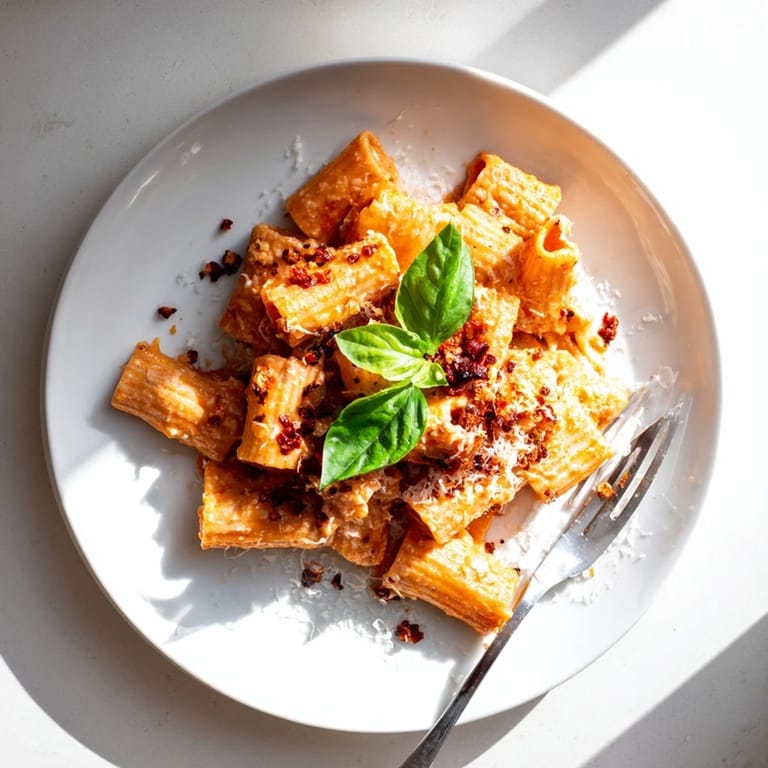
Save There was an evening last fall when I made this for myself after a long, frustrating day. I wasn't trying to impress anyone or test a new technique, I just wanted something warm and a little indulgent. Sitting at the table with a bowl of this pasta and a glass of cold white wine, I felt my shoulders drop for the first time in hours. It reminded me that sometimes the best meals are the ones we make just for ourselves, with no agenda except comfort.
Choosing Your Pasta Shape
Rigatoni works beautifully here because the sauce gets trapped inside the tubes and clings to the ridges, giving you flavor in every bite. If you can't find it, penne or ziti are great stand ins with similar structure. I've also tried this with shells when that's all I had, and while it's a little different, the creamy sauce still pools in the curves and makes every forkful satisfying. Whatever shape you choose, just make sure it has some texture or hollow space for the sauce to grab onto.
Adjusting the Heat Level
The teaspoon of red pepper flakes gives a gentle warmth that builds slowly, but you're in complete control here. Start with half a teaspoon if you're cautious, or bump it up to a teaspoon and a half if you like a little more kick. I've made this for friends who can't handle any heat at all, and a quarter teaspoon still gave the sauce character without any burn. Taste as you go, and remember you can always add more but you can't take it back.
Making It Ahead and Storing
This sauce actually improves after a night in the fridge, the flavors meld and deepen in a way that makes leftovers feel like a reward. Store the pasta and sauce together in an airtight container for up to three days, and reheat gently on the stove with a splash of water or cream to loosen it back up. I've even frozen the sauce on its own for up to two months, then cooked fresh pasta when I needed a quick dinner that didn't taste like I took a shortcut. Just thaw it overnight in the fridge and warm it slowly, stirring in a little extra cream if it looks separated.
- If reheating in the microwave, do it in short bursts and stir often so the cream doesn't break.
- Fresh basil doesn't hold up well in storage, so add it right before serving for the best color and flavor.
- Leftover pasta makes an excellent baked dish, just top with mozzarella and broil until bubbly and golden.
 Save
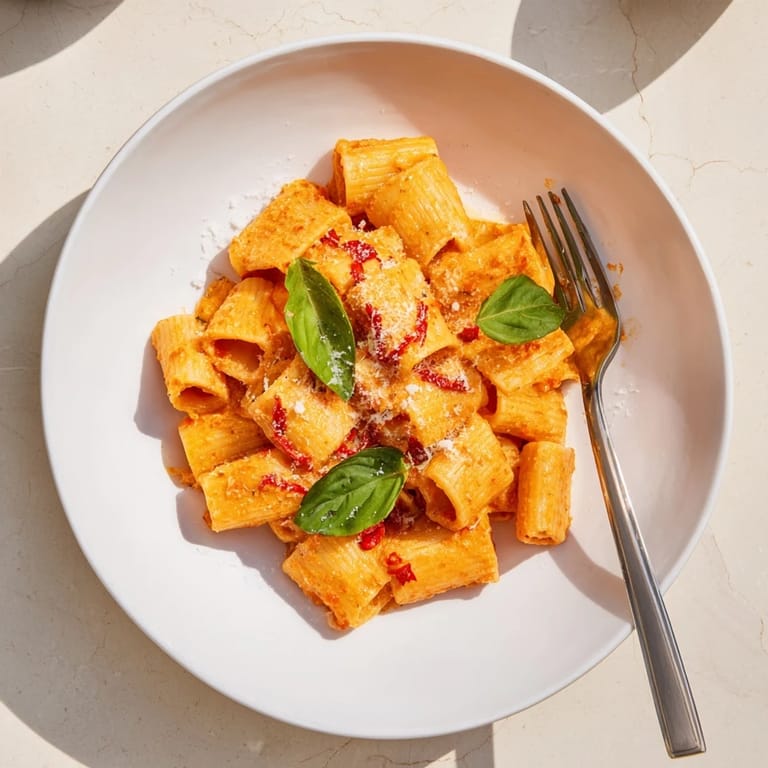
Save This dish has become my go to when I want something that feels special but doesn't demand too much from me. It's generous enough to share and comforting enough to keep all to yourself, depending on the kind of day you've had.
Kitchen Guide
- → How do I keep the sauce from breaking when adding cream?
Reduce the heat to low before adding cream and Parmesan cheese. This prevents the dairy from curdling. Stir gently and allow the sauce to simmer softly for 2-3 minutes until creamy and smooth.
- → Can I make this ahead of time?
You can prepare the sauce up to 2 days ahead and refrigerate it. When ready to serve, reheat gently over low heat, cook fresh pasta, then combine. Do not freeze pasta once combined, as texture suffers.
- → What if my sauce is too thick?
Reserve pasta water during draining for this reason. Add it gradually while stirring until you reach your preferred consistency. Even a tablespoon at a time makes a difference in sauce thickness.
- → How spicy will this dish be?
Starting with 1 teaspoon of red pepper flakes creates a mild heat. Adjust based on your tolerance—add more for spiciness or reduce for milder flavors. Taste as you go during the final simmer.
- → Are there protein-forward variations?
Absolutely. Sauté diced pancetta or crumbled Italian sausage with the onions before adding garlic and spices. This adds depth and makes the dish more filling without changing cooking time significantly.
- → What pasta shapes work best as substitutes?
Penne, ziti, or fusilli are excellent alternatives. Any short, tubular or ridged pasta holds this creamy sauce well. Avoid delicate shapes like angel hair, which may become overcoated.