 Save
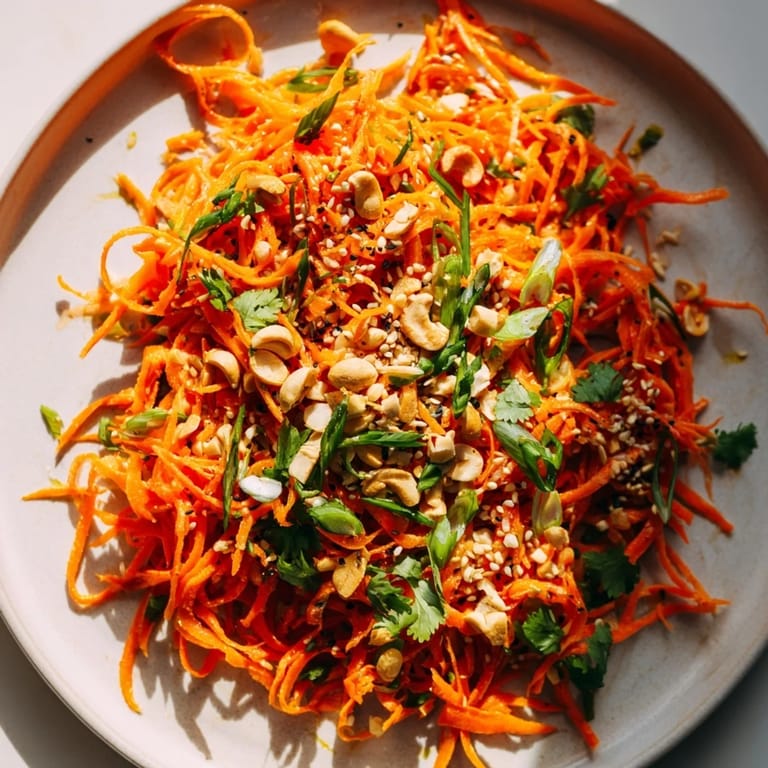
Save There was an afternoon when my friend arrived unannounced with groceries from the market, and I realized I had nothing prepared to serve. I grabbed four carrots, some soy sauce from the back of the cupboard, and within minutes had tossed together this vibrant salad that somehow tasted like it had been simmering in my mind all along. The heat from the chili hit first, then the sesame oil wrapped around everything with this warm, nutty whisper. She had seconds before I'd even finished plating, and I knew right then this would become one of those recipes I'd make without thinking, the kind that tastes like both effort and ease at once.
I made this for a potluck once where everyone brought something that needed reheating, and this cool, spicy salad became the thing people kept circling back to between bites of everything else. One person asked if I'd bought it from somewhere, and I think that's when I understood the real magic of simple recipes—they feel fancier than they are. The carrots had absorbed just enough of the dressing in those twenty minutes on the counter, and the sesame seeds were still catching the light like little flecks of gold.
Ingredients
- Carrots: Use firm, medium-sized ones because they shred more evenly and hold their crunch; avoid any that feel soft or woody at the core.
- Soy sauce: The umami backbone of this whole thing—it's worth using a good-quality one, though tamari works beautifully if you need gluten-free.
- Sesame oil: Buy the toasted kind and store it in a cool spot; it turns rancid faster than regular oils, so a small bottle you'll actually use up is smarter than a big one.
- Rice vinegar: This adds brightness without overpowering; it's gentler than rice wine vinegar and worth keeping in the pantry.
- Honey or maple syrup: A teaspoon balances the heat and salt in a way that makes everything taste rounder and more intentional.
- Chili garlic sauce: Sriracha works if that's what you have, but chili garlic sauce has a different texture and lets the heat sit more gently.
- Fresh ginger: Grate it just before mixing so the oils are still alive; frozen or powdered changes the flavor entirely.
- Sesame seeds: Toast them yourself if you can—they taste exponentially better than store-bought, and it takes just a minute in a dry pan.
- Roasted peanuts or cashews: A handful adds texture and makes the whole salad feel complete, though it's genuinely optional if you're avoiding nuts.
Tired of Takeout? 🥡
Get 10 meals you can make faster than delivery arrives. Seriously.
One email. No spam. Unsubscribe anytime.
Instructions
- Shred and gather:
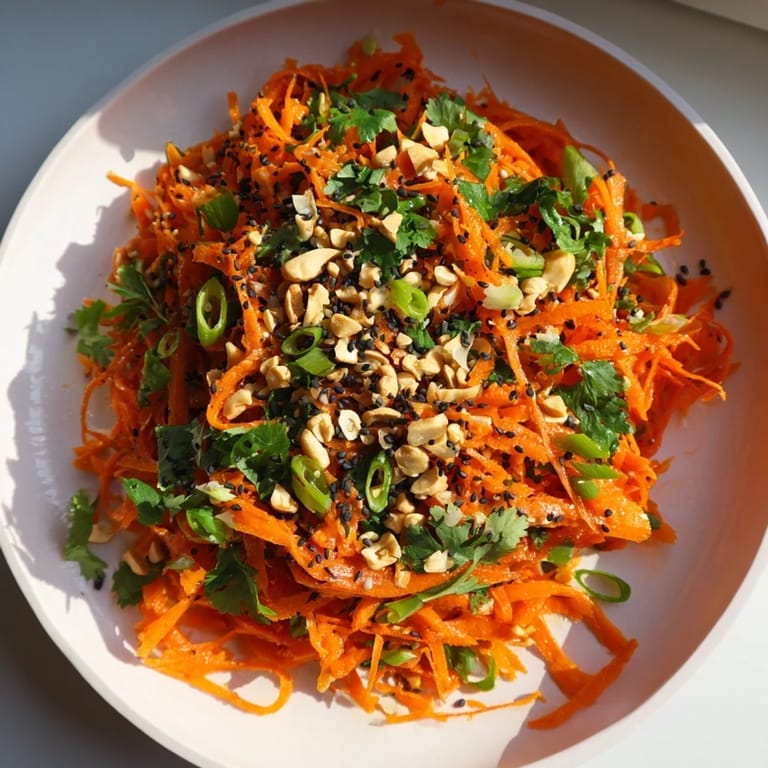
- Peel your carrots and shred them with a box grater or vegetable peeler—the sound of the grater against the carrot is oddly satisfying, and you'll end up with about three cups of feathery shreds. Toss them into a large bowl with your spring onions and cilantro, if you're using it.
- Build the dressing:
- In a small bowl, whisk together the soy sauce, sesame oil, rice vinegar, honey, and chili sauce until they start to know each other. Add the fresh ginger and garlic, stirring so the bits are evenly distributed, then scatter in the sesame seeds.
- Combine and taste:
- Pour the dressing over the carrots and toss everything together until every strand is glistening and coated. This is when you taste it—your tongue will tell you if it needs more heat, more soy, more anything.
- Rest or serve:
- You can eat it immediately while the carrots are still aggressively crunchy, or let it sit for ten to fifteen minutes so the flavors settle into each other. Either way, top with nuts and extra sesame seeds just before serving.
 Save
Save There was a morning when I made this salad the night before for a workday lunch, worried I'd ruined it by dressing it too early. But something magical had happened in the fridge—the carrots had softened just enough to be tender without losing their character, and the flavors had deepened into something almost caramelized. I've been dressing it early ever since, and it tastes better than the day I first made it.
When to Make This Salad
This is the dish to reach for when you want something that feels light but substantial, something that says you made an effort without requiring you to turn on the oven or stand at the stove. It works equally well as a side dish for grilled chicken or tofu, or as the main event on a hot day when you're too tired to cook but hungry enough to want something with character. I've made it for weeknight dinners, weekend parties, and lunches I'm tired of eating by Wednesday—it never feels wrong.
Building Better Flavor
The secret to this salad tasting like more than the sum of its parts is balance—every element is there for a reason, and when they're in the right proportion, you stop tasting individual ingredients and start tasting harmony. The heat from the chili doesn't announce itself loudly but instead creates a warm undertone that makes everything taste more like itself. The sesame oil is there in a quiet way, suggesting richness without overwhelming, and the ginger keeps everything from feeling heavy or one-dimensional.
Variations and Additions
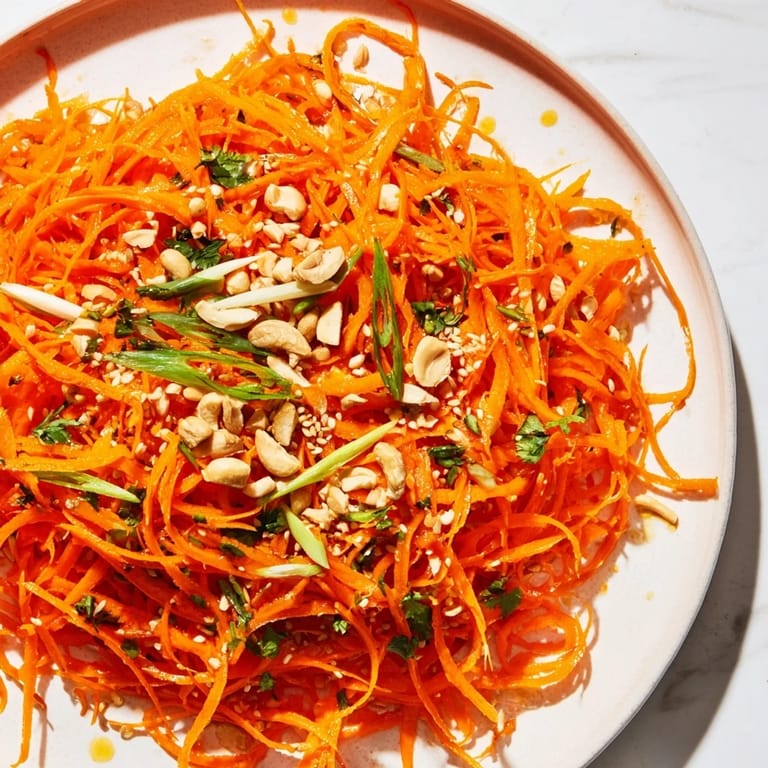
Once you understand how this salad works, you can play with it endlessly without losing what makes it special. Thin slices of cucumber add a waterlogged crunch that contrasts beautifully with the dressed carrots, or strips of bell pepper can bring sweetness and color. I've made it with julienned daikon radish for extra heat, and I've left out the nuts entirely for a friend with allergies and never heard a word of complaint.
- Swap in tamari for a gluten-free version that tastes nearly identical to the original.
- Add thinly sliced red or yellow bell pepper for sweetness and visual pop without changing the core flavor profile.
- Roast chickpeas separately and scatter them on top for a salad hearty enough to stand alone as a meal.
 Save
Save This salad has become one of those recipes that feels both simple and special, the kind you make without thinking and that somehow always impresses people. It's taught me that the best food often comes from understanding a few good ingredients and letting them speak for themselves.
Kitchen Guide
- → What gives the salad its spicy flavor?
The spice comes from chili garlic sauce or sriracha, which you can adjust to your preferred heat level.
- → Can I make this salad gluten-free?
Yes, by using tamari instead of regular soy sauce, the salad is gluten-free.
- → What nuts work best for garnish?
Roasted peanuts or cashews add a crunchy, nutty contrast and complement the sesame seeds in the dressing.
- → How long can the salad be stored?
It keeps well in the fridge for up to 24 hours but is best enjoyed fresh for optimal crunch.
- → Can I add other vegetables to the salad?
Yes, thinly sliced bell peppers or cucumber make great additions for extra crunch and color.