 Save
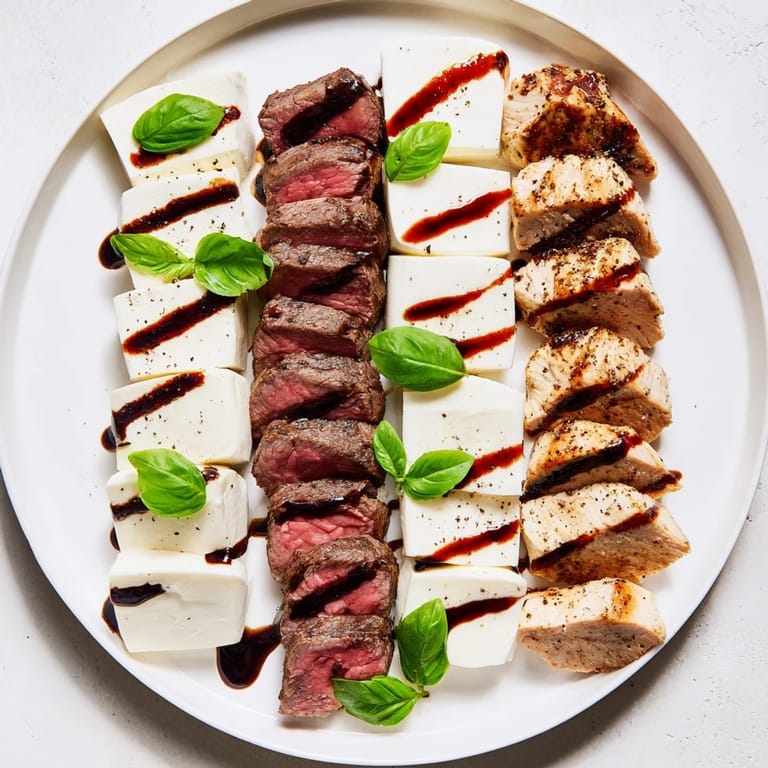
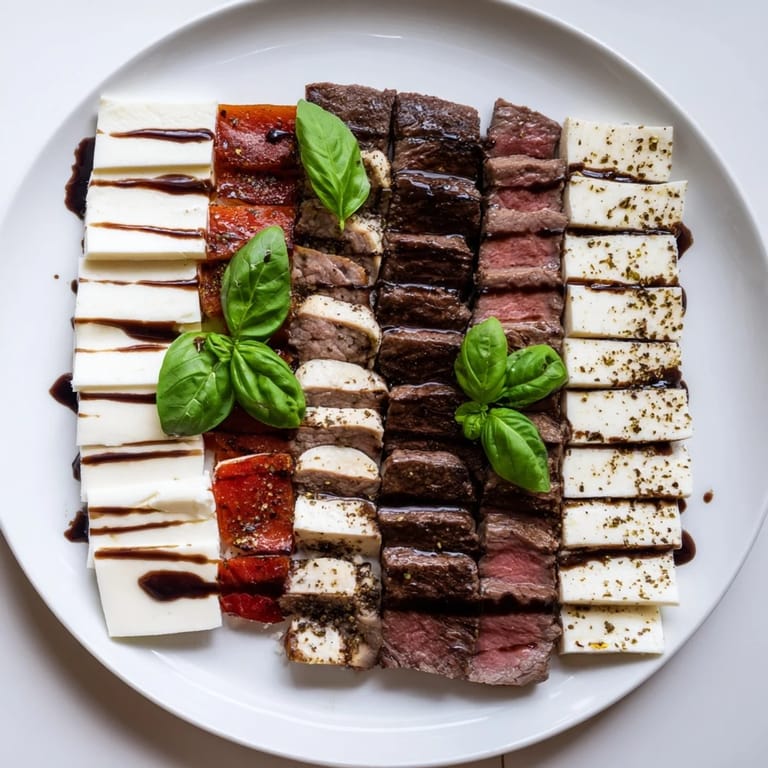
Save I discovered this dish by accident at a dinner party where I was trying to impress someone with a minimalist aesthetic. Instead of the usual charcuterie mess, I arranged strips of mozzarella and beef on a platter, drizzled them with a quick balsamic reduction, and suddenly everyone was talking about the visual—those clean, parallel lines felt almost architectural. What started as a nervous improvisation became the appetizer I keep coming back to, and now I can barely remember how I made it that first time.
My neighbor once asked what I was making and stayed for three hours just talking while I worked. She loved how you could eat it with your hands, no forks needed, and the balsamic glaze kept everything tasting fresh instead of heavy. It became our go-to thing to make together before her book club meetings, and I realized this recipe works because it's both elegant and forgiving.
Ingredients
- Fresh mozzarella: Buy it the day you're serving this—it should feel soft and slightly warm to the touch, which means it'll have that perfect milky taste that cuts through the meat's richness.
- Feta cheese: The crumbly texture creates visual interest, though it's firmer than mozzarella, so your stripes will have more presence on the platter.
- Beef tenderloin: This is where you don't skimp; the tenderness matters because thin slices cook so fast they almost finish themselves.
- Chicken breast: Slice it against the grain so it doesn't shred when you sear it, and don't walk away from the pan or it'll toughen up.
- Balsamic vinegar: The acidity is what ties everything together, so taste your glaze before it finishes—some vinegars are sweeter than others.
- Honey: This rounds out the sharp vinegar notes and creates that glossy finish that makes the platter shimmer.
- Fresh basil: Tear it just before serving so the leaves stay green and don't bruise into dark spots.
Tired of Takeout? 🥡
Get 10 meals you can make faster than delivery arrives. Seriously.
One email. No spam. Unsubscribe anytime.
Instructions
- Make the Glaze:
- Pour your balsamic vinegar into a small saucepan with honey and bring it to a gentle simmer. You'll notice it starts to bubble and smell sharper, then after about eight to ten minutes it'll become syrupy and coat the back of a spoon—that's when you know it's done.
- Sear the Meats:
- Season your beef and chicken generously, then work quickly in a hot skillet with just enough olive oil to keep things moving. The beef needs only a minute or so per side to stay tender, and the chicken should look golden and firm when you press it with tongs.
- Build Your Stripes:
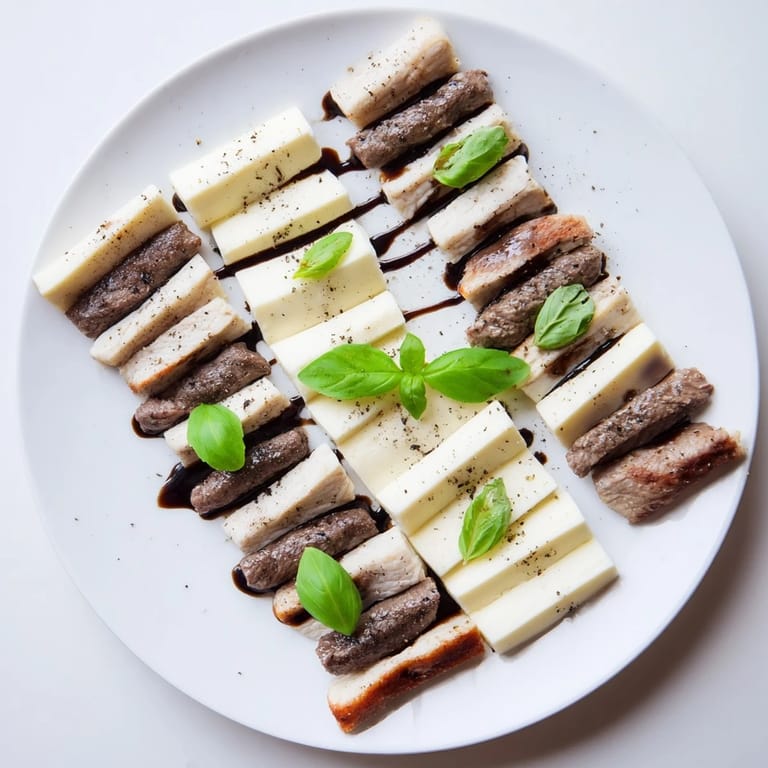
- Once everything's cooled enough to handle, lay your cheese and meat strips parallel to each other like you're creating a visual rhythm. The alternating pattern is what makes people stop and stare before they even taste it.
- Finish with Glaze and Garnish:
- Drizzle the balsamic reduction over the meat rows so it pools slightly between the stripes. Scatter basil leaves and crack fresh black pepper over everything just before people arrive.
 Save
Save I remember my sister trying this at a family gathering and then asking for the recipe mid-bite, her fork still in her hand. She said it felt special because it was something she'd never seen before, even though the ingredients were familiar—and that's when I realized this dish is really about presentation meeting restraint, about letting quality ingredients speak instead of piling on complexity.
The Glaze Moment
The balsamic glaze is honestly the heart of this whole thing. I've made it with different vinegars and watched how it completely changes the vibe—some are too thin, some too sweet, so I always taste as I go. The honey isn't just sweetness; it acts like a buffer that makes the whole thing feel balanced instead of acidic, and when it cools slightly it becomes almost sticky, which helps the glaze cling to the meat instead of sliding off the platter.
Cheese Selection Matters
Using both mozzarella and feta creates this beautiful conversation between soft and firm, mild and tangy. The mozzarella stays creamy and almost melts against the warm meat, while feta holds its shape and adds a salty sharpness that plays against the sweet glaze. I learned this by accident when I ran out of mozzarella and used all feta, which was fine but felt one-note compared to mixing them.
Timing and Temperature
The thing about appetizers is that timing feels obvious until it isn't. I used to make this hours ahead and refrigerate it, watching the cheese get dense and the glaze separate. Now I prep everything an hour early but do the final assembly just before people arrive, and the difference is remarkable—flavors are brighter, textures are cleaner, and it tastes like you actually cared instead of just checking boxes.
- Slice your cheese and meat no more than an hour before assembling to keep everything from drying out under plastic wrap.
- Let the platter sit at room temperature for ten minutes before serving so all the elements taste their best instead of cold.
- Have extra basil on hand because people always want more green scattered on top.
 Save
Save This recipe became my favorite because it proved that sophisticated doesn't mean complicated. Every time I make it, I'm reminded that good food is really just about respecting your ingredients and not overthinking it.
Kitchen Guide
- → What cheeses are used in the Safari Stripes?
Fresh mozzarella and feta are sliced into strips to create creamy layers that contrast with the meats.
- → How is the balsamic glaze prepared?
The glaze is made by simmering balsamic vinegar with honey until thickened to a syrupy consistency.
- → Can the meats be substituted?
Yes, prosciutto or smoked turkey can replace the beef and chicken for different flavors.
- → Is there a vegetarian alternative?
Grilled eggplant or portobello mushroom strips can be used instead of meats for a vegetarian option.
- → What garnishes enhance the dish?
Fresh basil leaves and cracked black pepper add aroma and a slight spice to the final presentation.