 Save
Save There's something magical about setting down a mezze platter in the middle of a table and watching everyone's hands reach in at once. I discovered this particular combination during a chaotic dinner party where I'd promised to bring something impressive but had barely two hours to pull it together. Instead of panicking, I remembered my neighbor's kitchen garden and the afternoon she taught me that the best platters aren't about perfection—they're about abundance and texture. That simple lesson has stayed with me ever since.
I made this for the first time when my sister called to say she was bringing her new partner to dinner, and I realized I had about an hour to seem like I had my life together. The hummus came together so easily that I actually had time to light candles, and watching their faces light up when they saw the spread made me realize this wasn't really about the food at all—it was about creating a moment where everyone felt welcome.
Ingredients
- Cooked chickpeas (1½ cups / 400 g): The foundation of truly creamy hummus; I always drain and rinse mine thoroughly to remove any starch that might make it grainy.
- Tahini (¼ cup / 60 ml): The secret ingredient that transforms chickpeas into silk; buy a good quality version because you'll taste the difference immediately.
- Fresh lemon juice (3 tbsp): This is what gives hummus its brightness and keeps it from tasting flat or heavy.
- Extra virgin olive oil (2 tbsp, plus extra for drizzling): Use the good stuff here—it's the finishing touch that makes people ask for your recipe.
- Garlic clove (1 small, minced): Less is more; a tiny clove gives warmth without overpowering the delicate tahini flavor.
- Ground cumin (½ tsp): This brings an earthy warmth that makes people ask what that subtle spice is.
- Salt (½ tsp): Start with less and adjust; tahini and lemon juice are already salty.
- Cold water (2–3 tbsp): Add it gradually—the hummus will continue to lighten as you blend, and you can always add more but can't take it back.
- Cherry tomatoes (1 cup, halved): Their natural sweetness and burst of color make them essential, not just decoration.
- Cucumber (1 cup, sliced): The refreshing contrast that keeps people coming back for more.
- Red bell pepper (1 cup, sliced): Adds crunch and a subtle sweetness that works perfectly with salty olives and cheese.
- Carrot sticks (1 cup): They stay crisp for hours, making them the reliable friend of any platter.
- Mixed olives (1 cup, pitted if desired): The combination of green and Kalamata creates depth; briny is good, but not so briny it overpowers.
- Feta cheese (150 g, cubed or sliced): Creamy, tangy, and it holds its shape beautifully on a platter.
- Pita breads (4, cut into triangles): Warm them gently before cutting so they stay flexible and don't shatter.
- Fresh parsley (2 tbsp, chopped): A handful scattered at the end brings everything to life and adds a fresh green brightness.
- Sumac or paprika (1 tsp): The finishing flourish that makes people think you spent all day on this.
Tired of Takeout? 🥡
Get 10 meals you can make faster than delivery arrives. Seriously.
One email. No spam. Unsubscribe anytime.
Instructions
- Make the hummus:
- Combine your chickpeas, tahini, lemon juice, olive oil, garlic, cumin, and salt in a food processor and blend until it's completely smooth and creamy. Add cold water one tablespoon at a time, tasting as you go—you want it light and fluffy, not stiff or runny.
- Set the stage:
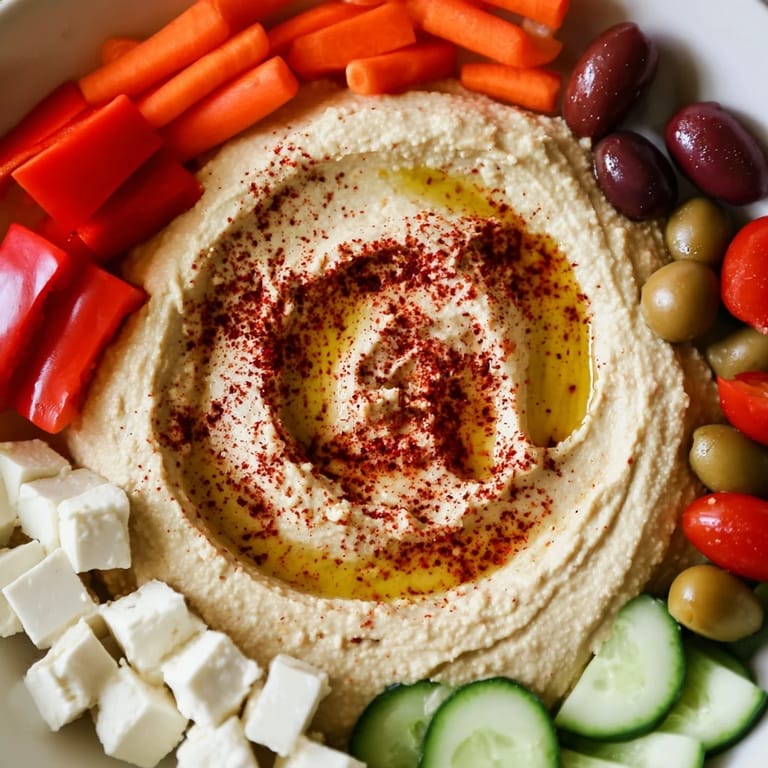
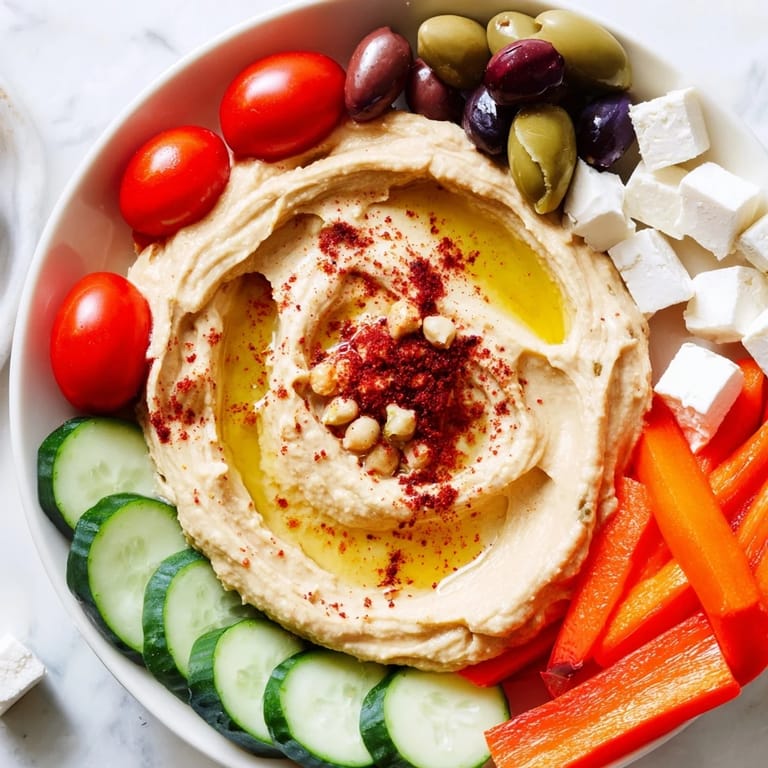
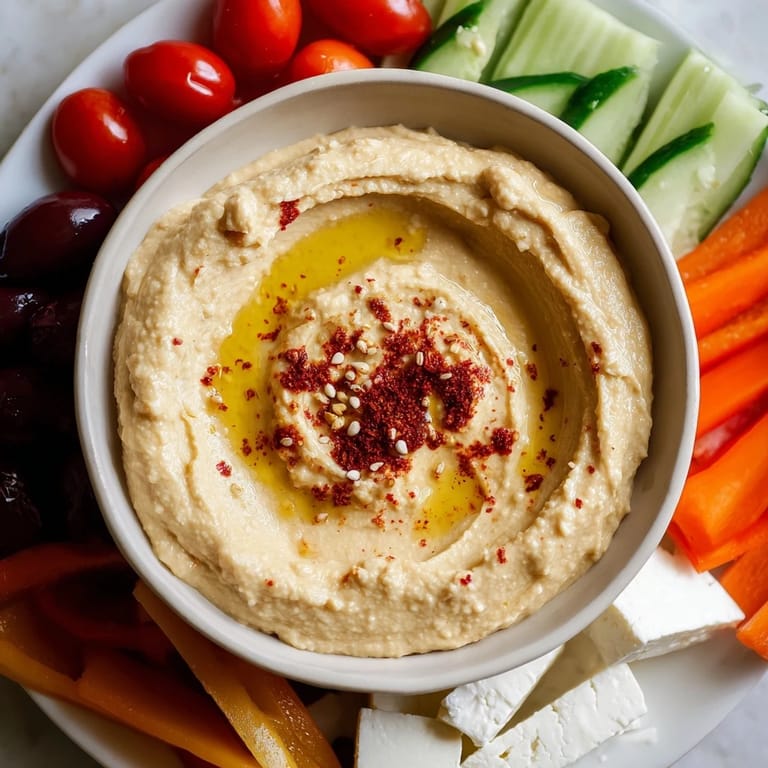
- Spread your hummus in a shallow bowl or directly onto your serving platter, creating a slight well in the center. Drizzle generously with that good olive oil and dust with sumac or paprika—this is where the visual magic happens.
- Arrange with intention:
- Scatter your tomatoes, cucumber, bell pepper, and carrot sticks around the hummus, leaving enough negative space so nothing looks crowded. Tuck in the olives and feta cheese, nestling them between the vegetables so every bite gets a variety of flavors and textures.
- Warm and add the bread:
- Heat your pita breads for just a minute or two in a warm oven or over a flame so they're soft and pliable, then cut them into triangles and arrange them around the edge of the platter. They'll stay warm and flexible long enough for people to scoop.
- Final touches:
- Scatter fresh parsley across the platter and add lemon wedges to the sides—let people squeeze them over everything according to their taste. Serve immediately and watch it disappear.
 Save
Save I served this to my book club once, and instead of discussing the book, we ended up talking for two hours about the simplicity of it all—how something so unpretentious could feel so generous. That's when I realized this platter isn't really food at all; it's permission to slow down and share something real.
Building the Perfect Spread
The secret to a mezze platter that people actually enjoy isn't about having expensive ingredients or rare finds; it's about contrast and balance. Think about how the creamy hummus works against the crisp vegetables, how the salty cheese plays off the bright lemon, how the chewy pita grounds everything else. When you arrange your platter with these contrasts in mind, you're not just serving food—you're creating an experience where every texture and flavor has a purpose.
Make It Your Own
This platter is incredibly forgiving, which is part of its charm. If you don't have one vegetable, use another; if you prefer labneh to feta, go for it; if you want to add roasted red peppers or a drizzle of muhammara, that's exactly the kind of thinking that makes these spreads special. The framework stays the same, but the details are yours to play with.
Serving and Storage
This platter is best served fresh, but you have more flexibility than you'd think. Keep the hummus covered and separate if you're making it more than an hour ahead, and store your vegetables in water to keep them crisp; you can assemble everything just before guests arrive. If you have leftovers—which rarely happens—the hummus keeps beautifully in the fridge for up to five days, and leftover vegetables make wonderful additions to salads or lunch bowls the next day.
- Warm your pita just before serving so it stays soft and flexible rather than drying out and cracking.
- If you're traveling with this platter, pack the hummus separately and assemble once you arrive to keep everything fresh.
- Don't skip the final drizzle of good olive oil and that sprinkle of sumac—they're what make people pause and say this tastes special.
 Save
Save This platter has become my answer to almost every gathering because it says all the things I want to say without words—that I care enough to put thought into it, but not so much that I'm stressed about it. It's honest, generous, and it always brings people together in exactly the way a good meal should.
Kitchen Guide
- → What ingredients make the hummus creamy?
The creaminess in the hummus comes from blended chickpeas combined with tahini, olive oil, lemon juice, and a bit of cold water to achieve a smooth texture.
- → Can the pita bread be warmed before serving?
Yes, warming pita bread enhances its softness and flavor, making it a perfect accompaniment to the platter.
- → Are there alternative cheeses that can be used?
Feta can be swapped with labneh or goat cheese to suit different tastes while maintaining a creamy texture.
- → What garnishes add extra flavor to the platter?
Fresh chopped parsley, lemon wedges, and a sprinkle of sumac or paprika provide bright, aromatic flavors to elevate the dish.
- → Is this platter suitable for vegetarians?
Yes, the assortment includes only plant-based and vegetarian-friendly ingredients like chickpeas, vegetables, olives, and cheese.