 Save
Save The first time I made this, I wasn't actually trying to turn Marry Me Chicken into soup—I'd simply overestimated the broth while poaching chicken for a different dish entirely. By the time I realized my mistake, the kitchen smelled like sun-dried tomatoes and cream, and something told me to keep going instead of starting over. That happy accident taught me that the best dishes often come from a willingness to adapt, and now this creamy, brothy version is what I reach for when I want comfort without fuss.
I served this to my partner on a rainy evening when neither of us felt like ordering takeout, and they asked if I'd learned to cook Italian professionally while they weren't looking. It was such a small moment, but watching someone's face light up over a soup you made—when you know exactly how simple it really is—that's when you realize comfort food isn't about complexity, it's about the care you put into each step.
Ingredients
- Boneless, skinless chicken breasts (2, about 450 g): These stay tender when you don't fully cook them in the searing step, letting the gentle simmer finish the job without drying them out.
- Olive oil (1 tbsp): Just enough to get a light golden color on the chicken—you're not making a crust, just kissing the surface with heat.
- Kosher salt and black pepper: Season generously before searing; this is where most of your flavor foundation starts.
- Yellow onion, carrots, and celery (diced): The holy trinity that makes any soup smell like home cooking; don't skip the step of softening them first.
- Garlic (3 cloves, minced): Add it after the vegetables soften so it doesn't burn and turn bitter—that 1-minute bloom is crucial.
- Sun-dried tomatoes (50 g, drained): These are the secret weapon that gives the soup its warmth and slight sweetness; the oil they're packed in adds flavor, but drain it so you control the richness.
- Low-sodium chicken broth and water (1 L broth plus 240 ml water): The ratio of broth to water keeps things from becoming too salty, letting you taste each ingredient.
- Heavy cream (120 ml): Add this at the very end over gentle heat so it doesn't break or separate.
- Parmesan cheese (30 g, freshly grated): Freshly grated melts more smoothly than pre-shredded; it's worth the 30 seconds it takes.
- Ditalini pasta (120 g): These tiny tubes absorb the creamy broth beautifully, but cook them separately if you like—it gives you more control over doneness.
- Dried oregano, thyme, bay leaf, and red pepper flakes: Oregano and thyme anchor the Italian flavor, the bay leaf adds subtle depth, and red pepper flakes are optional but they wake up your palate.
- Fresh basil: Don't skip the garnish; it's the final touch that says you cared about presentation.
Tired of Takeout? 🥡
Get 10 meals you can make faster than delivery arrives. Seriously.
One email. No spam. Unsubscribe anytime.
Instructions
- Sear the chicken:
- Season both breasts with salt and pepper, then lay them in hot oil. You'll hear that satisfying sizzle—that's your cue you're doing it right. Three to four minutes per side until the outside turns golden, but the inside stays slightly undercooked; the soup will finish cooking it gently.
- Build the flavor base:
- Toss in your diced onion, carrots, and celery and let them soften for a few minutes, stirring occasionally. Once they start releasing their sweetness, add the garlic and cook just until fragrant—the goal is soft and sweet, not browned.
- Add the aromatics and tomatoes:
- Stir in your sun-dried tomatoes along with oregano, thyme, and red pepper flakes if you're using them. The herbs will bloom and release their essential oils—your whole kitchen will smell incredible.
- Pour in the liquid:
- Add your broth and water, toss in the bay leaf, and nestle the seared chicken back into the pot. You're creating an environment where everything will cook gently together.
- Simmer gently:
- Bring it to a boil, then lower the heat immediately to a gentle simmer. Fifteen to twenty minutes until the chicken is cooked through and the vegetables are tender. You want tiny bubbles, not a rolling boil.
- Shred and return:
- Once the chicken is cooked, pull it out with tongs and shred it using two forks—it should fall apart easily. Stir it back into the pot where it'll soak up all those flavors.
- Cook the pasta:
- Add your ditalini and cook for eight to ten minutes, stirring occasionally. Taste a piece of pasta; it should be soft but still have a tiny bit of resistance when you bite it.
- Finish with cream:
- Lower the heat, fish out the bay leaf, and slowly stir in heavy cream and freshly grated Parmesan. Keep the heat low and gentle; you're melting, not boiling, or the cream might separate and leave you with little broken bits.
- Taste and adjust:
- This is your moment to taste and decide if you need more salt, pepper, or herbs. Fresh basil goes on top just before serving.
 Save
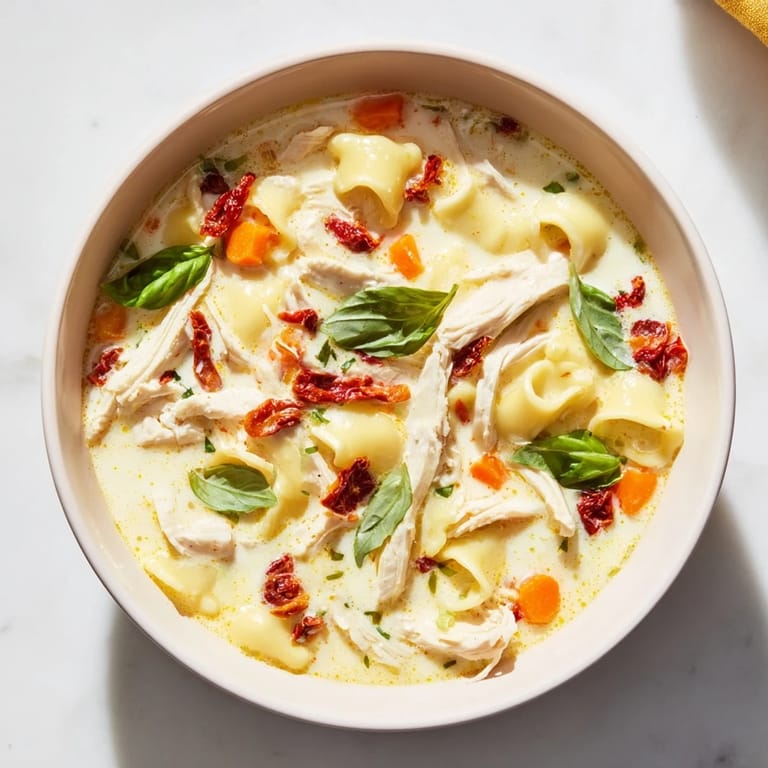
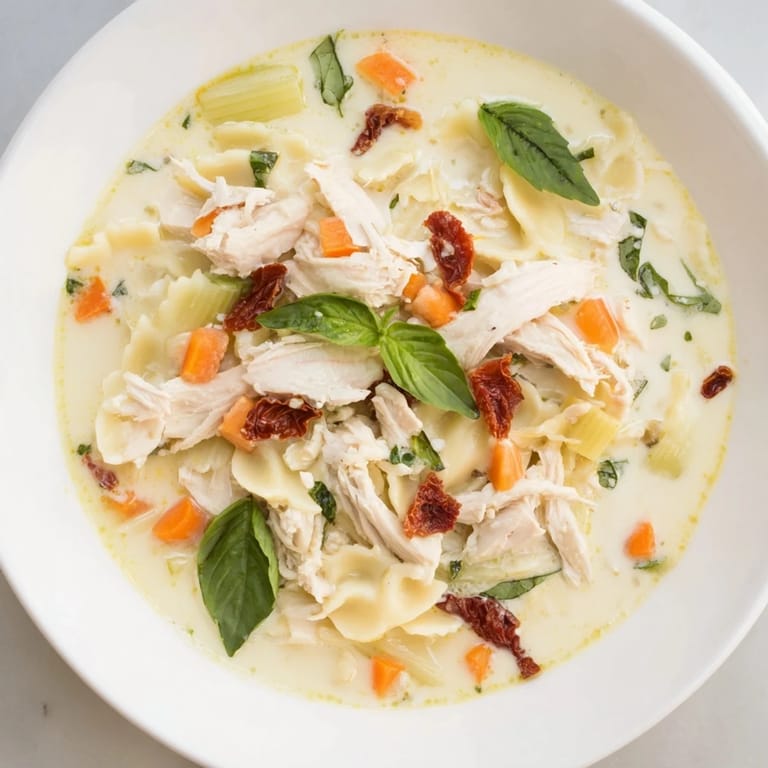
Save There's a moment right before serving when you ladle it into bowls and watch the cream swirl with the broth, the ditalini nestled with tender chicken, and those dark bits of sun-dried tomato scattered throughout—that's when you realize you've made something that looks restaurant-quality but tastes like it came from your own kitchen and your own care. That's the magic of this soup.
Timing and Preparation
The beauty of this dish is that it doesn't ask much of you upfront. Fifteen minutes of prep work—dicing vegetables, mincing garlic, draining those sun-dried tomatoes—and then the pot does most of the work. I've learned to prep everything before I heat the oil, so once I start cooking, it's just a steady rhythm of adding ingredients, stirring, and letting time do the heavy lifting. Even if you're a slower vegetable chopper, you'll still have everything ready before the chicken finishes searing.
Making It Your Own
This recipe is forgiving enough to play with. Some nights I've added a handful of fresh spinach right before the cream, which wilts into the broth and adds earthiness. Other times I've used rotisserie chicken when I'm exhausted, which cuts the cooking time in half and still tastes wonderful. A squeeze of lemon juice at the end brightens everything, especially if you feel like the cream has made it too rich. The structure is solid enough that your tweaks will only make it feel more personal to your kitchen.
Serving Suggestions and Pairings
This soup wants crusty bread—something with a dark crust and an open crumb that can soak up every last spoonful of broth. A glass of dry white wine, like Pinot Grigio or Sauvignon Blanc, cuts through the richness beautifully and tastes perfect alongside the creamy, herby warmth. I've served this as a starter before a light salad, or as the main course with roasted vegetables on the side, and it works both ways.
- Fresh basil isn't just decoration; it's the final flavor note that makes people ask for seconds.
- Extra grated Parmesan on the table lets people adjust the richness to their taste.
- If you have leftovers, add a splash of broth when you reheat; the pasta absorbs liquid as it sits and makes the soup thicker than it was fresh.
 Save
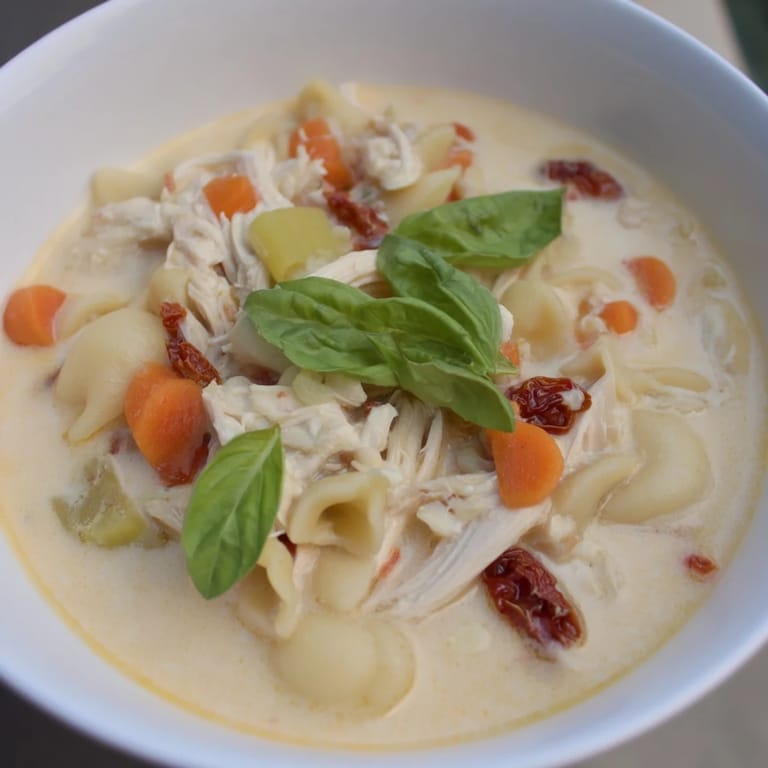
Save This soup came into my life by accident but stayed because it works—it's delicious, it's manageable, and it makes people feel cared for. That's all any comfort food really needs to do.
Kitchen Guide
- → Can I use rotisserie chicken instead of fresh chicken breasts?
Yes, shredded rotisserie chicken can be added towards the end of cooking to save time while maintaining flavor.
- → What type of pasta works best in this dish?
Ditalini pasta is preferred for its small size and ability to hold the creamy broth, but other small shapes like orzo or elbow macaroni also work well.
- → How can I make this dish dairy-free?
Substitute heavy cream with coconut milk or a plant-based cream and omit the Parmesan cheese or use a dairy-free alternative.
- → What herbs enhance the flavor of this dish?
Dried oregano and thyme add warmth and depth, complemented by fresh basil garnish for a bright finishing touch.
- → Is it possible to add more vegetables to this meal?
Yes, spinach or other leafy greens can be stirred in towards the end for extra nutrition and color.