 Save
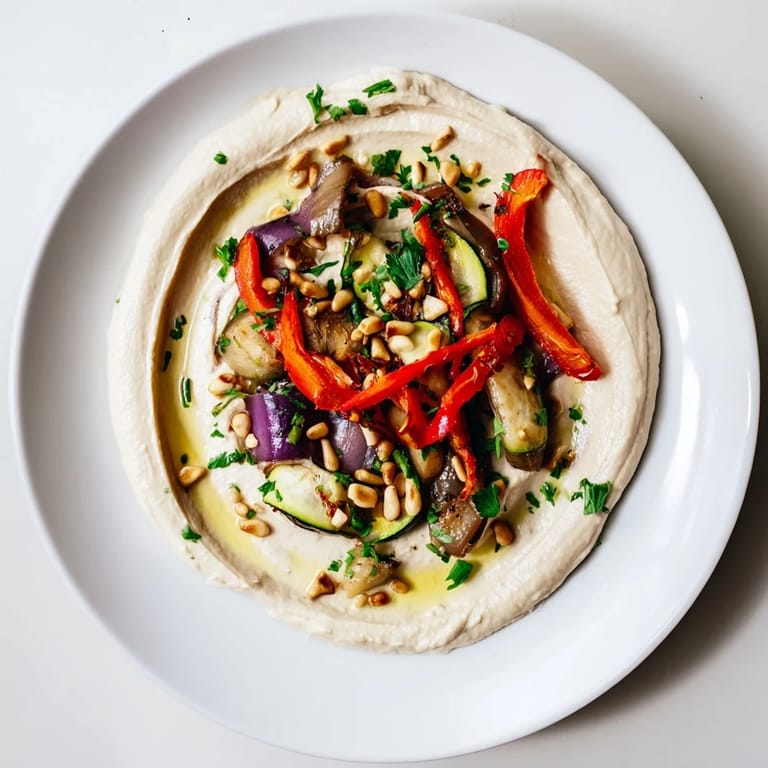
Save There's something almost meditative about the ritual of making hummus—the gentle whir of the food processor, the way chickpeas transform into silk. But it wasn't until a friend brought a charred vegetable hummus to a potluck that I realized this creamy base deserved more than a simple drizzle of olive oil. The smoky vegetables, the warmth of toasted pine nuts, the bright scatter of parsley—suddenly it felt like an actual dish, something with presence and story.
I served this at a late summer dinner when the market had the most gorgeous small eggplants, and my neighbor—who usually picked around vegetables—went back for thirds. She spent the whole time talking about the charred edges and asking how I got the hummus so silky. That's when I understood: good food isn't about complexity, it's about letting each ingredient shine in its own way.
Ingredients
- Canned chickpeas (1½ cups): Drain and rinse them well—this step removes the starchy liquid that can make hummus gluey instead of airy.
- Tahini (¼ cup): This is your secret weapon for creaminess, but don't skip the quality; cheap tahini tastes thin and bitter.
- Fresh lemon juice (2 tablespoons): Always fresh—bottled changes the flavor profile and won't brighten the hummus the same way.
- Garlic clove (1), minced: One is usually perfect unless your garlic is small or you love bold flavors.
- Extra-virgin olive oil (3 tablespoons plus more for drizzling): The good stuff makes a difference here since it's not being cooked down.
- Ground cumin (½ teaspoon): This warm spice ties the whole thing together without overpowering.
- Sea salt (½ teaspoon): Adjust to taste after blending—salt tastes different once everything's mixed.
- Cold water (2–3 tablespoons): Add slowly; you're going for cloud-like, not runny.
- Red bell pepper, zucchini, red onion, eggplant: These vegetables char beautifully and add sweetness that balances the earthiness of chickpeas.
- Smoked paprika (½ teaspoon): This gives the vegetables their signature depth without using a smoker.
- Pine nuts (3 tablespoons): Toast them yourself—the few minutes of attention transforms them from pleasant to unforgettable.
- Fresh parsley (2 tablespoons, chopped): Adds brightness and that fresh-from-the-garden feeling at the end.
- Sumac or zaatar (1 teaspoon, optional): If you have it, use it; the tartness and herbiness make everything taste more intentional.
Tired of Takeout? 🥡
Get 10 meals you can make faster than delivery arrives. Seriously.
One email. No spam. Unsubscribe anytime.
Instructions
- Warm your oven and prep your vegetables:
- Set the oven to 425°F so it's ready to go. While it heats, cut your bell pepper into strips, slice the zucchini, break the red onion into wedges, and cube the eggplant—try to keep pieces roughly the same size so they cook evenly.
- Toss and spread:
- In a bowl, combine your vegetables with a tablespoon of olive oil, the smoked paprika, salt, and pepper. Spread them in a single layer on your baking sheet—they should have room to breathe and char, not steam in a pile.
- Roast until golden and caramelized:
- Slide the pan into the oven for 22–25 minutes, giving everything a stir about halfway through. You want the edges to be dark and crispy, not soft and pale.
- Build your hummus:
- While vegetables roast, add your drained chickpeas, tahini, lemon juice, minced garlic, olive oil, cumin, and salt to the food processor. Blend until completely smooth, then add cold water a tablespoon at a time until you reach the creaminess you want—it should hold its shape but be fluffy, not thick.
- Toast the pine nuts:
- In a dry skillet over medium heat, add the pine nuts and shake the pan frequently for 2–3 minutes until they're golden and smell toasted. Don't walk away; they go from perfect to burnt in seconds.
- Compose your plate:
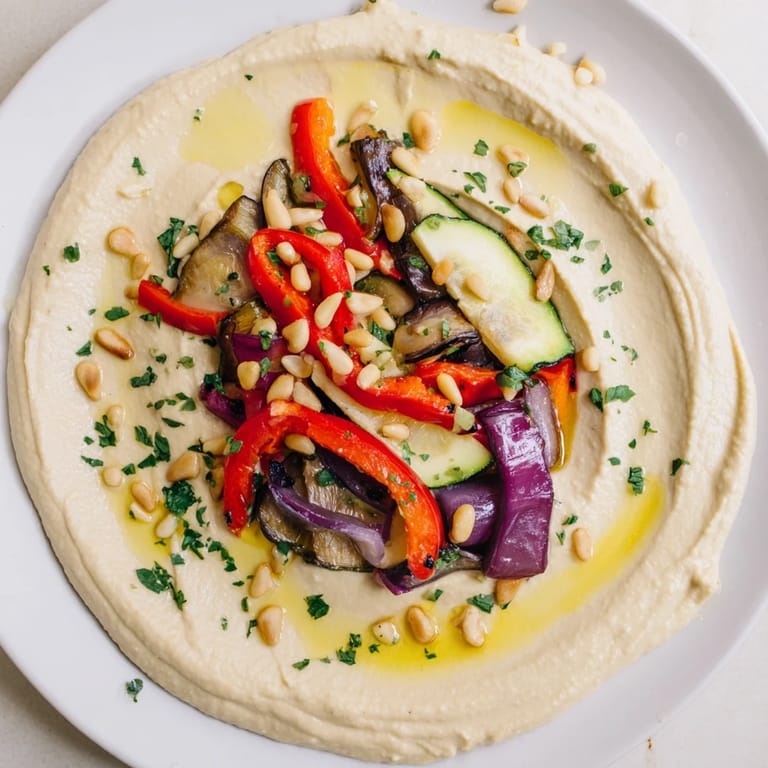
- Spread the hummus onto your serving platter in a shallow swoosh using the back of a spoon—this creates those beautiful ridges that catch the oil and make everything look more purposeful.
- Top and drizzle:
- Scatter the warm roasted vegetables across the hummus, sprinkle the toasted pine nuts and chopped parsley over everything, add a pinch of sumac if you have it, and finish with a generous drizzle of olive oil. Serve right away while the vegetables are still warm and the hummus is at its silkiest.
 Save
Save There was a moment at that summer dinner when someone tore off a piece of pita, loaded it with hummus and charred vegetables, and closed their eyes while eating it. That's when food becomes more than sustenance—it becomes a little gift you've made with your own hands.
Why Seasonal Vegetables Matter
This dish thrives on what's in season. In fall, try roasting cubed butternut squash or chunks of carrots alongside smaller mushrooms. In spring, asparagus and snap peas work beautifully. The recipe is flexible because great hummus is a canvas—the vegetables tell the story of what time of year you're cooking in. I've found that smaller vegetables tend to char better and cook through faster than large ones, so choose them with intention.
Customizing the Heat and Depth
Some nights I add a small spoonful of harissa stirred into the hummus for warmth and a subtle kick. Other times I scatter chili flakes across the top or add pomegranate molasses for brightness. The base recipe is forgiving enough to take on these additions without losing its character. The key is tasting and adjusting—start small and build your flavors rather than overwhelming the delicate nuttiness of the tahini and chickpeas.
Serving and Storage Ideas
I've served this as an appetizer, a light lunch with grains, and even as a side to grilled fish. The hummus keeps for three to four days in the refrigerator, though the roasted vegetables are best served fresh—you can always roast a new batch if you're reusing hummus. For parties, you can spread the hummus ahead of time and add the warm vegetables and toasted nuts just before guests arrive to keep everything at its peak.
- If you're bringing this to a potluck, assemble it there so the vegetables stay warm and the hummus doesn't dry out during transport.
- Leftover roasted vegetables are wonderful cold the next day tossed with greens and a simple vinaigrette.
- Make extra pine nuts; they disappear faster than you'd expect, and toasted nuts keep in an airtight container for up to a week.
 Save
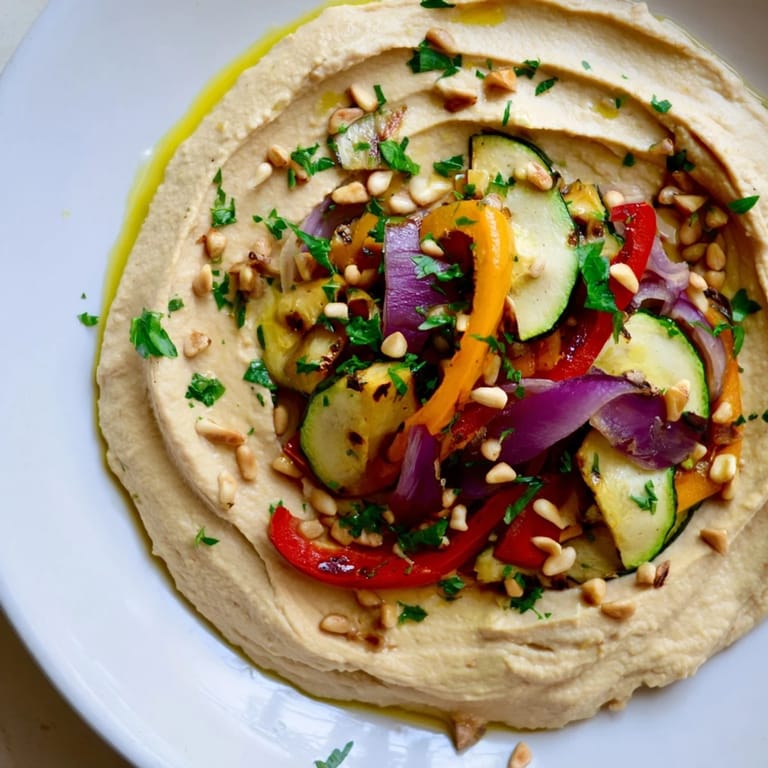
Save This dish taught me that hospitality is in the details—the warmth of toasted nuts, the char marks on vegetables, the swirl of good olive oil. It's simple, but it's made with attention, and people always feel that.
Kitchen Guide
- → What vegetables work best for roasting in this dish?
Red bell pepper, zucchini, red onion, and eggplant are excellent choices for roasting due to their textures and ability to caramelize.
- → How can I achieve the smooth, creamy hummus base?
Blend chickpeas with tahini, lemon juice, garlic, olive oil, cumin, and cold water until silky and smooth. Adjust textures by adding water gradually.
- → What seasonings enhance the roasted vegetables?
Smoked paprika, salt, and freshly ground black pepper bring out a smoky and well-balanced flavor in the vegetables.
- → Can I substitute pine nuts with another topping?
Yes, toasted walnuts or almonds can provide a similar crunch and nutty flavor as an alternative.
- → How should this dish be served for best results?
Spread the creamy base on a platter, top with warm roasted vegetables, sprinkle pine nuts and parsley, then drizzle olive oil. Serve with warm pita or fresh crudités.