 Save
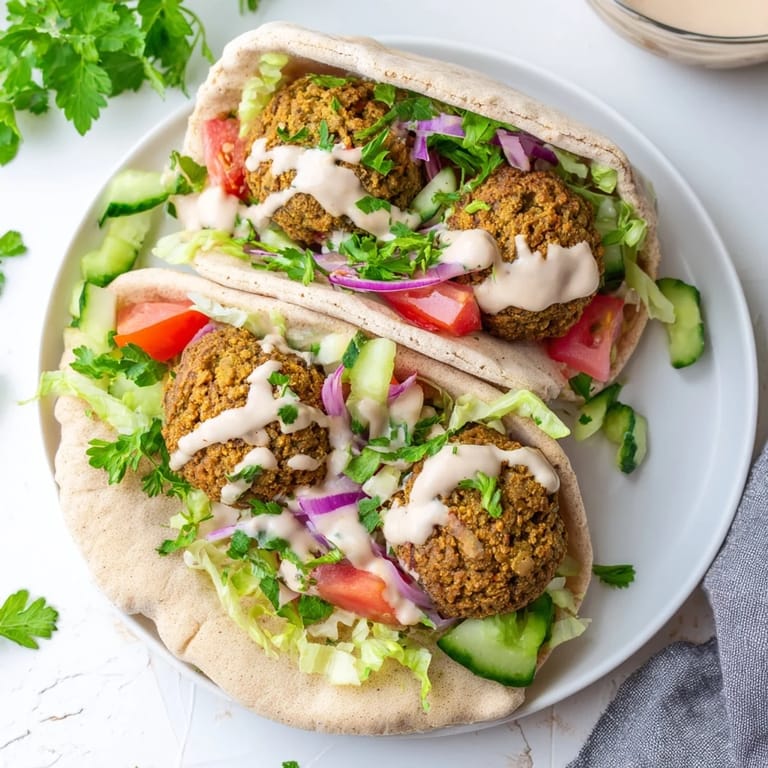
Save The smell of falafel frying in hot oil takes me straight back to a Saturday morning in my tiny apartment kitchen, when a friend from Lebanon showed me how to make these crispy little pockets from scratch. I'd always bought them pre-made before, never realizing how much better homemade could taste. She laughed when I first tasted mine, golden and still warm, and said, "Now you understand why people fight over the last one." That was years ago, but I still think of her kitchen wisdom every time I make a batch.
I made these for a potluck once and watched someone take a bite, pause, and ask if I'd bought them from a restaurant. There's something about the warmth of the pita and the cool crunch of fresh vegetables that just works—it became my go-to dish whenever I wanted to impress without spending hours in the kitchen.
Ingredients
- Dried chickpeas (1 ½ cups, soaked overnight): Start with dried, not canned—they hold together better and give you that authentic crispy exterior.
- Fresh herbs (½ cup each parsley and cilantro): Don't skip these or use dried; they're what makes the inside bright and alive.
- Spices (cumin, coriander, cayenne): Toast them in your head as you smell them—these are the flavors that make you close your eyes and savor.
- Baking powder and flour: The baking powder is your secret weapon for fluffiness; the flour helps everything bind without being dense.
- Tahini (½ cup): Quality matters here—get the kind that's just ground sesame, nothing else.
- Fresh vegetables (lettuce, tomatoes, cucumber, red onion): Keep them cold and fresh; they're the textural contrast that makes every bite interesting.
- Pita bread: Warm it gently so it's soft but still holds its pocket shape.
Tired of Takeout? 🥡
Get 10 meals you can make faster than delivery arrives. Seriously.
One email. No spam. Unsubscribe anytime.
Instructions
- Drain and pulse the chickpeas:
- Pat your soaked chickpeas very dry—moisture is the enemy of crispiness. Pulse everything in the food processor until it looks like coarse sand that holds together when you squeeze it; don't overprocess or you'll end up with a paste.
- Rest the mixture:
- Refrigerate for 30 minutes if you have time; it makes the mixture easier to shape and actually improves the flavor as things meld.
- Heat the oil correctly:
- Get your oil to exactly 350°F—too cool and they'll be greasy, too hot and they'll brown before cooking through. If you don't have a thermometer, drop a small piece of bread in; it should sizzle immediately.
- Form and fry:
- Wet your hands or use a falafel scoop to keep things from sticking, then fry in batches so the oil temperature stays steady. Listen for the gentle bubbling sound that means they're cooking perfectly.
- Make the tahini sauce:
- Whisk tahini with lemon juice first—it'll seize up into a ball, but keep going. Slowly add water until it becomes silky and pourable; this is where patience makes all the difference.
- Assemble with care:
- Warm your pita just enough to soften it, fill gently so nothing tears, and drizzle the sauce right before serving so the bread doesn't get soggy.
 Save
Save There's a moment, right after you pull the falafel from the oil and bite into one while it's still steaming, where everything else fades away. That crispy shell shattering between your teeth, the herby warmth inside—it's one of those simple things that reminds you why cooking matters.
The Secret to Perfectly Crispy Falafel
The difference between soggy and spectacular comes down to two things: keeping your oil at the right temperature and not overcrowding the pan. I learned this the hard way when I tried to speed things up by frying too many at once, and they came out greasy and pale. Now I work in small batches and treat each one like it matters, because it does. The sizzle should be steady and confident, not violent or timid.
Building Your Perfect Pita Pocket
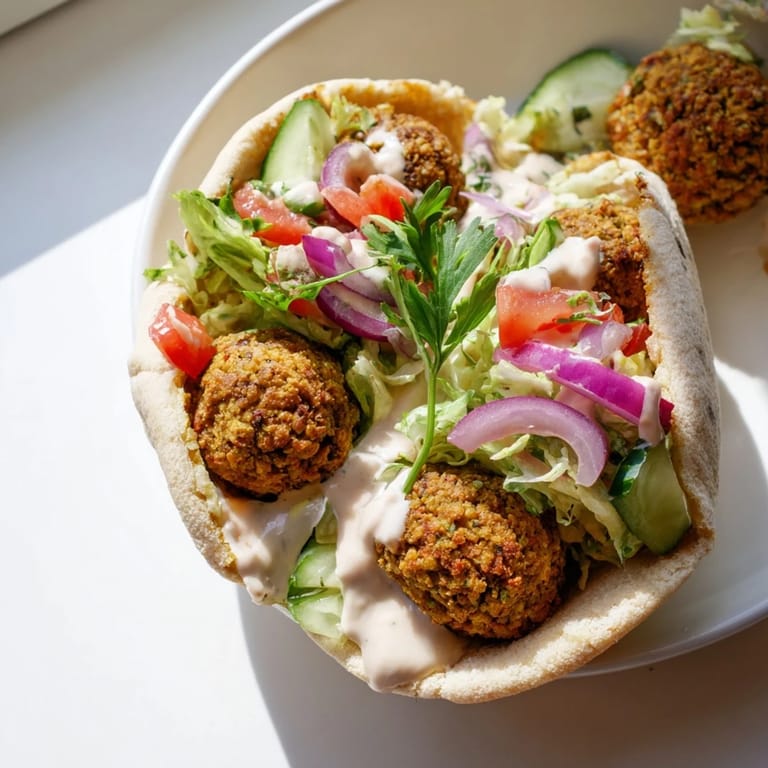
The order matters more than you'd think—lettuce first as a buffer so the warm falafel doesn't wilt everything, then the juicier vegetables, then falafel, then sauce. It's like building a little edible architecture. I also keep everything as cold and fresh as possible until the moment of assembly, which creates this beautiful temperature contrast that makes each bite interesting.
Variations and Serving Ideas
Once you master the basic recipe, the possibilities expand in fun directions. I've added roasted beets for earthiness, swapped in za'atar for extra spice, and even crumbled falafel over salads when I wanted something lighter. It works equally well as a side dish for grilled vegetables or as part of a mezze spread. The tahini sauce is so versatile that you'll find yourself drizzling it on everything from grain bowls to roasted cauliflower.
- Add pickled turnips or sliced radishes for a sour brightness that cuts through the richness.
- Bake at 400°F for 20–25 minutes if you want a lighter version without sacrificing texture.
- Serve with hot sauce, extra lemon juice, or even a dollop of hummus for more flavor dimensions.
 Save
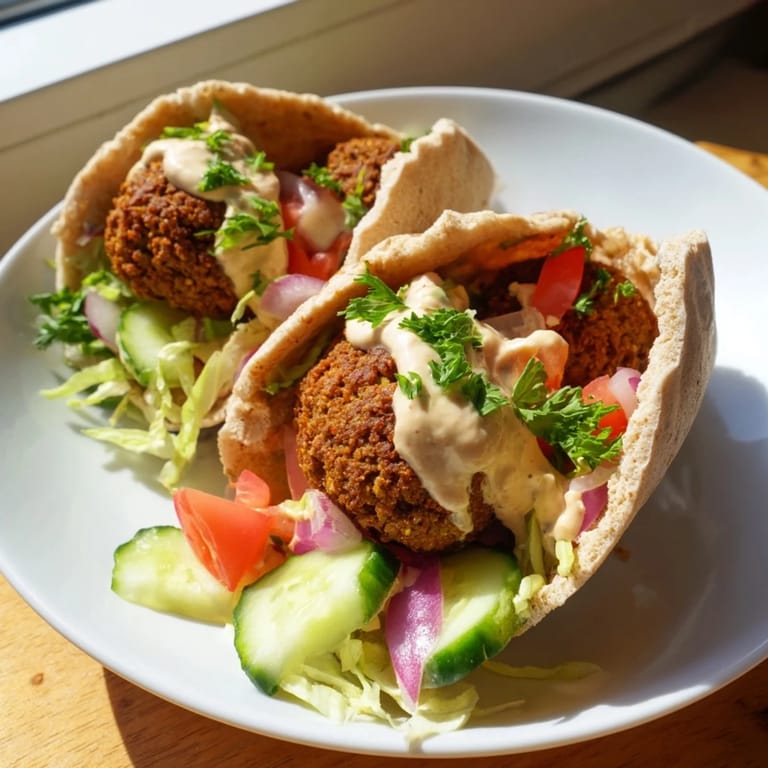
Save These pita pockets have become my answer to "what should we make for dinner?" because they're fast, they're impressive, and everyone leaves the table happy. Once you've made them once, you'll understand why they're a Middle Eastern staple.
Kitchen Guide
- → What is the best way to soak chickpeas?
Soak dried chickpeas overnight in plenty of cold water to soften them thoroughly, ensuring a tender falafel texture.
- → Can falafel be baked instead of fried?
Yes, baking falafel at 400°F (200°C) for 20-25 minutes provides a lighter alternative with good crispness when turned halfway.
- → How is the tahini sauce prepared?
Whisk tahini with lemon juice, minced garlic, salt, and gradually add cold water until smooth and pourable.
- → Which herbs enhance falafel flavor?
Fresh parsley and cilantro bring bright, aromatic notes that complement cumin and coriander for a balanced spice profile.
- → How do you achieve crispy falafel texture?
Fry falafel balls in hot vegetable oil (about 350°F/175°C) for 2-3 minutes per side until golden brown and crisp.
- → What vegetables pair well inside the pita pocket?
Shredded lettuce, diced tomatoes, sliced cucumber, and red onion add freshness and crunch to the falafel pockets.