 Save
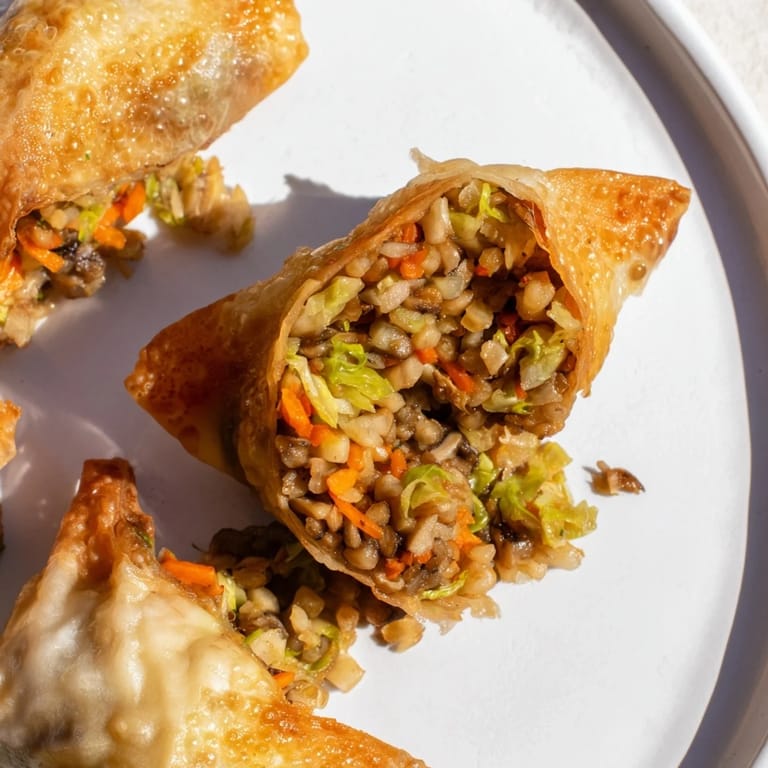
Save The first time I made these dumplings, I wasn't actually trying to create anything special—I just had leftover vegetables sitting in my crisper drawer and a pack of rice paper I'd been meaning to use. I decided to sauté everything together, wrapped it up, and when those golden, shattering shells hit the hot oil, something clicked. The sound alone—that urgent crackling—told me I'd stumbled onto something worth repeating.
I remember making a batch for my friend Sarah on a random Tuesday afternoon, mostly because she'd been stressed about work and needed something to do with her hands. We stood there folding dumplings at my kitchen counter, laughing at how the rice paper kept sticking to my fingers, and by the time they came out of the pan, her whole mood had shifted. That's when I realized these weren't just dumplings—they were a conversation starter, a reason to pause.
Ingredients
- Green cabbage, shredded: The backbone of the filling, it holds moisture without getting soggy and adds a subtle sweetness that balances the saltiness of the soy sauce.
- Carrot, grated: A touch of natural sweetness and those small flecks of color that make people think you fussed over every detail.
- Shiitake mushrooms, finely chopped: These give the filling an umami depth that makes it feel more savory than it has any right to be.
- Green onions, thinly sliced: Add them raw to the filling for a bright, sharp bite that cuts through the richness.
- Garlic and ginger, minced: These two are the flavor architects—don't skimp or rush the mincing, it makes a real difference.
- Soy sauce or tamari: Use tamari if you're keeping things gluten-free; the difference is barely noticeable but peace of mind matters.
- Sesame oil: Just a teaspoon, but it transforms everything with a toasted, nutty note that's impossible to replicate.
- Rice paper sheets: The 22 cm round ones work best; they're forgiving enough for beginners but crisp up beautifully when fried.
- Neutral oil for frying: Canola or avocado oil keeps the temperature stable without adding competing flavors.
Tired of Takeout? 🥡
Get 10 meals you can make faster than delivery arrives. Seriously.
One email. No spam. Unsubscribe anytime.
Instructions
- Prepare your filling:
- Combine the cabbage, carrot, mushrooms, green onions, garlic, soy sauce, sesame oil, and ginger in a large bowl. Mix everything together until it feels like one unified mixture, not separate ingredients just piled on top of each other.
- Cook the vegetables lightly:
- Heat a nonstick skillet over medium heat and add the filling, sautéing for 3 to 4 minutes until the vegetables soften slightly but still have some firmness to them. You want them cooked just enough to release their flavors without turning into mush, then remove from heat and let cool for a few minutes.
- Prepare your rice paper:
- Fill a large shallow dish with warm water—this is where patience matters more than speed. Dip one sheet of rice paper into the water for just 5 to 10 seconds until it becomes pliable; pulling it out too soon leaves it stiff, soaking too long makes it tear like wet tissue paper.
- Roll your dumplings:
- Lay the damp rice paper on a clean kitchen towel, place about 2 tablespoons of filling in the center, fold in the sides, then roll it up tightly like a burrito with confidence and momentum. The tighter you roll, the better they hold together during frying.
- Fry until golden:
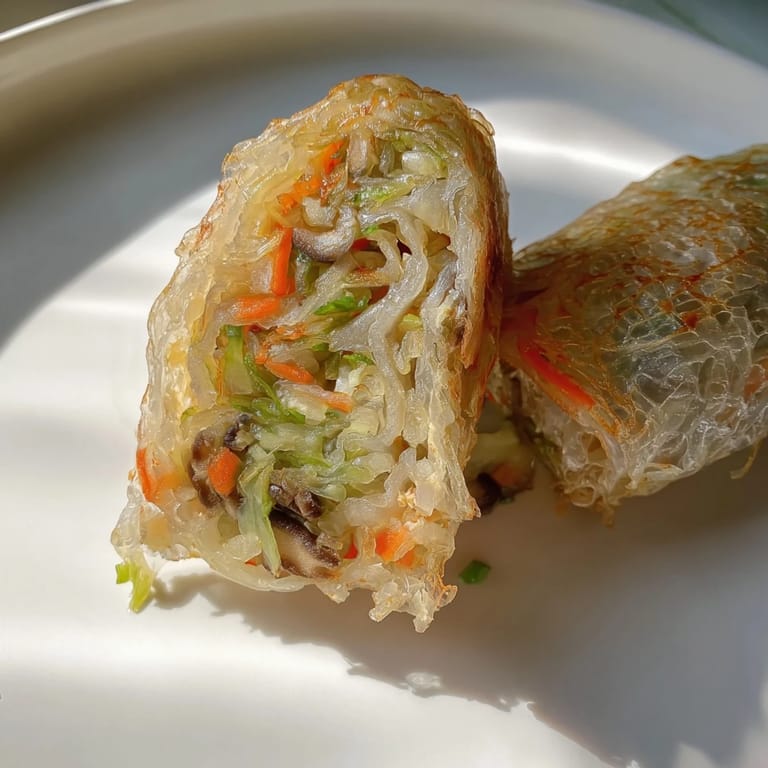
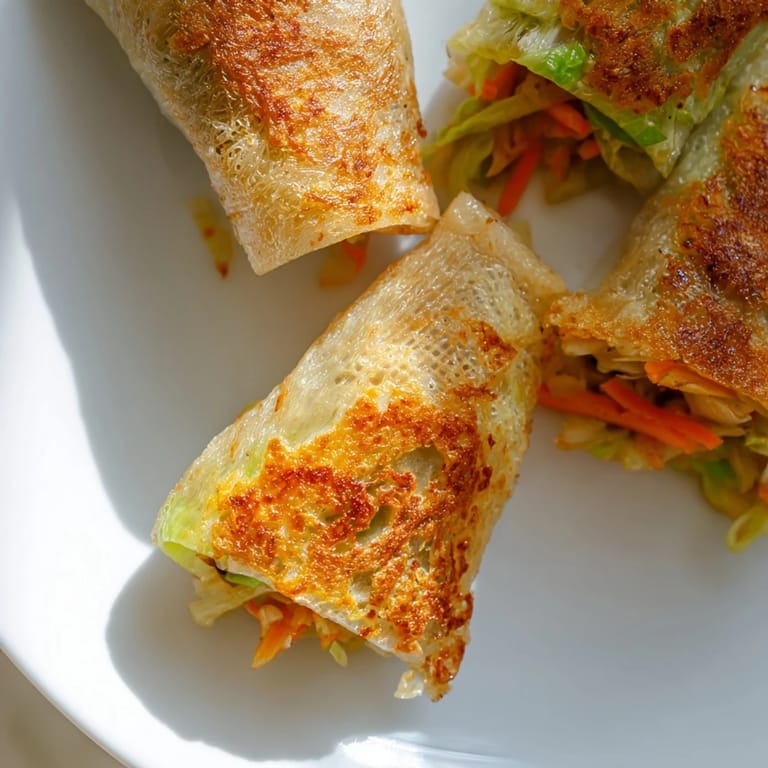
- Heat oil in a large nonstick skillet over medium heat, place dumplings seam side down with space between each, and cook for 2 to 3 minutes per side. You'll know they're ready when they've turned golden and the rice paper sounds paper-thin and crispy when you tap it with your spatula.
- Make your dipping sauce:
- Whisk together soy sauce or tamari, rice vinegar, maple syrup or honey, and chili flakes if you like heat. Taste it and adjust—some people prefer it saltier, others want more acid or sweetness, and that's completely fine.
- Serve immediately:
- Transfer dumplings to a plate while they're still hot and the rice paper is still at its crispiest. The moment they start cooling, they begin softening, so resist the urge to let them sit around.
 Save
Save There was this one evening when my partner came home just as I was frying the last batch, and the kitchen smelled so insanely good that he abandoned his jacket by the door and went straight for a dumpling. He bit into one without waiting for it to cool, burned his mouth, and still went back for two more—that's when I knew I'd created something worth making over and over again.
Wrapping Techniques That Actually Work
The trick to perfect dumplings isn't complicated, but it does require a light hand and some confidence. Your filling should be cool enough that it doesn't make the rice paper soft and floppy, but your hands should be warm and slightly damp so the paper doesn't stick to your fingers like glue. Some people find it helpful to wet their fingertips between folds, others keep a damp cloth nearby to set the rice paper on—find what feels natural to you and stick with it.
Variations and Add-Ins Worth Trying
Once you nail the basic recipe, it's fun to experiment. I've added minced tofu for extra protein, stirred in finely chopped cooked chicken, and even tried crispy vegetarian bacon pieces mixed into the filling. You can also double wrap each dumpling in a second sheet of rice paper for an extra crunchy exterior—it takes a few more seconds but the result is almost cartoonishly crispy.
Make-Ahead Strategies and Storage
You can prepare the filling up to a day ahead and store it in an airtight container in the refrigerator; the flavors actually meld together better overnight. Rolling the dumplings ahead of time is possible, but they're best fried fresh—if you do make them ahead, cover them with a damp cloth to prevent the rice paper from drying out. If you end up with leftovers, reheat them gently in a low oven rather than the microwave, which turns the wrapper rubbery.
- Prep the filling a day ahead to save time on the day you're serving them.
- Fried dumplings stored in an airtight container will keep for 2 to 3 days, though they taste best the same day.
- Reheat in a 300°F oven for a few minutes to restore some of the crispiness if needed.
 Save
Save These dumplings have a way of becoming more than just something to eat—they're an excuse to slow down, to cook alongside someone, to share something that tastes like effort even when it barely took any. Make them for yourself on a quiet evening, or make them for people you care about and watch their faces light up when they bite into something this perfectly crispy and full.
Kitchen Guide
- → How do I achieve crispiness on dumplings?
Use medium heat and enough oil when frying the rice paper wrappers, flipping gently until both sides are golden and crunchy.
- → Can these be made gluten-free?
Yes, by using tamari instead of soy sauce and ensuring rice paper sheets are gluten-free, this dish remains gluten-free.
- → What is the best way to soften the rice paper sheets?
Briefly dip each sheet in warm water for about 5 to 10 seconds until just pliable, avoiding over-soaking to prevent tearing.
- → How can I vary the filling for extra protein?
Add finely chopped tofu or cooked chicken to the vegetable mixture to boost protein content while maintaining flavor.
- → Is there a way to make the dumplings crunchier?
Try double-wrapping each dumpling with two layers of rice paper to enhance the crunch after frying.