 Save
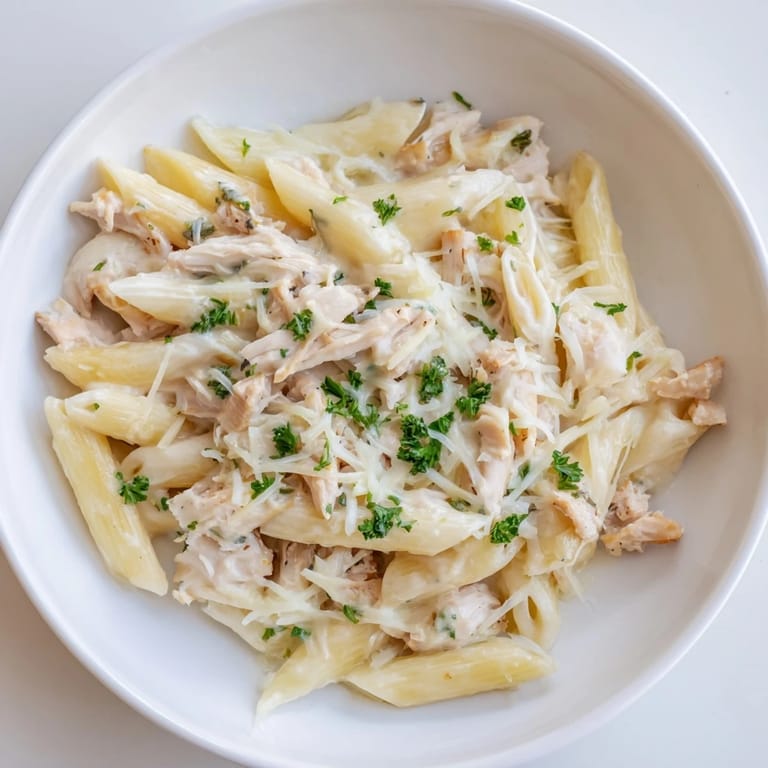
Save There's something almost magical about the moment when cream hits hot pasta water—that little cloud of steam carries the promise of something deeply satisfying. I discovered this dish on a Tuesday night when I had leftover rotisserie chicken and an overwhelming craving for something warm and uncomplicated. One pot of boiling water and a skillet later, I realized I'd stumbled onto the kind of meal that quietly becomes a weeknight staple, the one you find yourself making whenever life feels a little too hectic to think.
I made this for my neighbor once after she'd had a rough week, and watching her face soften with that first bite reminded me why simple food matters so much. It wasn't fancy, but it was exactly what she needed—creamy, gentle, honest. Since then, I've made it for friends, family, and most often just for myself on nights when I need a little comfort.
Ingredients
- Penne pasta, 400 g (14 oz): Use a good quality pasta that holds sauce well; cheap pasta gets mushy and won't give you that satisfying bite.
- Cooked shredded chicken, 2 cups (about 350 g / 12 oz): Rotisserie chicken saves you time and tastes genuinely good, but homemade works beautifully too.
- Unsalted butter, 2 tbsp: This is where flavor starts; don't skip it or substitute with oil alone.
- Olive oil, 1 tbsp: Keeps the butter from browning too quickly and adds a subtle richness.
- Garlic, 3 cloves, minced: Mince it fine so it releases its aroma into the oil without burning.
- Small onion, finely chopped: This softens into the background and builds the sauce foundation.
- Heavy cream, 250 ml (1 cup): The heart of the sauce; don't rush heating it or it can separate.
- Chicken broth, 120 ml (½ cup): This brightens the cream and prevents the sauce from feeling too thick.
- Grated Parmesan cheese, 60 g (½ cup): Freshly grated melts more smoothly than pre-shredded.
- Shredded mozzarella cheese, 60 g (½ cup): Adds stretch and a creamy texture that Parmesan alone can't achieve.
- Dried Italian herbs, ½ tsp: A gentle seasoning that hints at Mediterranean kitchens without overpowering.
- Salt and black pepper, to taste: Taste as you go; the cheeses add saltiness too.
- Fresh parsley, 2 tbsp, chopped: A bright finish that cuts through the richness and adds visual life.
- Extra grated Parmesan, to serve: Because there's no such thing as too much at the table.
Tired of Takeout? 🥡
Get 10 meals you can make faster than delivery arrives. Seriously.
One email. No spam. Unsubscribe anytime.
Instructions
- Get your pasta water ready:
- Fill a large pot with salted water and bring it to a rolling boil. The salt should make it taste like the sea—this is your only chance to season the pasta itself. Add penne and stir occasionally so nothing sticks together.
- Cook until just shy of soft:
- Follow the package time but taste it a minute early; you want al dente, that slight resistance when you bite through. Drain it into a colander and set aside, but keep about ½ cup of that starchy water—it's liquid gold for adjusting your sauce later.
- Build the flavor base:
- Heat butter and olive oil in a large skillet over medium heat until the butter foams and smells almost nutty. Add chopped onion and let it soften for 2-3 minutes, stirring occasionally, until it turns translucent and smells sweet.
- Wake up the garlic:
- Add minced garlic and cook just until fragrant, about a minute. You're looking for that moment when you can smell it filling the kitchen but before it browns—burnt garlic tastes bitter and ruins everything.
- Build depth with broth:
- Pour in chicken broth and simmer for 2 minutes, gently scraping the bottom of the pan with a wooden spoon to loosen any flavorful bits. This is called deglazing, and those little stuck-on pieces hold all the savory depth.
- Create the cream sauce:
- Turn the heat down to low and slowly pour in heavy cream, stirring as you go. Low heat is essential here; high heat can make cream break and separate into greasy streaks.
- Melt the cheeses in:
- Add grated Parmesan and shredded mozzarella, stirring constantly until they disappear into a smooth, silky sauce. If you see grainy bits, your heat was too high; lower it and keep stirring gently until everything's velvety.
- Season with care:
- Sprinkle in dried Italian herbs, salt, and pepper. Stir and taste. Remember the cheeses already add saltiness, so go easy at first.
- Bring it all together:
- Add shredded chicken and cooked penne to the skillet, tossing gently until every piece is coated in that creamy sauce. If it feels too thick, splash in a little reserved pasta water a tablespoon at a time until you reach that perfect consistency.
- Finish and serve:
- Remove from heat and sprinkle chopped fresh parsley over the top. Serve immediately into bowls and finish each one with a generous handful of extra grated Parmesan.
 Save
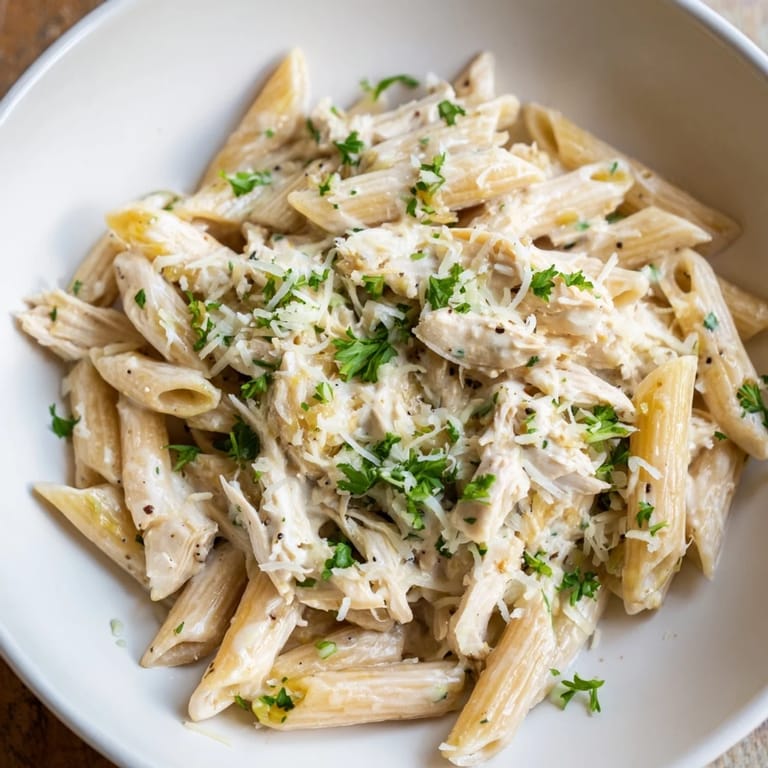
Save This dish has a quiet power to it, the kind of meal that transforms a regular evening into something that feels intentional and kind. Whether you're feeding yourself or someone who needs feeding, it does what the best food does: it says without words that you were thinking of them.
Why This Pasta Feels Like Home
There's a reason creamy pasta dishes show up in kitchens across so many different cultures—cream and cheese are almost impossible to get wrong together, and they make everything taste like it took more effort than it actually did. This particular combination works because the chicken adds substance and the cream adds comfort, but the garlic and herbs remind you it's still sophisticated enough for company. It's the kind of dish that bridges the gap between weeknight lazy and weekend impressive, which is basically the dream.
Timing and Technique Secrets
The entire dish hinges on multitasking smoothly, so getting your mise en place ready before you start heating anything makes an enormous difference. Chop your onion and garlic while the water boils, have your cheeses grated and ready to go the moment you need them, and measure out your cream so you're not fumbling with bottles over a hot pan. One small thing that changed my cooking forever was learning to listen to the pasta water—when it reaches that aggressive rolling boil, you know your oven heat is just right for everything else you're about to do.
Variations and What Happens When You Experiment
This recipe is beautifully blank canvas enough that it welcomes additions without complaint—I've seen people add spinach, sun-dried tomatoes, mushrooms, or even a pinch of red pepper flakes with the garlic for heat. The only thing to remember is that wet ingredients like fresh spinach should be added at the very end, and drier things like sun-dried tomatoes do fine halfway through. I tried swapping heavy cream for half-and-half once because that's what I had, and it worked—lighter and a bit less rich, which some people actually prefer for eating more comfortably afterward.
- Red pepper flakes stirred in with the garlic add a gentle warmth that plays beautifully with the cream.
- Fresh spinach or arugula wilts in at the very end without needing any extra cooking.
- A glass of crisp white wine like Pinot Grigio alongside makes the whole experience feel more intentional.
 Save
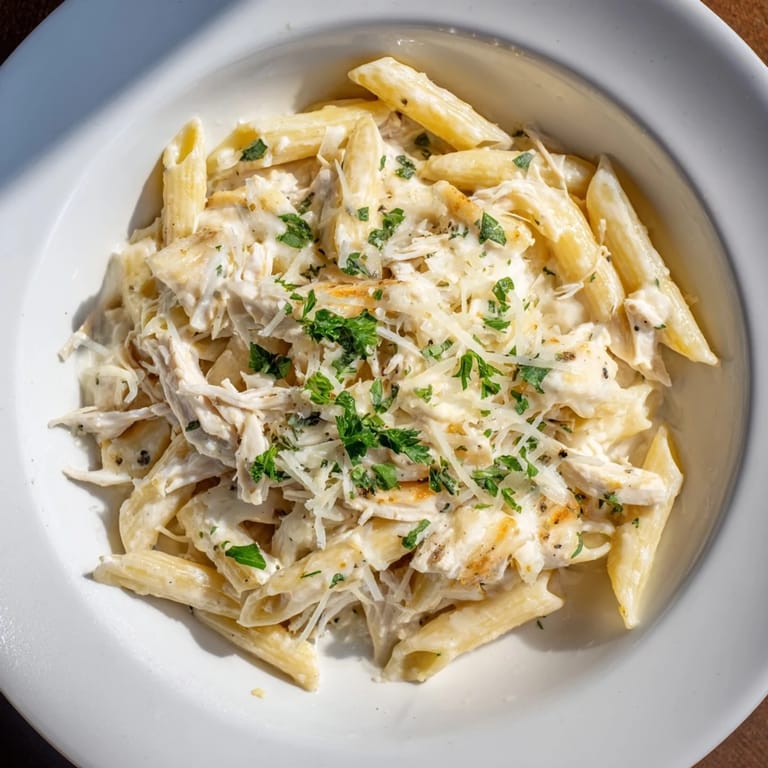
Save This is the kind of recipe that asks very little from you but gives back enormous comfort in return. Make it, feed someone with it, and watch it become something they ask you for again.
Kitchen Guide
- → What pasta works best for this dish?
Penne pasta is ideal for this creamy sauce because its tube shape holds the sauce well, but rigatoni or fusilli can also be great alternatives.
- → Can I use rotisserie chicken?
Yes, shredded rotisserie chicken is a convenient option that adds flavor and saves preparation time.
- → How can I adjust the sauce consistency?
If the sauce is too thick, adding reserved pasta water a little at a time will help achieve the desired smoothness.
- → Is it possible to lighten the dish?
For a lighter version, substitute heavy cream with half-and-half or a milk-cream blend, but expect a slightly thinner sauce.
- → What herbs are recommended?
A blend of dried Italian herbs like basil, oregano, and thyme complements the flavors beautifully, enhancing the creamy sauce.